

Himalayan
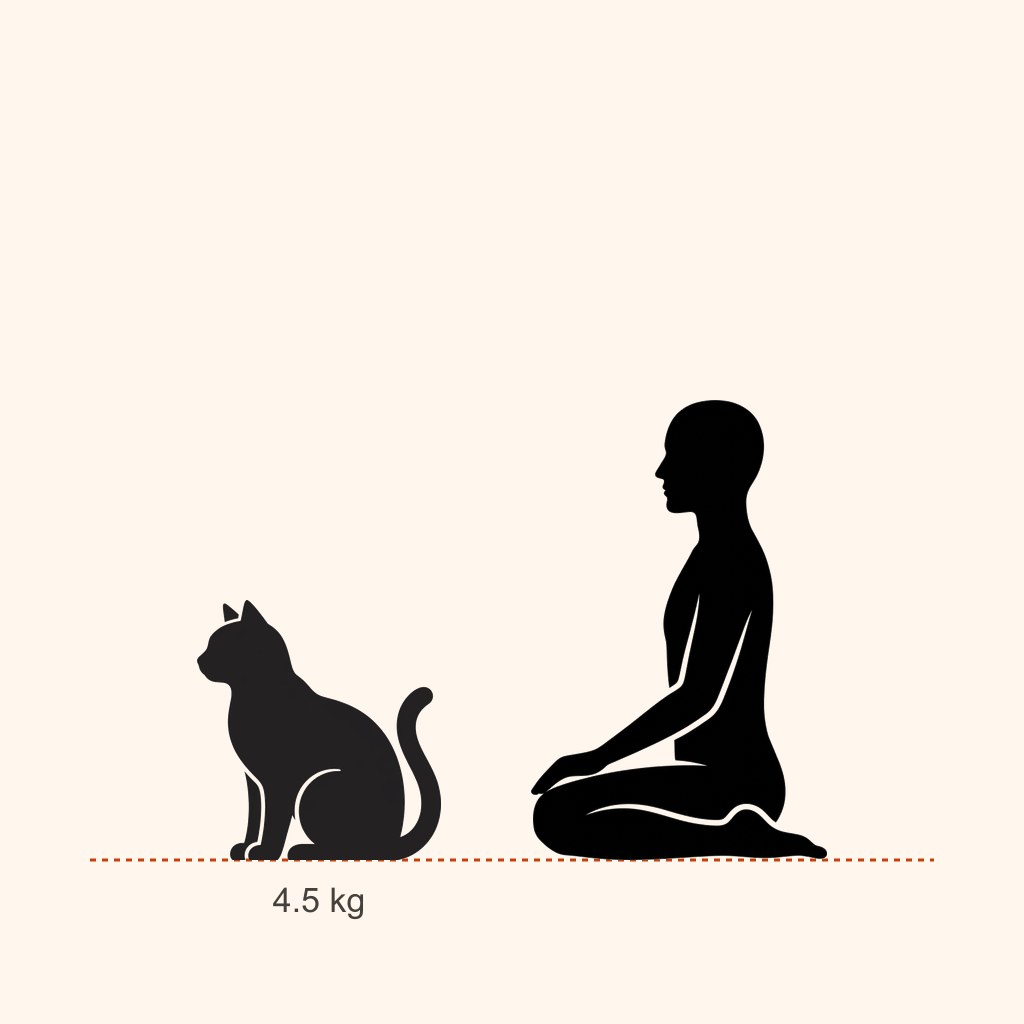
The image on this page is AI-generated and does not depict a real animal.
- Species
- Cat
- Origin
- United States
- Size
- Medium
- Lifespan
- 9 - 15 years
- Temperament
- Devoted (attached to its owner) Gentle Intelligent Quiet Social
- Description
Calm and loyal, enjoys play in a sedate style, prefers a peaceful home environment.
- Physical Traits
Long Persian-type coat, color-point pattern, blue eyes, a flat facial structure.
- Care / Environment Info
Lives indoors. Sheds noticeably. Requires intensive grooming, daily brushing/grooming needed. Very calm and low energy. Very quiet. Some breed-specific health monitoring is recommended.
Himalayan Owner's Guide
Last updated:
Is a Himalayan right for you?
The Himalayan combines the body and long coat of the Persian with the colourpoint pattern and blue eyes of the Siamese. Many registries record it not as a separate breed but as the colourpoint variety of the Persian. It is a calm, sweet, lap-loving cat, said to be a little livelier than the Persian. But its health and grooming load is exactly the same: daily brushing, daily face cleaning and the risks that come with a flat face.
| Situation | Suitability | Note |
|---|---|---|
| Apartment | Perfect | A calm indoor cat |
| Family with young children | Good | Gentle; avoids noisy, rough play |
| First-time cat owner | Moderate | Easy temperament, demanding daily care and health monitoring |
| Alone 8+ hours a day | Good | Fairly independent, but daily grooming is still a must |
| Household with fur allergies | Very poor | Long, dense, constantly shedding coat |
| Home that cannot spare 15 minutes a day | Not suitable | The coat mats and the eyes get dirty |
| Hot climate | Poor | Short muzzle and thick coat struggle seriously in heat |
The most realistic question: can you commit, for years, to brushing a cat every day, wiping its eyes every day and keeping it cool in summer? Choose a Himalayan because you accept that routine, not for its looks.
Before you adopt
Face type is the most important decision you will make. Himalayans come in a longer-muzzled "doll face" type and an extremely flat "peke-face" or "ultra" type. Research in Persian-type cats shows that as facial flattening increases, more of the eyeball sits outside the bony socket, teeth become more crowded and the nasal passages narrow. Avoid kittens whose nose is buried between the eyes or whose nostrils look like slits; check that the nostrils are open and the kitten breathes quietly.
Ask for the PKD genetic test. Polycystic kidney disease is common in Persians and Persian-derived breeds and is dominantly inherited: even one affected parent is enough for a significant share of kittens to be affected, and every cat carrying the gene eventually develops cysts. Ask to see negative results for both parents in writing. Ask about heart screening of the parents too.
Cats are rarely subject to breed-specific restrictions, but check local rules. Because of the grooming workload, Himalayans and Persian mixes regularly end up in shelters and rehoming groups; if you adopt an adult, have the eyes, nose and kidneys checked in the first week.
Temperament
The Himalayan is gentle, quiet and sweet-natured. It inherited the Persian's soft voice rather than the Siamese's loud, demanding style; it expresses itself in short, melodious sounds.
Its energy level is low to moderate. It enjoys play in short bursts but prefers a lap or a soft cushion to climbing high.
It is polite but reserved with visitors. It needs a calm home; crowds and noise send it into hiding.
Because it is so quiet it may not show discomfort. Watch regularly for changes in breathing sounds, eye discharge, appetite and litter tray habits.
Health issues and lifespan
Sources give a wide lifespan range (roughly 9 to 15 years, longer in some sources); face type and PKD status directly affect it.
- Brachycephaly (flat face) and breathing: Narrow nostrils, compressed internal nasal structures and a long soft palate restrict airflow. Noisy breathing, snoring, mouth breathing and poor tolerance of exercise and heat are typical. A Himalayan breathing through its mouth or panting is a veterinary emergency.
- Eye discharge and tear ducts: In a flat face the tear duct is kinked and narrowed, so tears overflow. Brown staining under the eyes and damp, irritated skin are typical. See a vet if the discharge turns yellow-green or the cat squints.
- Corneal problems and sequestrum: With the eye sitting further out of its socket, the cornea is more exposed to drying, scratches and ulcers. Persians, Himalayans and Exotics show a marked predisposition to corneal sequestrum, a hard brown-black patch on the cornea, with a strong hereditary component. If you see a colour change, watering or squinting, same-day examination is advisable.
- Polycystic kidney disease (PKD): Cysts present from birth grow in the kidneys over the years. Signs usually start in middle age: increased thirst and urination, poor appetite, weight loss, vomiting. Ultrasound and genetic testing allow early diagnosis; there is no cure, but diet and supportive care can slow progression.
- Dental crowding: In a short jaw the teeth are crowded and displaced, speeding up tartar and gum disease. Dropping food or chewing on one side are signs.
- Heat stroke: Short muzzle plus thick coat is a real summer risk. Rapid breathing, weakness or mouth breathing mean cool the cat and go to a vet immediately.
Feeding
An adult Himalayan (about 3.5-5.5 kg) needs the energy equivalent of roughly 45-65 g of dry food a day; adjust the portion to body condition.
- Kitten (2-12 months): Kitten food, three to four meals a day.
- Adult: High protein, measured portions. Kibble shape matters: flat-faced cats struggle to pick up small round kibble; almond-shaped or specially shaped kibble for Persian-type cats, or wet food, makes eating easier.
- Senior (7+ years): Because of the PKD risk, blood and urine checks at least once a year.
Water intake is critical: use wet food, a fountain and wide, shallow water bowls. Deep bowls wet a flat-faced cat's nose and can discourage drinking. Wipe around the mouth after meals.
Grooming and coat
- Brush every day. The long, dense undercoat mats within days. You need a metal comb and a wide-toothed brush.
- Mats form mostly in the armpits, behind the ears, on the belly and on the inner hind legs.
- Wipe the eyes every day. Use clean, damp cotton wool, a separate piece for each eye.
- Keep the fold over the nose dry; moisture causes skin irritation.
- Bathe every four to six weeks, then dry the coat completely.
- Keeping the hair around the rear short prevents faecal soiling.
- Nails every two to three weeks, teeth several times a week.
The colourpoint gene is temperature-sensitive: cooler parts of the body grow darker hair. Hair on a clipped area may grow back darker; this is harmless.
Living space and enrichment
- Coolness. A cool room, ceramic flooring and shade in summer. Air conditioning is a health measure for this breed, not a luxury.
- Low, soft spaces. Wide, low shelves and soft cushions rather than a tall cat tree.
- Measured play. Ten minutes of calm play twice a day; stop if breathing becomes laboured.
- A wide litter tray. Low-sided and wide, with dust-free litter to protect the airways.
- A quiet corner. A space of its own away from noise.
It should live indoors; the coat gets dirty quickly outside, and heat is a danger of its own.
History
Attempts to produce a long-haired colourpoint cat began as genetic research at Harvard University in the 1930s, with results published in 1936. Around the same time breeders in Britain were crossing Persians and Siamese to build a similar line.
Through the work of British breeder Brian Sterling-Webb, the breed was recognised in Britain in 1955 as the "Longhaired Colourpoint". In America, the CFA accepted it in 1957 as the "Himalayan", a name taken from the colourpoint pattern known as "Himalayan" in other animals such as rabbits.
In 1984 the CFA reclassified the Himalayan as a colour division of the Persian. Most registries now treat it as part of the Persian group. Like the Persian, the Himalayan was selected for ever flatter faces during the 20th century; a return to a more moderate face is the direction recommended for animal welfare.
This guide is for information only and is not a substitute for veterinary advice. Prices are approximate and vary by region and time.
Adoption Prep Checklist
Housing
-
Cat bed
Cats want a safe space of their own to rest.
-
Cat scratching post
Satisfies the natural scratching instinct and protects furniture.
Feeding
-
Dry/wet cat food
Quality cat food is needed for balanced nutrition.
-
Food and water bowl set
Needed for daily feeding and water access.
Grooming
-
Cat litter and litter box
Essential for the cat's toilet needs.
-
Cat de-shedding brush
Regular brushing reduces hairball formation.
Activity
-
Cat toy
Cats release energy through play.
-
Cat carrier
Needed for safe transport to vet visits.
Frequently Asked Questions
Does the Himalayan shed?
It sheds heavily, especially at seasonal changes. Expect near-daily brushing and regular cleaning at home; it is not a good choice for anyone sensitive to pet hair.
Can the Himalayan live in an apartment?
Yes. It lives comfortably in an apartment as long as its daily needs are met. What matters is not floor area but consistent exercise and mental stimulation.
Is the Himalayan good with children?
Generally yes. It adapts well to families with children. Even so, interactions should be supervised and children taught to respect the animal’s boundaries.
Is the Himalayan suitable for first-time cat owners?
No — it suits experienced owners. Its character, energy or care requirements would be demanding for a first-time owner.
How much exercise does the Himalayan need?
Its energy level is low. Short, regular activity is enough; strenuous exercise is not required.
Can the Himalayan be left alone during the day?
It can be left alone for a few hours. Long, routine absences can bring on boredom-driven behaviour problems; enrichment and a predictable routine reduce that risk.
How long does the Himalayan live?
The Himalayan lives 9 - 15 years on average. Diet, regular veterinary check-ups and early screening for hereditary conditions all affect this directly.
Where does the Himalayan come from?
The Himalayan originates from United States. The geography a breed was developed in, and the job it was bred for, explain much of its temperament and care needs today.