

American Wirehair
The image on this page is AI-generated and does not depict a real animal.
- Species
- Cat
- Origin
- United States
- Size
- Large
- Lifespan
- 14 - 18 years
- Temperament
- Affectionate Curious Gentle Intelligent Interactive Lively active Loyal Playful Reasonable well-balanced Social
- Description
Calm and easygoing, taking life as it comes, and fond of watching birds.
- Physical Traits
A unique wiry/crimped coat texture, found in every color, a medium-sized stocky body.
- Care / Environment Info
Lives indoors. Sheds very little. Very easy to care for, infrequent brushing needed. Moderate energy. Moderately vocal/talkative. Some breed-specific health monitoring is recommended.
American Wirehair Owner's Guide
Last updated:
Is an American Wirehair right for you?
The American Wirehair is one of the rarest cats in the world, known for its wiry, springy coat. Its personality, though, is unassuming: a calm, even-tempered, low-drama companion. What actually makes this breed special is not its grooming needs but the genetics behind its coat.
| Situation | Suitability | Note |
|---|---|---|
| Apartment | Excellent | Calm and well suited to indoor life |
| Family with young children | Good | Gentle and patient, tolerates rough handling |
| First-time cat owner | Excellent | Easy care, predictable temperament |
| Alone 8+ hours a day | Good | Independent nature makes it relatively tolerant of solitude |
| Household with fur allergies | Moderate | Short-coated, but still sheds regardless of allergy status |
| Household that loves frequent brushing | Caution | Over-brushing snaps the fragile hair; grooming should be minimal |
| Someone looking for a rare, unusual breed | Excellent | One of the rarest breeds recognized by CFA |
The question to ask before choosing this breed: are you ready to own a cat that looks unusual but is actually one of the easiest to groom? It can be hard to find because of its rarity, but most owners end up delighted by the temperament.
Before you adopt
This breed is extremely rare; finding one in a shelter, in Turkey or anywhere, is nearly impossible. When looking for a kitten, ask whether the breeder screens parents' hearts with echocardiograms. The wire coat gene is semi-dominant: not all kittens from two wirehairs will be wired, and in a wire-to-straight pairing, on average only about half the kittens will have the wired coat — coat type isn't guaranteed at the time you choose a kitten.
Temperament
The American Wirehair is calm, balanced, and even-keeled, with a temperament quite close to its ancestor, the American Shorthair. It isn't overly energetic or clingy, but it does bond with its family and enjoys a lap.
It's curious without being demonstrative; it takes interest in household happenings and enjoys watching from a window. Its voice is quiet and infrequent, though its purr is notably loud. It gets along with other cats and gentle children, and its independent streak makes it relatively tolerant of being alone.
It generally adapts well to new places and people; it is neither overly timid nor pushy. This balanced nature is the main reason the breed has long been known as an "easy-going house cat."
Health issues and lifespan
Sources generally report a lifespan of 12-18 years, with some narrowing it to 14-18 years. Thanks to its broad genetic base (outcrossing with the American Shorthair is permitted), the breed is considered relatively robust, with no well-documented common hereditary disease.
- Hypertrophic cardiomyopathy (HCM): The most common heart disease in cats; monitoring is recommended for this breed too. Responsible breeders screen parents periodically with echocardiograms. See a vet if you notice lethargy, rapid breathing, or loss of appetite.
- Hip dysplasia: Reported in some sources; watch for limping or reluctance to jump.
- Skin irritation and seborrhea: In some individuals, the wiry coat structure is accompanied by skin sensitivity; excessive scratching, redness, and rash are signs.
- Tartar and gum disease: As in the general cat population, preventable with regular care.
- Sun sensitivity: Sunburn risk, especially on the ear tips, has been reported in pale-coated, sparsely-furred individuals; avoid prolonged direct sun exposure.
Feeding
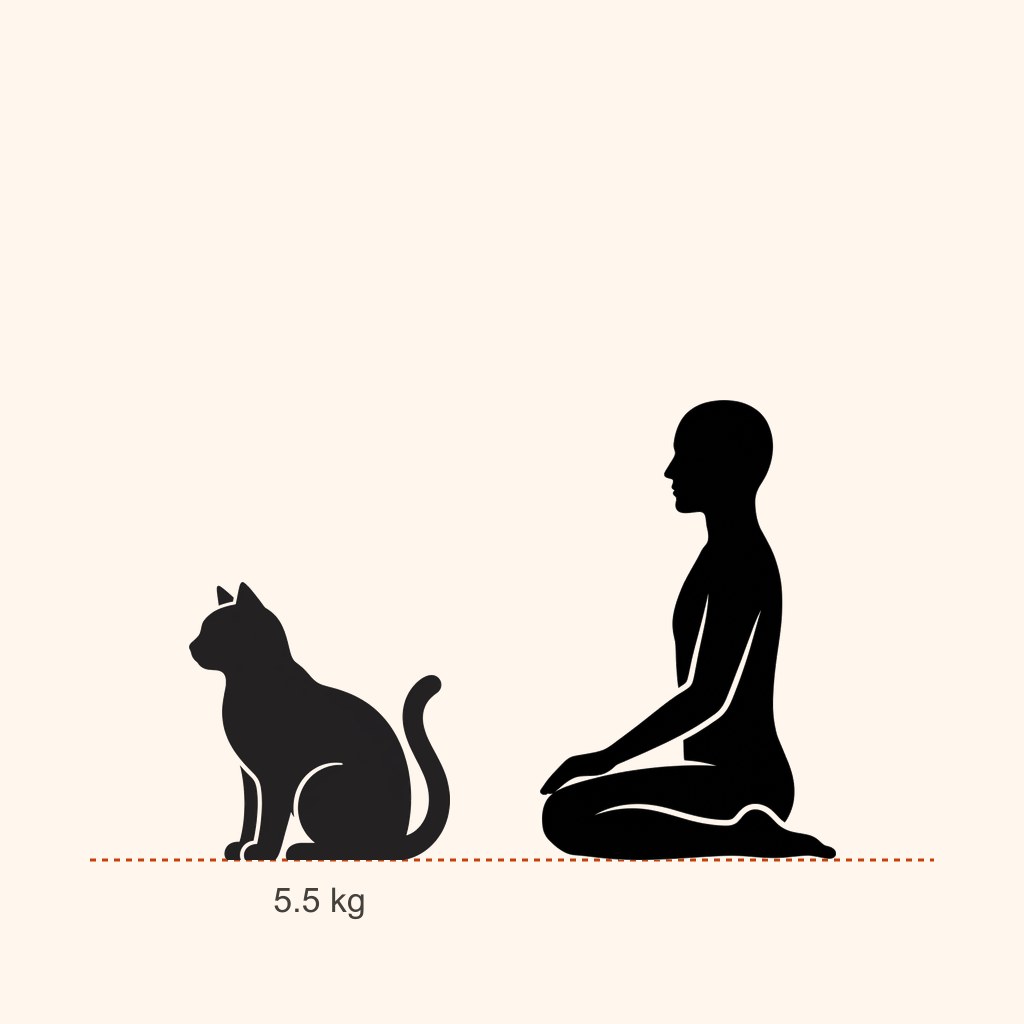
An adult American Wirehair (3.5-6.5 kg) needs the energy equivalent of about 50-70 g of dry food per day; it is a large-boned breed.
- Kitten (2-12 months): Kitten food, three to four meals a day.
- Adult: High protein, a balanced omega-3/omega-6 ratio; fatty acids benefit the wire coat's health.
- Senior (9+ years): Food that supports heart and joint health, paired with an annual heart check, is recommended.
Being a moderately active breed, don't neglect portion control; measured feeding prevents obesity.
Grooming and coat
Despite how demanding this coat looks, it actually needs the opposite: light, gentle handling.
- Don't over-brush. The wiry hair is fragile, and unnecessary brushing distorts the crimp and breaks the hair. Brush only during shedding season, and gently.
- It naturally resists matting; daily grooming isn't necessary.
- Bathing is rarely needed; when wet, the coat texture can temporarily flatten but re-curls once dry.
- Trim nails every two to three weeks, brush teeth several times a week.
- Protect the ear tips from sun in pale-coated individuals.
Living space and enrichment
- Moderate vertical space. It likes to climb but isn't hyperactive; a standard cat tree is enough.
- Quiet observation spots. It enjoys a window perch to watch household activity.
- Daily measured play. Ten to fifteen minutes twice a day; inactivity leads to weight gain.
- Teach gentle handling. Because the coat is fragile, teach children not to brush hard or pull at it.
- Social contact. Independent as it is, it doesn't like being left entirely alone; it needs daily attention.
History
The breed's story begins in 1966 in Vernon, in upstate New York, with a litter of five kittens born to a pair of barn cats. One of them, a red-and-white male, was born with a wiry, coarse-textured coat. The cat's owner alerted a local Rex breeder, Joan O'Shea, who bought the kitten and one of his straight-coated female littermates to start a breeding program.
Genetic study showed this wire coat gene to be a completely new, dominant but semi-penetrating mutation, distinct from the Rex mutation seen in other curly-coated breeds like the Cornish Rex or Devon Rex. In a wire-to-straight pairing, on average half the kittens are born wired.
CFA registered the breed in 1967 and granted championship status in 1978; TICA recognized it in 1979. As of 2017, the American Wirehair is considered the rarest breed CFA recognizes, and it remains largely unknown outside North America.
Even today the only approved outcross breed is the American Shorthair — a deliberate breeding decision meant to keep the gene pool from narrowing and to protect the breed's health.
This guide is for information only and is not a substitute for veterinary advice. Prices are approximate and vary by region and time.
Adoption Prep Checklist
Housing
-
Cat bed
Cats want a safe space of their own to rest.
-
Cat scratching post
Satisfies the natural scratching instinct and protects furniture.
Feeding
-
Dry/wet cat food
Quality cat food is needed for balanced nutrition.
-
Food and water bowl set
Needed for daily feeding and water access.
Grooming
-
Cat litter and litter box
Essential for the cat's toilet needs.
-
Short-hair cat brush
Regular brushing reduces hairball formation.
Activity
-
Cat toy
Cats release energy through play.
-
Cat carrier
Needed for safe transport to vet visits.
Frequently Asked Questions
Does the American Wirehair shed?
Shedding is low. Brushing once a week is usually enough, with a mild increase during seasonal changes.
Can the American Wirehair live in an apartment?
Yes. It lives comfortably in an apartment as long as its daily needs are met. What matters is not floor area but consistent exercise and mental stimulation.
Is the American Wirehair good with children?
Generally yes. It adapts well to families with children. Even so, interactions should be supervised and children taught to respect the animal’s boundaries.
Is the American Wirehair suitable for first-time cat owners?
Yes. Its care and training are relatively forgiving, which makes it a sound choice for first-time owners.
How much exercise does the American Wirehair need?
It needs a moderate amount of exercise. Daily activity plus some play time makes for a balanced routine.
Can the American Wirehair be left alone during the day?
It tolerates being alone well. That makes it workable for someone employed full time, though it will still expect attention and activity on your return.
How long does the American Wirehair live?
The American Wirehair lives 14 - 18 years on average. Diet, regular veterinary check-ups and early screening for hereditary conditions all affect this directly.
Where does the American Wirehair come from?
The American Wirehair originates from United States. The geography a breed was developed in, and the job it was bred for, explain much of its temperament and care needs today.