

Abyssinian
The image on this page is AI-generated and does not depict a real animal.
- Species
- Cat
- Origin
- Egypt
- Size
- Medium
- Lifespan
- 14 - 15 years
- Temperament
- Active Energetic Independent Intelligent Gentle
- Description
Easy to care for, affectionate, and gets along well with both people and other animals.
- Physical Traits
Short, dense 'ticked' coat (each hair having multiple color bands) in cinnamon-red tones, almond-shaped eyes, large upright ears, and a slender athletic body.
- Care / Environment Info
Lives indoors. Sheds little. Very easy to care for, infrequent brushing needed. Very high energy, needs plenty of play and stimulation. Very quiet. Generally a healthy breed.
Abyssinian Owner's Guide
Last updated:
Is an Abyssinian right for you?
The Abyssinian is known for its "ticked" coat, in which each hair carries more than one band of colour; this gives it the appearance closest to a wild cat in the domestic world. Its character is equally lively: curious, athletic, never still.
| Situation | Suitability | Note |
|---|---|---|
| Apartment | Moderate to good | Vertical space and intensive play must be provided |
| Family with young children | Good | Playful and energetic; does not like staying on a lap |
| First-time cat owner | Moderate | Easy to groom but with a high energy level |
| Alone 8+ hours a day | Poor | It becomes bored and mischievous; a second animal helps |
| Household with fur allergies | Moderate | A short, fine coat; sheds little |
| Quiet and tidy home | Poor | It climbs everywhere and investigates everything |
| Owner wanting a lap cat | Not suitable | Affectionate but it does not sit still; it is always on the move |
The Abyssinian's best-known nickname is "the clown of the cat world". It is always after something; cupboards, drawers, shelves, and sinks are all territory to explore.
Before you adopt
When buying a kitten, ask for the PK deficiency (pyruvate kinase) and PRA-rdAc genetic test results. Both are known inherited diseases in this breed and tests are available.
Also ask about renal amyloidosis in the line.
Abyssinians appear in breed rescues, often surrendered because the owner underestimated the energy. Adopting an adult means the activity level is already visible.
Temperament
The Abyssinian is curious, intelligent, and extremely active. When you walk into a room you will usually find it on the highest shelf or inside a cupboard.
It enjoys interacting with people but not sitting on a lap; it wants to do something with you. It supervises every job you undertake.
Its voice is quiet; instead of meowing it produces soft chirps.
It is intelligent and eager to learn. It plays fetch, walks on a harness, learns tricks, and opens doors and cupboards.
Individuals with an interest in water are common; it plays with taps and basins.
It does not like being alone; a bored Abyssinian gets into mischief. A second cat is usually a good idea in this breed.
Health issues and lifespan
Average lifespan is 12 to 15 years.
- Pyruvate kinase (PK) deficiency: An inherited anaemia. Lethargy, pale gums, loss of appetite, reduced exercise tolerance. A genetic test exists; because it is common in this breed, screening the parents should be standard.
- Progressive retinal atrophy (PRA-rdAc): An inherited loss of vision known in this breed. A genetic test exists.
- Renal amyloidosis: Abnormal protein accumulation in the kidneys; reported in this breed. Excessive drinking, weight loss, and loss of appetite are the signs.
- Dental and gum disease: Early-onset gingivitis and tooth resorption are common in this breed. Regular brushing and an annual oral check matter.
- Hypertrophic cardiomyopathy (HCM): Periodic cardiac checks are recommended.
- Patellar luxation: Reported.
- Psychogenic alopecia: Excessive licking and hair loss caused by stress; associated with boredom and solitude.
Feeding
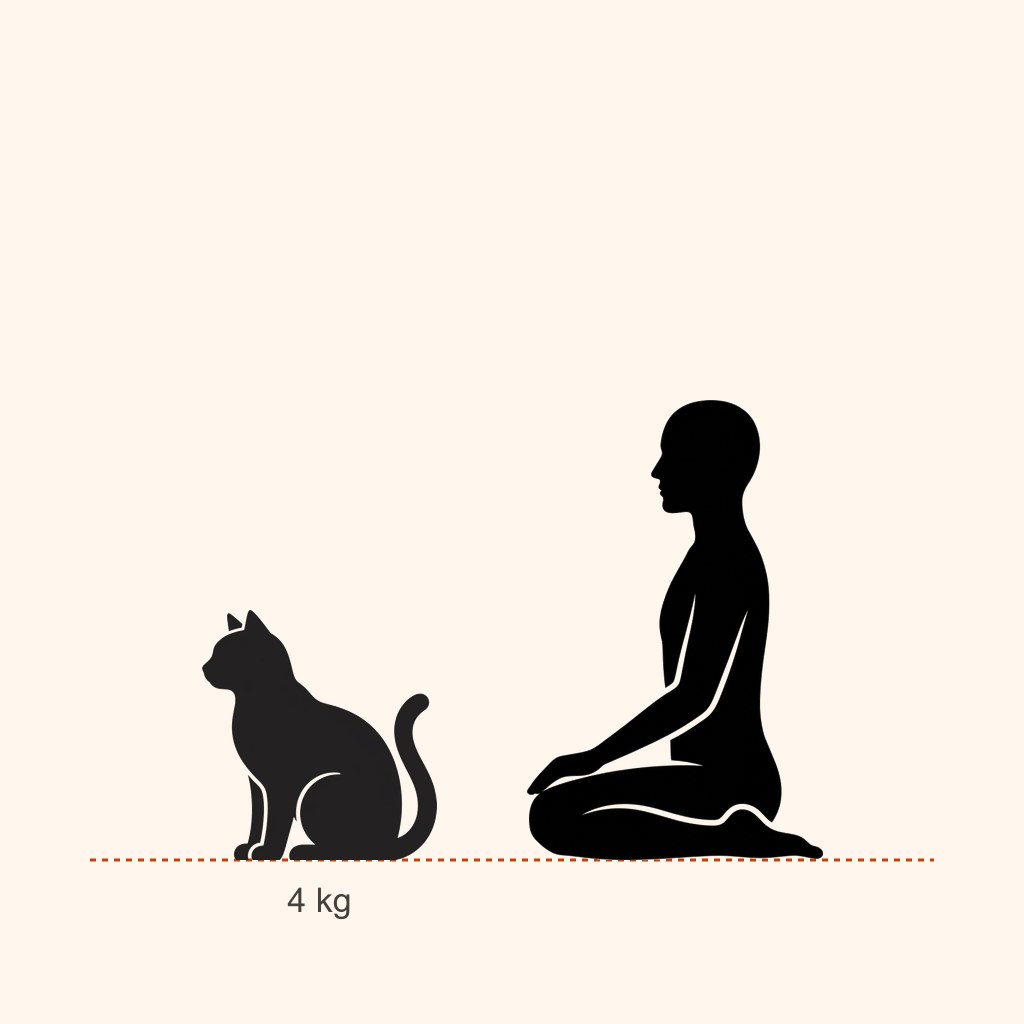
An adult Abyssinian (3-5 kg) needs the energy equivalent of 55-75 g of dry food per day. Being an active breed, the requirement is high for its size.
- Kitten (2-12 months): Kitten food, three to four meals a day.
- Adult: High protein, low carbohydrate.
- Senior (9+ years): Annual monitoring of kidney values; this matters because of the amyloidosis risk.
Food puzzles work very well in this breed; they both tire the mind and slow eating.
Use a fountain-type water bowl; this breed likes running water.
Grooming and coat
One of the easiest breeds to groom.
- A short, fine, ticked coat; a rubber mitt once a week is enough.
- It sheds little.
- Bathing is not needed.
- Nails every two to three weeks; this breed climbs a great deal.
- Teeth several times a week; dental disease starts early in this breed and is the most important grooming task.
- Monthly ear checks; the large ears collect dust.
Living space and enrichment
In this breed enrichment is the main tool for preventing behaviour problems.
- Vertical space. A tall cat tree, wall shelves, access to the top of cupboards. The Abyssinian lives at height.
- At least two 15-minute sessions of active play a day. Wand toys, hunting simulation.
- Food puzzles and foraging. Tiring the mind matters as much as physical tiredness.
- Trick and harness training. This breed likes to learn and it provides a good outlet.
- A second animal. If it will be alone for long periods this should be seriously considered.
- Water play. A shallow water bowl or a fountain.
- Put breakables away. This cat walks along shelves and pushes off what is in front of it.
- A safe window. A screen is essential.
History
The Abyssinian takes its name from Abyssinia, the old name of present-day Ethiopia; however, it is not proven that the breed actually came from there. The source of the name is linked to a cat called "Zula" brought back by a soldier returning from the British army's Abyssinian expedition in 1868.
Genetic studies suggest that the breed's origins may be connected to the Indian Ocean coasts and Southeast Asia, and that it probably reached Britain along colonial-era trade routes.
The breed was marketed as "the cat of the pharaohs" because of its resemblance to the cats in ancient Egyptian wall paintings; this is a romantic story with no historical basis.
It was standardised in England at the end of the 19th century and recognised in 1882. The two world wars and the feline leukaemia outbreak of the 1960s reduced the breed severely; the British population nearly disappeared and recovered through individuals imported from America.
The characteristic "ticked" (agouti) coat arises from alternating light and dark bands on each hair and is the breed's signature. Its long-haired variant is recognised as a separate breed under the name Somali.
This guide is for information only and is not a substitute for veterinary advice. Prices are approximate and vary by region and time.
Adoption Prep Checklist
Housing
-
Cat bed
Cats want a safe space of their own to rest.
-
Cat climbing tree
Satisfies the natural scratching instinct and protects furniture.
Feeding
-
Dry/wet cat food
Quality cat food is needed for balanced nutrition.
-
Food and water bowl set
Needed for daily feeding and water access.
Grooming
-
Cat litter and litter box
Essential for the cat's toilet needs.
-
Short-hair cat brush
Regular brushing reduces hairball formation.
Activity
-
Interactive cat toy
Cats release energy through play.
-
Cat carrier
Needed for safe transport to vet visits.
Frequently Asked Questions
Does the Abyssinian shed?
Shedding is low. Brushing once a week is usually enough, with a mild increase during seasonal changes.
Can the Abyssinian live in an apartment?
Yes. It lives comfortably in an apartment as long as its daily needs are met. What matters is not floor area but consistent exercise and mental stimulation.
Is the Abyssinian good with children?
Generally yes. It adapts well to families with children. Even so, interactions should be supervised and children taught to respect the animal’s boundaries.
Is the Abyssinian suitable for first-time cat owners?
Yes. Its care and training are relatively forgiving, which makes it a sound choice for first-time owners.
How much exercise does the Abyssinian need?
It is high-energy and needs vigorous daily activity. Mental stimulation matters as much as physical exercise; without enough to do, destructive behaviour follows.
Can the Abyssinian be left alone during the day?
It tolerates being alone well. That makes it workable for someone employed full time, though it will still expect attention and activity on your return.
How long does the Abyssinian live?
The Abyssinian lives 14 - 15 years on average. Diet, regular veterinary check-ups and early screening for hereditary conditions all affect this directly.
Where does the Abyssinian come from?
The Abyssinian originates from Egypt. The geography a breed was developed in, and the job it was bred for, explain much of its temperament and care needs today.