

American Shorthair
The image on this page is AI-generated and does not depict a real animal.
- Species
- Cat
- Origin
- United States
- Size
- Large
- Lifespan
- 15 - 17 years
- Temperament
- Active Curious Adaptable easygoing Playful Calm
- Description
Long-lived, healthy, sweet-natured, and gets along well with children.
- Physical Traits
Dense short coat (most commonly a silver classic tabby pattern), round face, a strong stocky body.
- Care / Environment Info
Lives indoors. Sheds moderately. Very easy to care for, infrequent brushing needed. Moderate energy. Moderately vocal/talkative. Some breed-specific health monitoring is recommended.
American Shorthair Owner's Guide
Last updated:
Is an American Shorthair right for you?
The American Shorthair is a sturdy, even-tempered breed descended from the mousers that sailed to North America on settlers' ships. Affectionate but not clingy, it enjoys play yet can keep itself busy. It has no flashy feature, and that is exactly its appeal: an easy companion for families looking for a "regular cat".
| Situation | Suitability | Note |
|---|---|---|
| Apartment | Very good | Adaptable, but gains weight if inactive |
| Family with young children | Good | Patient and steady; has limits with rough play |
| First-time cat owner | Very good | Easy temperament and care |
| Alone 8+ hours a day | Good | Independent enough to amuse itself |
| Home with cat allergies | Poor | Dense short coat, seasonal shedding |
| Home that can't manage its weight | Medium | Hearty appetite and solid build predispose to obesity |
| Other pets at home | Good | Usually easygoing; caution with rodents and birds due to prey drive |
Before you adopt
Outside North America, genuine pedigreed American Shorthairs are uncommon. The silver classic tabby pattern is closely associated with the breed, but the same pattern is common in mixed-breed cats. Many cats advertised as "American Shorthair" are actually mixed-breed or confused with the British Shorthair. Don't rely on breed claims for a kitten without registration papers from a body such as CFA or TICA.
If buying from a breeder, ask for:
- The parents' pedigree papers.
- Heart ultrasound (echocardiography) results for the parents, to screen for HCM.
- PKD screening results (genetic test or ultrasound).
- A kitten at least 12 weeks old with vaccinations started.
If you love the look but don't care about papers, adopting a mixed-breed cat with a similar pattern from a shelter is an excellent choice. Either way, check local microchipping rules (in Turkey, for example, owned cats must be registered in the PETVET system).
Temperament
CFA describes the breed as having an "even temperament". In daily life that means:
- Affectionate but independent: Likes to be near its people but doesn't demand constant lap time. Many prefer sitting beside you to being held.
- Playful: Joins in interactive play willingly; the hunting drive comes from its ancestors.
- Self-sufficient: Independent enough to entertain itself while you're out.
- Calm: Not overly vocal; adapts relatively well to new settings and changes in routine.
Its mousing heritage is still obvious: if you have hamsters or budgies, keep cages secure and don't leave the cat unsupervised with them.
Health issues and lifespan
A generally robust breed; CFA states that it is not currently known for any breed-specific health problems. Still, keep an eye on:
- Hypertrophic cardiomyopathy (HCM): Cornell Feline Health Center lists the American Shorthair among breeds predisposed to HCM, while CFA says cases seen in the 1980s-90s have largely disappeared thanks to preventive screening. Given this difference between sources, asking for parental screening still makes sense. Signs: rapid or laboured breathing, open-mouth breathing, lethargy; in the worst case sudden hind-limb paralysis from a blood clot. These are emergencies.
- Polycystic kidney disease (PKD): A study in Japan reported American Shorthairs carrying the PKD mutation. Signs usually start in middle age: increased thirst and urination, weight loss, poor appetite, vomiting. Diagnosis is confirmed by ultrasound.
- Obesity: A solid build plus a good appetite means weight creeps up easily, raising the risk of diabetes and joint problems.
- Dental and gum disease: Bad breath, red gums, chewing on one side.
- Urinary problems in males: A male cat visiting the litter box often, passing little urine or straining should see a vet the same day.
We found no reliable breed-specific lifespan study. Popular breed guides usually quote 15 years or more; well-cared-for cats kept at a healthy weight are known to live long, but don't treat that range as data-verified.
Feeding
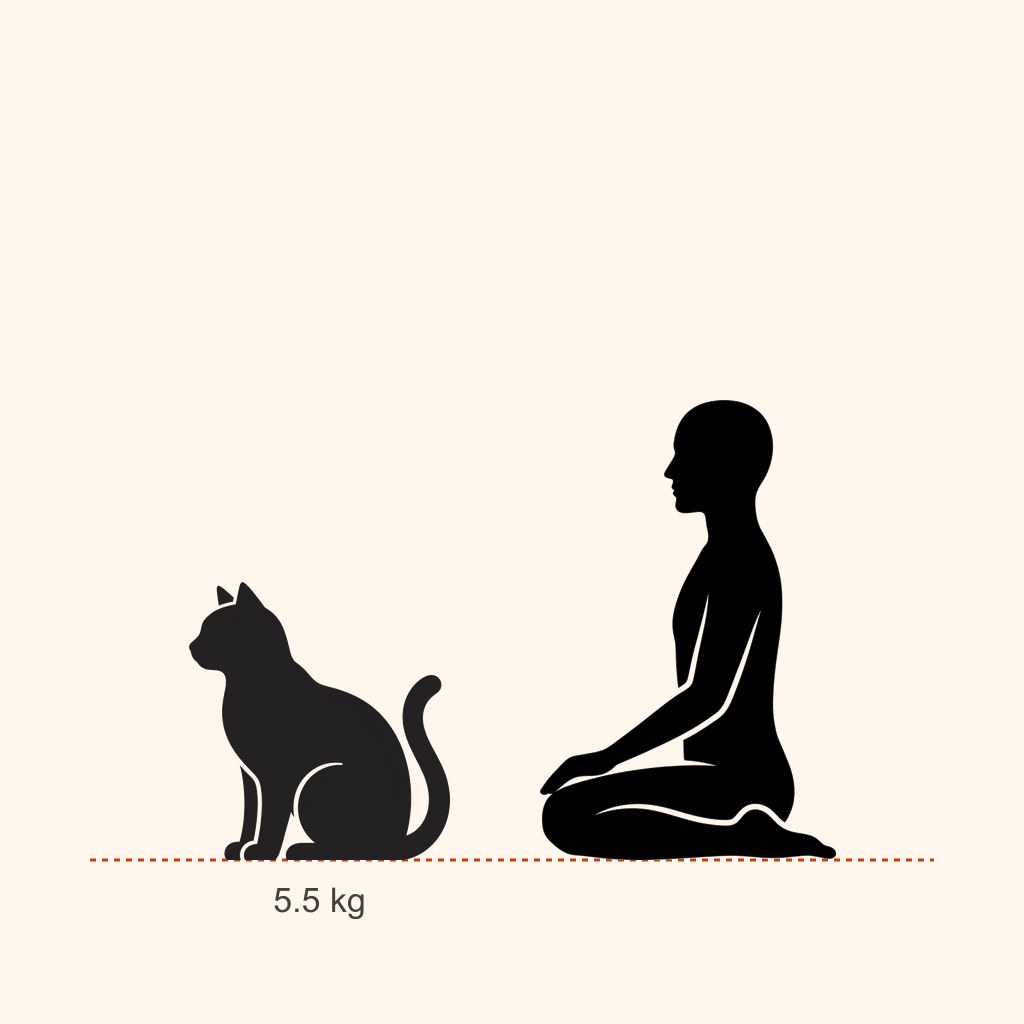
According to breed sources, males weigh about 5-7 kg and females 2.5-5.5 kg; males are noticeably larger.
- Kitten (2-12 months): Kitten food, 3-4 meals a day. Don't overfeed to make the kitten "big"; rapid weight gain sets up later obesity.
- Adult: Meat-based, high-protein complete food. Start with the chart on the pack and aim for a condition where you can feel the ribs with light pressure.
- Neutered adult: Lower energy needs; weigh the food.
- Senior (8+ years): Yearly blood and urine tests; monitor kidney values and weight.
Serve meals rather than free-feeding; a "bowl always full" approach quickly adds weight in this breed. Wet food and a drinking fountain increase water intake.
Grooming and coat
CFA describes the coat as short, thick, even and hard in texture. Easy to care for, but it sheds.
- Brush a few times a week, daily during shedding, with a slicker brush or grooming mitt.
- The coat thickens in winter and sheds heavily in spring, when hairballs may increase.
- Baths are rarely needed.
- Trim nails every 2-3 weeks and brush teeth several times a week.
- Use grooming time to check body condition: ribs and waistline.
Living space and enrichment
- A sturdy cat tree. Choose wide-based models that won't tip under a heavy cat.
- Hunting play. Two 10-15 minute sessions a day with a wand toy satisfy prey drive and help with weight.
- Food puzzles. Serving part of the dry food from toys slows eating.
- A window seat. Bird-watching is strong stimulation for this breed; make sure windows are netted.
- Litter box. A large box to suit a big body; number of cats + 1.
- Keeping cool in summer. A cool room and several water bowls for a dense-coated cat.
History
Settlers sailing from Europe to North America took cats on board to protect stores from mice. These ship's cats became working cats on farms and in homes in the new continent, and over time a strong, hardy, dense-coated type emerged.
The breed was shown at the first cat show in the United States in 1895 and in 1906 became one of the first five breeds recognised by CFA. It was originally called the "Domestic Shorthair"; in 1966 it was renamed American Shorthair to stress that it is a pedigreed breed distinct from random-bred cats.
Today it is recognised by CFA and TICA in more than 80 colours and patterns, the best known being the silver classic tabby.
This guide is for information only and is not a substitute for veterinary advice. Prices are approximate and vary by region and time.
Sources
- cfa.org/breed/american-shorthair/
- en.wikipedia.org/wiki/American_Shorthair
- www.vet.cornell.edu/departments-centers-and-institutes/cornell-feline-health-center/health-information/feline-health-topics/hypertrophic-cardiomyopathy
- www.vet.cornell.edu/departments-centers-and-institutes/cornell-feline-health-center/health-information/feline-health-topics/polycystic-kidney-disease
Adoption Prep Checklist
Housing
-
Cat bed
Cats want a safe space of their own to rest.
-
Cat scratching post
Satisfies the natural scratching instinct and protects furniture.
Feeding
-
Dry/wet cat food
Quality cat food is needed for balanced nutrition.
-
Food and water bowl set
Needed for daily feeding and water access.
Grooming
-
Cat litter and litter box
Essential for the cat's toilet needs.
-
Short-hair cat brush
Regular brushing reduces hairball formation.
Activity
-
Cat toy
Cats release energy through play.
-
Cat carrier
Needed for safe transport to vet visits.
Frequently Asked Questions
Does the American Shorthair shed?
Shedding is low. Brushing once a week is usually enough, with a mild increase during seasonal changes.
Can the American Shorthair live in an apartment?
Yes. It lives comfortably in an apartment as long as its daily needs are met. What matters is not floor area but consistent exercise and mental stimulation.
Is the American Shorthair good with children?
Generally yes. It adapts well to families with children. Even so, interactions should be supervised and children taught to respect the animal’s boundaries.
Is the American Shorthair suitable for first-time cat owners?
Yes. Its care and training are relatively forgiving, which makes it a sound choice for first-time owners.
How much exercise does the American Shorthair need?
It needs a moderate amount of exercise. Daily activity plus some play time makes for a balanced routine.
Can the American Shorthair be left alone during the day?
It tolerates being alone well. That makes it workable for someone employed full time, though it will still expect attention and activity on your return.
How long does the American Shorthair live?
The American Shorthair lives 15 - 17 years on average. Diet, regular veterinary check-ups and early screening for hereditary conditions all affect this directly.
Where does the American Shorthair come from?
The American Shorthair originates from United States. The geography a breed was developed in, and the job it was bred for, explain much of its temperament and care needs today.