

British Longhair
The image on this page is AI-generated and does not depict a real animal.
- Species
- Cat
- Origin
- United Kingdom
- Size
- Large
- Lifespan
- 12 - 14 years
- Temperament
- Affectionate Adaptable easygoing Independent Intelligent Loyal Social
- Description
Easygoing, independent-looking but affectionate on its own terms, a calm cat.
- Physical Traits
Dense, lush medium-long coat, round face, a stocky body; the best-known shade is blue-grey but it's found in many colors.
- Care / Environment Info
Lives indoors. Sheds very little. Requires intensive grooming, daily brushing/grooming needed. Quite energetic and playful. Very quiet. Generally a very healthy breed.
British Longhair Owner's Guide
Last updated:
Is a British Longhair right for you?
The British Longhair combines the round face, cobby body and calm temperament of the British Shorthair with a long, dense coat. It is a quiet, self-sufficient cat that likes to be near its people but doesn't enjoy being carried around. In return it asks for regular brushing and careful weight control.
| Situation | Suitability | Note |
|---|---|---|
| Apartment | Perfect | Calm, low-energy indoor cat |
| Family with young children | Good | Tolerant, but dislikes being picked up |
| First-time cat owner | Good | Easy temperament; coat care needs discipline |
| Alone 8+ hours a day | Good | Independent and copes well alone |
| Home with cat allergies | Very poor | Long, dense coat with seasonal shedding |
| Can't brush several times a week | Not suitable | The coat mats, especially in autumn and winter |
| Hot climate | Medium | Dense coat struggles in summer; needs a cool space |
Before you adopt
The breed arose from crosses between British Shorthairs and Persians, and longhaired kittens are also born from British Shorthairs carrying the longhair gene. Some kittens sold as "British Longhair" are British Shorthair mixes, so registration papers matter.
The breed is recognised by TICA, where it gained championship status in 2009, and by European bodies such as GCCF and LOOF. It is not a separate breed in CFA.
Ask the breeder for:
- A PKD genetic test: Essential in a breed with Persian ancestry.
- Heart ultrasound of the parents: Its relative the British Shorthair is among breeds predisposed to HCM.
- Blood type information: Type B blood is relatively common in British cats; a breeder should know this.
- A socialised kitten at least 12 weeks old with vaccinations started.
Check local microchipping rules (in Turkey, for example, owned cats must be registered in the PETVET system).
Temperament
Its temperament closely mirrors the British Shorthair: calm, affectionate, tolerant and independent.
- Nearby, not on your lap: Likes being in the same room and will sit beside you, but most individuals don't enjoy being carried. Explain this to children from the start.
- Calm and quiet: Rarely vocal and low-energy. Playful as a kitten, more dignified as an adult.
- Copes with time alone: Doesn't mind spending part of the day by itself.
- Easygoing: Usually gets along with other cats and calm dogs.
That calm has a downside: a cat that moves little gains weight easily and may hide signs of illness. Regular observation is needed.
Health issues and lifespan
Large breed-specific health studies are limited; the risks largely come from its ancestors, the British Shorthair and the Persian.
- Polycystic kidney disease (PKD): Kidney cysts that grow over time. According to Cornell, signs usually appear around seven years of age: increased thirst and urination, loss of appetite and weight, vomiting, lethargy. Diagnosis is confirmed by ultrasound. See a vet if you notice any of these.
- Hypertrophic cardiomyopathy (HCM): Can be silent for a long time. Rapid or laboured breathing, open-mouth breathing, lethargy and especially sudden hind-limb paralysis are emergencies.
- Obesity: Very common in neutered indoor cats, paving the way for diabetes and joint problems. The long coat hides weight gain, so check by hand.
- Neonatal isoerythrolysis: Antibodies passed in the first milk from a type B mother to type A kittens can kill the kittens. This matters for breeders rather than adopters; blood typing prevents it.
- Matting and skin problems: An unbrushed coat mats, especially in the armpits and belly, with skin irritation underneath.
- Hairballs: Vomiting, retching or constipation. Repeated vomiting is not normal; talk to your vet.
Popular sources usually quote a lifespan of 12-15 years; we found no breed-specific study supporting this range.
Feeding
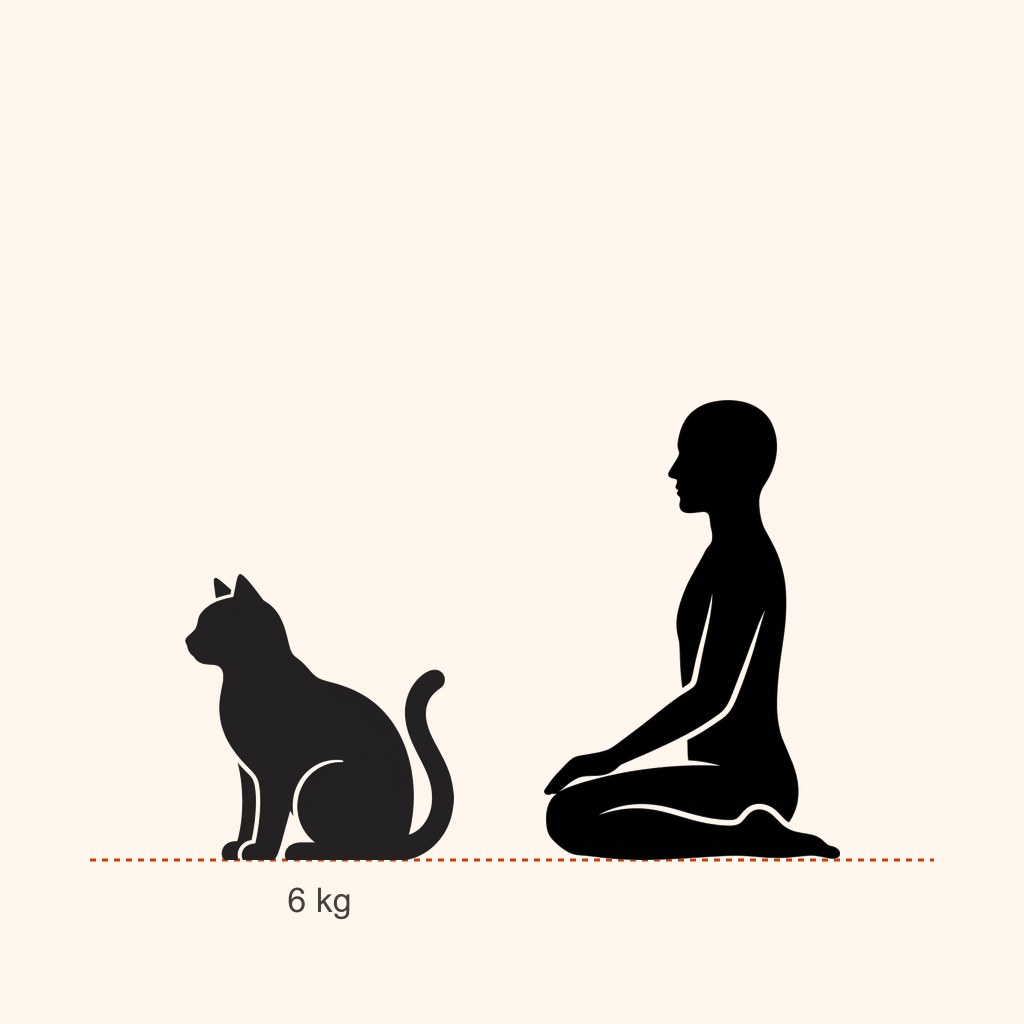
Adult British Longhairs usually weigh 4-8 kg; males are noticeably larger.
- Kitten (2-12 months): Kitten food, 3-4 meals a day.
- Adult: Meat-based, high-protein complete food. Start with the chart on the pack, adjust to body condition and weigh the food.
- Neutered adult: Energy needs drop markedly. Free-feeding quickly leads to obesity in this breed.
- Senior (7+ years): Yearly blood and urine tests because of PKD risk.
Water intake matters for kidney health: wet food, a drinking fountain and several water points. If hairballs are a problem, ask your vet about higher-fibre diets.
Grooming and coat
This is the most demanding part of owning the breed.
- Brush at least several times a week, daily during shedding. First a wide-toothed metal comb, then a soft brush.
- The coat thickens and tangles easily in autumn and winter; brush more often then.
- Most mat-prone areas: armpits, behind the ears, belly, inner hind legs.
- Keeping the fur around the rear short is a practical hygiene solution.
- Baths are rarely needed; if you bathe, dry the undercoat completely.
- Nails every 2-3 weeks, teeth several times a week.
Don't try to cut out mats with scissors; cat skin is easily cut. Take the cat to a vet or professional cat groomer.
Living space and enrichment
- Low, wide set-up. Sturdy, low platforms and roomy beds rather than tall cat trees.
- Daily play. Two 10-minute play sessions a day are essential for weight control in a low-activity breed.
- Food puzzles. Mental work and slower eating.
- A cool spot. In hot summers, tiled floors, shade and a cool room; air conditioning helps.
- No forced cuddles. Offer a bed near you that the cat chooses; teach children to pet the cat on the floor.
It should live indoors; the long coat quickly gets dirty and matted outside.
History
The British Shorthair descends from domestic cats that reached the British Isles in or before Roman times, and it appeared at the first cat show in London in 1871. In the 20th century British Shorthairs were crossed with Persians (and, according to some sources, Turkish Angoras). These crosses added colour variety and coat density to the British cat, and also introduced the longhair gene into the population.
Because the longhair gene is recessive, two carrier British Shorthairs can produce longhaired kittens. Over time some breeders developed them as a separate breed, and TICA granted championship status in 2009.
It is also called the "British Semi-longhair". Some sources call it "Highlander", but TICA's curl-eared Highlander is an entirely different breed. It is not accepted by every registry, but its temperament and looks are attracting growing interest.
This guide is for information only and is not a substitute for veterinary advice. Prices are approximate and vary by region and time.
Sources
- simple.wikipedia.org/wiki/British_Longhair
- en.wikipedia.org/wiki/British_Shorthair
- www.catster.com/cat-breeds/british-longhair-cat/
- www.vet.cornell.edu/departments-centers-and-institutes/cornell-feline-health-center/health-information/feline-health-topics/polycystic-kidney-disease
- www.vet.cornell.edu/departments-centers-and-institutes/cornell-feline-health-center/health-information/feline-health-topics/hypertrophic-cardiomyopathy
Adoption Prep Checklist
Housing
-
Cat bed
Cats want a safe space of their own to rest.
-
Cat climbing tree
Satisfies the natural scratching instinct and protects furniture.
Feeding
-
Dry/wet cat food
Quality cat food is needed for balanced nutrition.
-
Food and water bowl set
Needed for daily feeding and water access.
Grooming
-
Cat litter and litter box
Essential for the cat's toilet needs.
-
Short-hair cat brush
Regular brushing reduces hairball formation.
Activity
-
Interactive cat toy
Cats release energy through play.
-
Cat carrier
Needed for safe transport to vet visits.
Frequently Asked Questions
Does the British Longhair shed?
Shedding is low. Brushing once a week is usually enough, with a mild increase during seasonal changes.
Can the British Longhair live in an apartment?
Yes. It lives comfortably in an apartment as long as its daily needs are met. What matters is not floor area but consistent exercise and mental stimulation.
Is the British Longhair good with children?
Generally yes. It adapts well to families with children. Even so, interactions should be supervised and children taught to respect the animal’s boundaries.
Is the British Longhair suitable for first-time cat owners?
No — it suits experienced owners. Its character, energy or care requirements would be demanding for a first-time owner.
How much exercise does the British Longhair need?
It is high-energy and needs vigorous daily activity. Mental stimulation matters as much as physical exercise; without enough to do, destructive behaviour follows.
Can the British Longhair be left alone during the day?
It tolerates being alone well. That makes it workable for someone employed full time, though it will still expect attention and activity on your return.
How long does the British Longhair live?
The British Longhair lives 12 - 14 years on average. Diet, regular veterinary check-ups and early screening for hereditary conditions all affect this directly.
Where does the British Longhair come from?
The British Longhair originates from United Kingdom. The geography a breed was developed in, and the job it was bred for, explain much of its temperament and care needs today.