

Tonkinese
The image on this page is AI-generated and does not depict a real animal.
- Species
- Cat
- Origin
- Canada
- Size
- Medium
- Lifespan
- 15-20 years
- Temperament
- Curious Intelligent Social Lively active Outgoing Playful Affectionate
- Description
Intelligent and affectionate; observes everything with curiosity but is also happy to be a lap cat.
- Physical Traits
Short coat, a 'mink' color-point pattern between Siamese and Burmese, often turquoise/aqua eyes.
- Care / Environment Info
Lives indoors. Sheds moderately. Very easy to care for, infrequent brushing needed. Very high energy, needs plenty of play and stimulation. Very talkative and can meow loudly. Generally a very healthy breed.
Tonkinese Owner's Guide
Last updated:
Is a Tonkinese right for you?
The Tonkinese is a medium-sized breed created by deliberately crossing the Siamese and the Burmese, aiming for a type midway between the two. It combines the Siamese's chattiness and intelligence with the Burmese's devotion to people and muscular body. The result is a cat that follows you around the house, talks to you, asks to play and hates being alone. Its short coat is easy; the challenge is not the fur but its need for company.
| Situation | Suitability | Note |
|---|---|---|
| Apartment | Good | Works with climbing space and daily play |
| Family with young children | Perfect | Social, playful and usually tolerant |
| First-time cat owner | Good | Easy coat; high need for attention |
| Alone 8+ hours a day | Poor | Gets bored alone; a second cat is almost essential |
| Household with fur allergies | Moderate to poor | Short, low-shedding coat, but no guarantee against allergies |
| Home that values quiet | Moderate | Less loud than a Siamese, but uses its voice |
| Home with other cats and dogs | Perfect | Usually adapts easily |
The most realistic question: can you give this cat real time every day, or are you considering a second cat to keep it company? A Tonkinese is unhappy in a home that stays empty for long hours.
Before you adopt
The Tonkinese is uncommon in many countries, and pointed mixed cats are sometimes sold under the name; do not decide without papers and information on the parents.
- Hypokalaemia (BHK) genetic test: Research shows the inherited hypokalaemia mutation described in the Burmese occurs in breeds with Burmese ancestry, including the Tonkinese. Ask for the parents' results.
- Pattern and eye colour: Know the kitten's pattern. The Tonkinese has three patterns, each with its own eye colour, and kitten coat colour can darken with age.
- If you are taking a single kitten and nobody is home for long periods, seriously consider adopting two kittens together.
Temperament
CFA describes the Tonkinese as alert, active, people-oriented and vocal, with a strong memory and sensitivity to its owner's moods. It greets you at the door and comes to see what you are doing.
A breed expert quoted by PetMD says its activity level is medium; what a Tonkinese really wants is to be with you. Even so, at playtime it may gallop noisily through the house.
Its voice is softer than a Siamese's, but it is not a quiet cat and it "answers back". It enjoys laps and usually approaches visitors with curiosity.
It is social with children and other animals. According to PetMD, a single kitten left alone can get bored and into trouble; adult Tonkinese adapt somewhat better to busy households.
Its intelligence means it can learn to open doors and raid cupboards. Some individuals learn simple tricks and walking on a harness.
Health issues and lifespan
The Tonkinese is known as a long-lived breed; sources generally give 15 years or more, and PetMD cites 15 to 20. Things to watch:
- Gingivitis: CFA names gum inflammation in older cats as the main breed-specific concern. Bad breath, red gum margins and hesitation while eating are signs. Prevention means a tooth-brushing habit started in kittenhood and annual oral exams.
- Hypokalaemia: Recurrent muscle weakness caused by low blood potassium. Typical signs are the head and neck bending downward, a stiff gait, muscle tremors and reluctance to walk. The study reports onset usually in kittens of 2 to 6 months. See a vet the same day if you notice these signs; potassium supplementation can control it.
- Chronic kidney disease and polycystic kidney disease (PKD): PetMD lists both among issues to monitor in this breed. Increased drinking and urination, weight loss, vomiting or poor appetite call for blood and urine tests.
- Obesity: A muscular breed with a good appetite that gains weight easily after neutering. Excess weight speeds up diabetes and joint problems.
- Tooth resorption: Listed by PetMD under dental disease. Chewing on one side, dropping food or jaw chattering are signs; dental X-rays are needed for diagnosis.
A urinary stone study cited on Wikipedia found the Tonkinese markedly under-represented among stone cases; supporting water intake still benefits every cat. Annual checks are recommended, with blood and urine tests after age 8.
Feeding
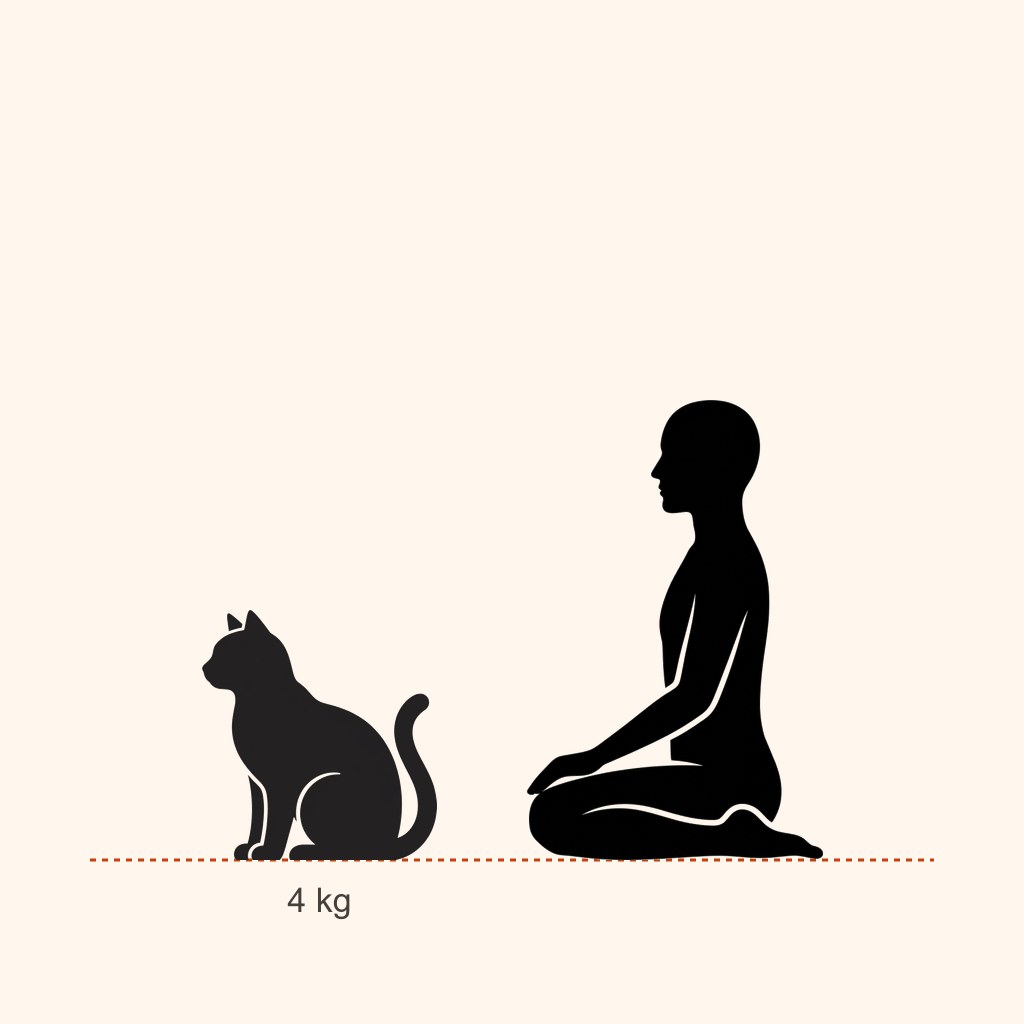
According to PetMD, adult females weigh roughly 3 to 4 kg and males 3.5 to 5.5 kg. A Tonkinese is heavier than it looks, so trust the scales over your eyes.
- Kitten (2-12 months): Kitten food, 3 to 4 meals a day.
- Adult: High-protein food from animal sources; 2 to 3 measured meals a day. Do not leave the bowl constantly full.
- After neutering: Review portions and weigh monthly.
- Senior (10+ years): A diet set with your vet according to kidney values.
Wet food and a water fountain increase water intake, which is valuable for kidney health. Serving part of the ration in puzzle feeders keeps its mind busy and slows fast eaters.
Grooming and coat
The Tonkinese's short, silky, close-lying coat is easy to care for.
- Brush once a week: A rubber or soft-bristle brush removes dead hair and adds shine.
- Bathing: Usually unnecessary.
- Tooth brushing: The most important part of care in this breed. Start in kittenhood; several times a week, ideally daily.
- Nails: Trim every 2 to 3 weeks; provide enough scratching posts.
- Ears and eyes: Check weekly; redness or dark discharge warrants a vet visit.
Living space and enrichment
- Climbing and lookout points. A sturdy cat tree and a window shelf.
- Daily interactive play. At least two 10 to 15 minute sessions; wand toys and fetch games. Some individuals learn to retrieve.
- A companion. In households away for long hours, a second cat with similar energy is the most effective enrichment.
- Brain games. Puzzle feeders, clicker training, harness training.
- Safe windows and balconies. This curious, trusting breed is vulnerable outdoors; fit nets and keep it indoors.
Despite its short coat, offer a cool room and plenty of water in hot summers.
History
The Tonkinese has roots in the shared past of the Siamese and Burmese. According to Wikipedia, cats of this type were known in the West in the 19th century as "chocolate Siamese". Wong Mau, a female brought from Burma to the United States in 1930 and bred with Siamese males, is named by CFA as a foundation cat of both the Burmese and the Tonkinese.
The modern breed took shape through the independent Siamese x Burmese breeding programmes of Margaret Conroy in Canada and Jane Barletta in the United States. The goal was a cat between the two parent breeds, neither very slender nor very cobby.
According to CFA the breed first achieved recognition in Canada in the 1960s; CFA registration and championship followed in the 1980s, and GCCF recognition in the UK came in 1991. Three patterns are accepted today: mink (aqua eyes, the original pattern), pointed (blue eyes) and solid (green eyes), each in natural, champagne, blue and platinum.
This guide is for information only and is not a substitute for veterinary advice. Prices are approximate and vary by region and time.
Adoption Prep Checklist
Housing
-
Cat bed
Cats want a safe space of their own to rest.
-
Cat climbing tree
Satisfies the natural scratching instinct and protects furniture.
Feeding
-
Dry/wet cat food
Quality cat food is needed for balanced nutrition.
-
Food and water bowl set
Needed for daily feeding and water access.
Grooming
-
Cat litter and litter box
Essential for the cat's toilet needs.
-
Cat de-shedding brush
Regular brushing reduces hairball formation.
Activity
-
Interactive cat toy
Cats release energy through play.
-
Cat carrier
Needed for safe transport to vet visits.
Frequently Asked Questions
Does the Tonkinese shed?
It sheds a moderate amount. Brushing two or three times a week noticeably reduces both loose hair and matting.
Can the Tonkinese live in an apartment?
Yes. It lives comfortably in an apartment as long as its daily needs are met. What matters is not floor area but consistent exercise and mental stimulation.
Is the Tonkinese good with children?
Generally yes. It adapts well to families with children. Even so, interactions should be supervised and children taught to respect the animal’s boundaries.
Is the Tonkinese suitable for first-time cat owners?
Yes. Its care and training are relatively forgiving, which makes it a sound choice for first-time owners.
How much exercise does the Tonkinese need?
It is high-energy and needs vigorous daily activity. Mental stimulation matters as much as physical exercise; without enough to do, destructive behaviour follows.
Can the Tonkinese be left alone during the day?
It can be left alone for a few hours. Long, routine absences can bring on boredom-driven behaviour problems; enrichment and a predictable routine reduce that risk.
How long does the Tonkinese live?
The Tonkinese lives 15-20 years on average. Diet, regular veterinary check-ups and early screening for hereditary conditions all affect this directly.
Where does the Tonkinese come from?
The Tonkinese originates from Canada. The geography a breed was developed in, and the job it was bred for, explain much of its temperament and care needs today.