

Ocicat
The image on this page is AI-generated and does not depict a real animal.
- Species
- Cat
- Origin
- United States
- Size
- Medium
- Lifespan
- 12 - 14 years
- Temperament
- Active Agile Curious Demanding Friendly Gentle Lively active Playful Social
- Description
Loyal, intelligent, confident and outgoing; has dog-like manners.
- Physical Traits
Distinctly spotted coat resembling a wild ocelot, a muscular athletic body.
- Care / Environment Info
Lives indoors. Sheds moderately. Very easy to care for, infrequent brushing needed. Very high energy, needs plenty of play and stimulation. Moderately vocal/talkative. Its allergy-triggering potential is considered somewhat lower than other breeds (not fully hypoallergenic). Some breed-specific health monitoring is recommended.
Ocicat Owner's Guide
Last updated:
Is an Ocicat right for you?
The Ocicat, with its spotted coat resembling a wild ocelot, carries no wild blood at all in its genetics. That makes it fundamentally different from breeds created by crossing with actual wild species, such as the Bengal or Savannah: the Ocicat was developed purely by crossing Siamese, Abyssinian, and American Shorthair cats — a 100% domestic breed. Its looks are exotic; its temperament is social and people-attached enough to be compared to a dog.
| Situation | Suitability | Note |
|---|---|---|
| Apartment | Good | Needs enrichment to burn off its energy |
| Family with young children | Very good | Playful, resilient, and social |
| First-time cat owner | Good | Easy care, but demands a lot of time and attention |
| Alone 8+ hours a day | Not suitable | Doesn't tolerate solitude well; prone to separation anxiety |
| Household with fur allergies | Moderate-poor | Short, close coat; no guarantee against allergies |
| Home with dogs or other cats | Excellent | Prefers company over living as a solo pet |
| Owner wanting a trainable cat | Excellent | Can learn leash walking and fetch |
The most realistic question: is someone usually home for much of the day, or are you considering a second pet? If not, the Ocicat will be unhappy; this breed lives for companionship.
Before you adopt
No wild blood. The Ocicat's spotted, "wild" look is entirely the result of selective breeding; there is no wildcat, including the ocelot, anywhere in its pedigree. This is the key difference between it and breeds like the Bengal (Asian leopard cat hybrid) or Savannah (serval hybrid): adopting or importing an Ocicat requires no CITES permit or filial-generation paperwork, since no wild species sits in its ancestry.
The breed emerged in 1964 in Michigan when breeder Virginia Daly, trying to combine Siamese and Abyssinian traits, accidentally produced a spotted kitten; her daughter's remark that it "looked just like an ocelot" gave the breed its name. It is rare in most countries outside North America; be cautious of listings that offer no documentation or health screening.
Temperament
The Ocicat is described by the Ocicat and Classic Society as a "dog in a cat's fur." It is highly social, curious, and dependent on people; it follows you from room to room and inserts itself into whatever you're doing.
It's intelligent and can learn leash walking, fetch, and simple commands. It's talkative but less insistent than its Siamese ancestors.
It dislikes being alone and is prone to separation anxiety; it prefers living with a companion — feline or canine — over being a solo pet. Its love of water traces back to its Abyssinian ancestry; some individuals show interest in running taps or bath time.
It's energetic and can get bored without mental stimulation, channeling that boredom into mischief.
Health issues and lifespan
Sources generally report a lifespan of 12 to 18 years. It's considered a generally healthy breed but carries some risks from its Abyssinian ancestry.
- Progressive retinal atrophy (PRA): An inherited eye disease from the Abyssinian line. It starts with worsening night vision and can progress to complete blindness. If you notice bumping into things or hesitancy in dim light, see a vet; a genetic test is available.
- Renal amyloidosis: A rare condition involving abnormal protein deposits in the kidneys that can progress to kidney failure over time; also linked to Abyssinian ancestry.
- Urate urolithiasis (urinary stones): Sources report a notably higher incidence in this breed than in cats generally. Frequent trips to the litter box with little urine, blood in the urine, or persistent licking warrant same-day veterinary attention; blockage in males is an emergency.
- Pyometra (uterine infection): Reported at above-average rates in unspayed females of this breed; loss of appetite, lethargy, abdominal swelling, or discharge require urgent veterinary care. Spaying eliminates this risk.
- Dental disease: A general risk across cats; regular brushing is recommended.
Feeding
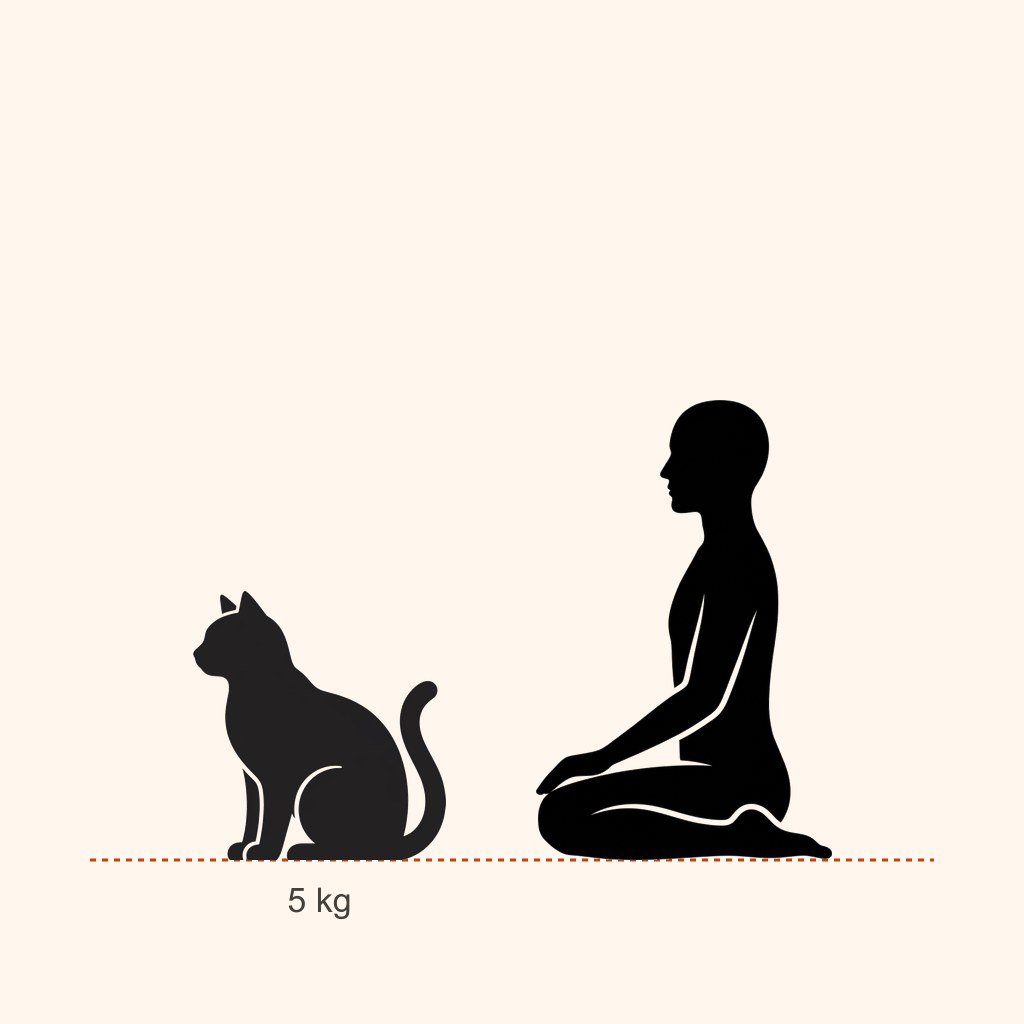
An adult Ocicat ranges roughly 2.7–6.5 kg; it has a muscular, athletic build, and some males exceed this range.
- Kitten (2–12 months): Kitten food, three to four meals a day; energy needs are high during growth.
- Adult: High-protein, balanced food. High activity levels mean many individuals don't gain weight with free-feeding, but measured portions are safer.
- For urinary health: Wet food and plenty of water help reduce the risk of stone formation; a fountain-type bowl helps.
- Senior (8+ years): Age-appropriate food alongside annual kidney and eye checks.
Grooming and coat
The short, satin coat needs very little upkeep.
- Weekly brushing or a wipe with a chamois cloth is enough.
- Sheds lightly; bathing is usually unnecessary.
- Brush teeth several times a week.
- Nails every two to three weeks; check ears monthly.
- If you notice cloudiness in the eyes or hesitation moving at night, see a vet about PRA.
Living space and enrichment
- Companionship. If no one is home during the day, a second cat or cat-friendly dog is nearly essential for this breed.
- Vigorous daily play. At least two 15–20 minute sessions a day; this is a high-energy breed.
- Training and enrichment. Leash training, clicker training, puzzle feeders.
- Climbing and lookout spots. A sturdy cat tree and window perch.
- Water access. A fountain-type bowl or supervised bath-time access for cats that enjoy water.
In hot summer climates, keeping such an active cat in a cool, enriched indoor space benefits both health and behavior.
History
The Ocicat's story begins in 1964 in Michigan, when breeder Virginia Daly was trying to develop a line combining Siamese and Abyssinian traits. When an Abyssinian-colored Siamese female was bred to a chocolate-point Siamese male, the litter unexpectedly produced a spotted male kitten on a gold-ivory background. Daly's daughter, seeing the kitten, said it looked "just like an ocelot," giving the breed its name; this first kitten was named Tonga. American Shorthair was later added to the program to strengthen body structure and introduce silver coloring.
TICA recognized the breed in 1986; CFA had accepted it for registration in 1966 and granted full championship status in 1987. FIFe recognized it in 1992, and the GCCF in 2006. Today the Ocicat is recognized by both TICA and CFA in twelve colors, all preserving the spotted pattern, as a breed of entirely domestic origin.
This guide is for information only and is not a substitute for veterinary advice. Prices are approximate and vary by region and time.
Adoption Prep Checklist
Housing
-
Cat bed
Cats want a safe space of their own to rest.
-
Cat climbing tree
Satisfies the natural scratching instinct and protects furniture.
Feeding
-
Dry/wet cat food
Quality cat food is needed for balanced nutrition.
-
Food and water bowl set
Needed for daily feeding and water access.
Grooming
-
Cat litter and litter box
Essential for the cat's toilet needs.
-
Cat de-shedding brush
Regular brushing reduces hairball formation.
Activity
-
Interactive cat toy
Cats release energy through play.
-
Cat carrier
Needed for safe transport to vet visits.
Frequently Asked Questions
Does the Ocicat shed?
It sheds a moderate amount. Brushing two or three times a week noticeably reduces both loose hair and matting.
Can the Ocicat live in an apartment?
Yes. It lives comfortably in an apartment as long as its daily needs are met. What matters is not floor area but consistent exercise and mental stimulation.
Is the Ocicat good with children?
Generally yes. It adapts well to families with children. Even so, interactions should be supervised and children taught to respect the animal’s boundaries.
Is the Ocicat suitable for first-time cat owners?
Yes. Its care and training are relatively forgiving, which makes it a sound choice for first-time owners.
How much exercise does the Ocicat need?
It is high-energy and needs vigorous daily activity. Mental stimulation matters as much as physical exercise; without enough to do, destructive behaviour follows.
Can the Ocicat be left alone during the day?
It can be left alone for a few hours. Long, routine absences can bring on boredom-driven behaviour problems; enrichment and a predictable routine reduce that risk.
How long does the Ocicat live?
The Ocicat lives 12 - 14 years on average. Diet, regular veterinary check-ups and early screening for hereditary conditions all affect this directly.
Where does the Ocicat come from?
The Ocicat originates from United States. The geography a breed was developed in, and the job it was bred for, explain much of its temperament and care needs today.