

Birman
The image on this page is AI-generated and does not depict a real animal.
- Species
- Cat
- Origin
- France
- Size
- Medium
- Lifespan
- 14 - 15 years
- Temperament
- Affectionate Active Gentle Social
- Description
Calm, docile and fond of human affection; follows you from room to room around the house.
- Physical Traits
Long silky coat, Siamese-type color-point pattern, but with characteristic white 'gloves' on the paws, blue eyes.
- Care / Environment Info
Lives indoors. Sheds moderately. Easy to care for, brushing once a week is enough. Moderate energy. Very quiet. Generally a very healthy breed.
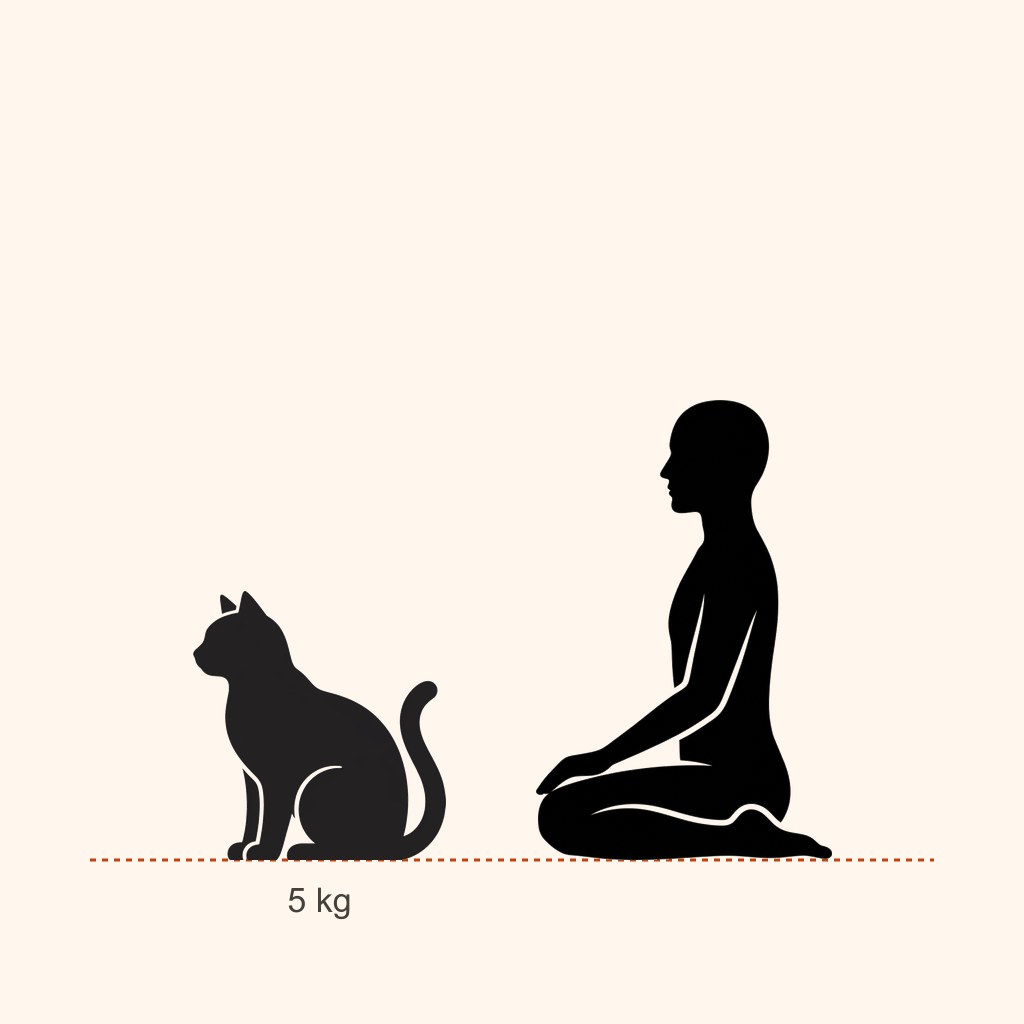
Birman Owner's Guide
Last updated:
Is a Birman right for you?
Often called the "Sacred Cat of Burma", the Birman is known for its colourpoint pattern, deep blue eyes and the bright white "gloves" on all four paws. It is a semi-longhaired, silky, sturdy-boned cat with an affectionate nature and a soft voice. It needs far less grooming than a Persian and is much quieter than a Siamese. What it really needs is not grooming but human company.
| Situation | Suitability | Note |
|---|---|---|
| Apartment | Perfect | Adapts very well to indoor life |
| Family with young children | Good | Gentle and patient; children must learn to respect the cat |
| First-time cat owner | Very good | Easy temperament, moderate grooming |
| Alone 8+ hours a day | Poor | Dislikes long periods alone; consider a second cat |
| Home with other cats or dogs | Very good | Usually peaceful with other animals |
| Household with fur allergies | Poor | Little undercoat, but it still sheds |
| Hot climate | Moderate | The semi-long coat needs a cool room in summer |
The realistic question before choosing a Birman: is there enough human presence at home during the day? This breed thrives on laps, on following you from room to room and on quiet, conversational chirps. In a home that is empty from morning to evening it can be unhappy.
Before you adopt
If you buy from a breeder, ask whether the parents have had heart screening for HCM, ideally by echocardiography. There is no widely used HCM genetic test for Birmans yet, so regular screening results matter. A DNA test exists for the hairlessness syndrome (hypotrichosis); asking for the parents' results is a reasonable request.
Kittens are born completely white; the points begin to appear in the first weeks and keep darkening until around two years of age. Pale colour in a kitten is not a fault.
Cats are rarely subject to breed-specific restrictions, but check local rules. Birmans and Birman mixes do turn up in shelters and rehoming groups; adopting an adult lets you see the temperament from day one.
Temperament
The Birman is affectionate, adaptable and people-oriented. It is not hyperactive, but not lazy either; it enjoys play, is curious and can learn simple commands and even fetch.
Its voice is soft and it communicates in short chirps. It tends to ask for things by staying close rather than by insisting.
It follows its owner around the house and dislikes being shut behind closed doors. With visitors it is usually interested rather than hiding.
It gets on well with other cats and cat-friendly dogs. A busy but calm family home is ideal; a Birman left alone for long periods may show stress behaviours such as over-grooming.
Health issues and lifespan
Sources give an average lifespan of 12 to 16 years; many well-cared-for Birmans live longer.
- Hypertrophic cardiomyopathy (HCM): The inherited disease most discussed in the breed. The heart wall thickens; it may cause no signs for a long time, although some cats have a murmur on examination. Rapid or open-mouth breathing, lethargy or sudden weakness in the hind legs is an emergency.
- Interpreting kidney values: Healthy Birmans have been found to have naturally higher blood creatinine than other breeds. This can lead to unnecessary "kidney failure" diagnoses. Always tell your vet the breed; additional tests such as SDMA give a more accurate picture. Real kidney disease can still occur, so watch for increased drinking and urination and weight loss.
- Blood type B and neonatal isoerythrolysis: Type B blood is more common in Birmans than in random-bred cats. Transfusing type A blood into a type B cat causes a severe reaction, so blood typing before any transfusion is essential. In breeding, type A kittens from a type B mother can suffer severe haemolysis after their first feed.
- Congenital hypotrichosis: A rare recessive disease. Kittens are born hairless or very sparsely coated; because the immune system is also affected, they usually die within the first months. A DNA test is available.
- Corneal sequestrum: A hard brown-black patch forms on the cornea. Watering, squinting and avoiding touch around the eye are signs; see a vet promptly if you notice a coloured spot on the eye.
- Obesity: The sturdy frame hides excess weight. If you cannot feel the ribs with light pressure, the cat is overweight.
Feeding
An adult Birman (females roughly 3-4.5 kg, males 4.5-7 kg) needs the energy equivalent of about 45-75 g of dry food a day. Use the pack guide as a starting point and adjust to body condition.
- Kitten (2-12 months): Kitten food, three to four meals a day.
- Adult: High protein, measured portions. Two or three small meals a day are better than a bowl left full all day.
- After neutering: Energy needs drop; reduce portions and weigh the cat monthly.
- Senior (8+ years): Annual blood and urine checks, with creatinine interpreted in light of the breed.
Encourage drinking with wet food, a water fountain and several water points.
Grooming and coat
The Birman's coat is semi-long and silky but has little undercoat, so it does not mat as easily as a Persian's.
- Comb once or twice a week; this is usually enough. A metal comb does the job.
- During seasonal shedding, especially in spring, comb several times a week.
- The armpits and behind the ears are where mats start first; check them.
- If the white gloves get dirty, a damp cloth is enough; frequent bathing is unnecessary.
- Nails every two to three weeks, teeth brushed several times a week.
- Check the ears monthly.
Living space and enrichment
- Closeness to people. Put the bed and resting spots in the lived-in part of the home; being banished to a closed room upsets this breed.
- A medium cat tree. It likes to climb but is no acrobat; a stable, medium-height tree is enough.
- Daily play. Ten to fifteen minutes twice a day with wand toys and balls, for weight control and bonding.
- Company. If nobody is home for long stretches, a compatible second cat makes a real difference.
- Coolness in summer. A cool room, shade and plenty of water.
- Safe windows. Cat netting on windows and balconies against escapes and falls.
Indoor life is recommended; the Birman's trusting nature leaves it vulnerable to outdoor dangers.
History
The breed's origin is told through a legend: in a Burmese temple, a white cat devoted to its priest was said to gain golden fur and blue eyes at the moment of the priest's death, while its paws stayed white as a symbol of purity. The story is not a historical record but part of the breed's cultural heritage.
Documented history begins with a pair brought from Burma to France around 1919; the female was pregnant during the journey. The breed was recognised in France in 1925. It almost vanished during the Second World War; by the end of the war only one breeding pair is said to have remained in Europe. Today's Birman population is the result of post-war breeders rebuilding the breed from that narrow base.
The Birman reached the United States in 1959 and was accepted for CFA registration in 1967. In Britain, GCCF recognition came in 1966. Originally only seal, blue, chocolate and lilac points were accepted; today tabby, red, cream and tortie points are also part of the standard.
This guide is for information only and is not a substitute for veterinary advice. Prices are approximate and vary by region and time.
Sources
- cfa.org/breed/birman/
- vcahospitals.com/know-your-pet/cat-breeds/birman
- www.gccfcats.org/getting-a-cat/choosing/cat-breeds/birman/
- pmc.ncbi.nlm.nih.gov/articles/PMC4363148/
- everycat.org/cat-health/investigators-look-to-methods-to-better-evaluate-ckd-in-the-birman-breed/
- pmc.ncbi.nlm.nih.gov/articles/PMC2899707/
Adoption Prep Checklist
Housing
-
Cat bed
Cats want a safe space of their own to rest.
-
Cat scratching post
Satisfies the natural scratching instinct and protects furniture.
Feeding
-
Dry/wet cat food
Quality cat food is needed for balanced nutrition.
-
Food and water bowl set
Needed for daily feeding and water access.
Grooming
-
Cat litter and litter box
Essential for the cat's toilet needs.
-
Short-hair cat brush
Regular brushing reduces hairball formation.
Activity
-
Cat toy
Cats release energy through play.
-
Cat carrier
Needed for safe transport to vet visits.
Frequently Asked Questions
Does the Birman shed?
Shedding is low. Brushing once a week is usually enough, with a mild increase during seasonal changes.
Can the Birman live in an apartment?
Yes. It lives comfortably in an apartment as long as its daily needs are met. What matters is not floor area but consistent exercise and mental stimulation.
Is the Birman good with children?
Generally yes. It adapts well to families with children. Even so, interactions should be supervised and children taught to respect the animal’s boundaries.
Is the Birman suitable for first-time cat owners?
Yes. Its care and training are relatively forgiving, which makes it a sound choice for first-time owners.
How much exercise does the Birman need?
It needs a moderate amount of exercise. Daily activity plus some play time makes for a balanced routine.
Can the Birman be left alone during the day?
It can be left alone for a few hours. Long, routine absences can bring on boredom-driven behaviour problems; enrichment and a predictable routine reduce that risk.
How long does the Birman live?
The Birman lives 14 - 15 years on average. Diet, regular veterinary check-ups and early screening for hereditary conditions all affect this directly.
Where does the Birman come from?
The Birman originates from France. The geography a breed was developed in, and the job it was bred for, explain much of its temperament and care needs today.