

Newfoundland
The image on this page is AI-generated and does not depict a real animal.
- Species
- Dog
- Origin
- Canada
- Size
- Very Large
- Lifespan
- 8-10 years
- Temperament
- Gentle loyal calm protective
- Description
Bred as a water dog, a loyal breed known for its gentle giant character.
- Physical Traits
Thick, water-resistant long coat (usually black), webbed feet, a very large strong body.
- Care / Environment Info
A large house/garden, ideally near a water source, is ideal (loves swimming very much). Its water-resistant coat sheds heavily, requiring regular brushing. Moderate exercise needs. Drooling tendency is noticeable, heat-intolerant.
Newfoundland Owner's Guide
Last updated:
Is a Newfoundland right for you?
The Newfoundland is a giant working dog from the Canadian island of the same name, where it hauled loads for fishermen and pulled people from the water, protected by a water-resistant double coat. Its best-known trait is its extraordinary sweetness; the FCI standard makes gentleness and serenity part of the breed's definition. But this gentle giant was made for the cold North Atlantic: it copes badly with heat, drools a lot, sheds a lot and becomes the biggest thing in your home.
| Situation | Suitability | Note |
|---|---|---|
| Family with children | Excellent | Famous for patience and kindness; size still needs supervision |
| Hot climate, no air conditioning | Unsuitable | The thick double coat is a serious risk in heat |
| Apartment | Poor | Calm but giant; hair, drool and stairs become problems |
| First-time dog owner | Moderate | Easy temperament; do not underestimate the grooming load and size |
| Very tidy household | Unsuitable | Heavy drool and year-round shedding |
| Left alone for long hours | Poor | A family dog strongly attached to its people |
| Cool climate, near water, with a garden | Excellent | Swimming is the breed's favourite exercise |
Before you adopt
The Newfoundland is not generally subject to breed restrictions (it is not on Turkey's dangerous-breeds list, for example).
The Newfoundland Club of America (NCA) considers hip and elbow X-rays, a cardiac exam by a cardiologist and a cystinuria DNA test necessary for all breeding stock, and also recommends thyroid, eye and patella evaluations. Ask the breeder for these results for both parents.
Heart screening has shown measurable results: in a 14-year French programme covering 921 Newfoundlands, systematic echocardiography and breeding decisions based on it brought aortic and pulmonic stenosis down to very low levels, with no cases found in the last three years. A puppy from screened lines genuinely carries lower risk.
If you live somewhere hot and have no place where the dog can stay cool all day, not getting this breed is the kindest choice for both of you.
Temperament
According to the FCI standard, the Newfoundland's expression reflects benevolence and softness; it is dignified, joyful and creative, known for its sterling gentleness and serenity.
Its patience with children is legendary, and it usually gets on well with other dogs and pets. It is not an aggressive guard, but it may place itself between its family and a stranger.
It has a strong attraction to water. Some individuals try to "rescue" swimmers by towing them to shore; this is the breed's working heritage.
It is intelligent and cooperative, and very sensitive to harsh voices and punishment. Training should rely on patience, praise and rewards.
Health issues and lifespan
A study of UK Kennel Club registered dogs found a median age at death of about 9.4 years for Newfoundlands, with bone tumours, other cancers and bloat among the most common causes of death in the breed. Sources usually give a lifespan of 9 to 10 years.
- Gastric dilatation-volvulus (bloat): A swollen belly, unproductive retching, heavy drooling, restlessness and pale gums are a life-threatening emergency; go straight to an emergency vet. Discuss preventive gastropexy at neutering with your vet.
- Osteosarcoma (bone cancer): Common in giant breeds. Persistent lameness or a swelling on a leg bone should not be dismissed as a sprain; it needs an X-ray.
- Hip and elbow dysplasia: Lameness, difficulty rising and with stairs. Controlled growth in puppyhood and a lean adult weight are the best protection.
- Subaortic stenosis (SAS): A congenital narrowing below the aortic valve. A murmur in puppyhood is often the first sign; severe cases can cause fainting on exercise and sudden death. Choose a puppy whose parents were screened by a cardiologist.
- Dilated cardiomyopathy (DCM): Weakening of the heart muscle; coughing, fast breathing, lethargy and a swollen belly.
- Cystinuria: An inherited kidney defect in which cystine accumulates in urine and forms bladder stones. Straining, frequent urination, blood in the urine or inability to urinate is an emergency, especially in males. Parental DNA testing greatly reduces the risk.
- Heatstroke: Heavy panting, dark red tongue, staggering and vomiting. Move the dog somewhere cool at once, wet it with cool water and contact a vet.
Feeding
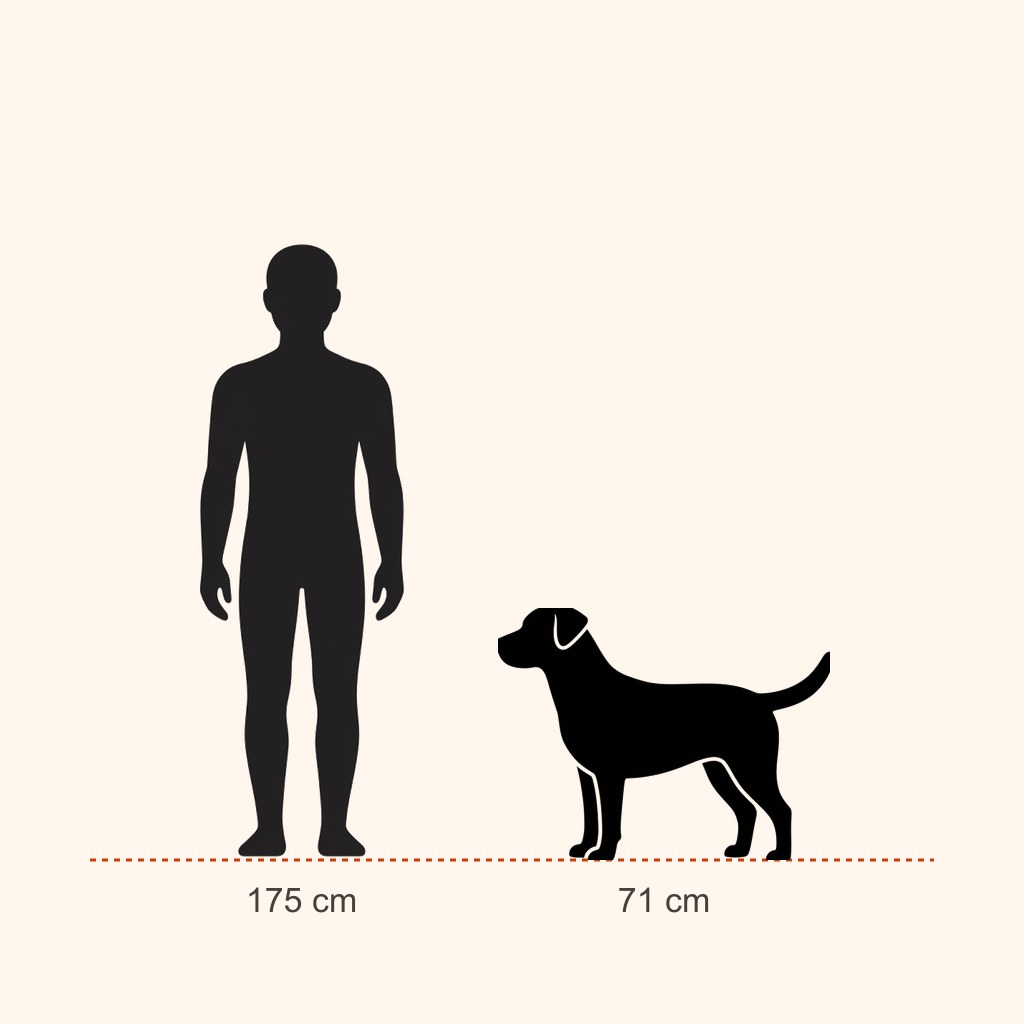
An adult Newfoundland (under the FCI standard, on average 68 kg for males and 54 kg for females) typically eats roughly 600-1,000 g of quality dry food a day depending on energy density and activity. The thick coat hides weight gain; check the ribs with your hands.
- Puppy (2-24 months): Giant-breed puppy food. Slow growth is the rule; excess calories and calcium supplements disrupt joint development.
- Adult: Daily ration split into two or three meals.
- Senior (from 6-7 years): Reduce calories; plan joint support with your vet.
To reduce bloat risk, avoid one large meal, use a slow-feeder for fast eaters, and limit activity for about an hour before and after meals. Dogs diagnosed with cystinuria need the special diet and plenty of water your vet recommends.
Grooming and coat
Water-resistant double coat with a moderately long outer coat and a soft, dense undercoat. Colours are black, brown, and white and black.
- Brush at least two or three times a week; daily during the spring and autumn undercoat moult.
- Behind the ears, the backs of the legs and under the tail mat easily; check regularly.
- Dry the coat thoroughly after swimming; moisture trapped in the undercoat can cause skin infection.
- Do not shave. Brushing out the undercoat helps cooling; shaving leaves the skin exposed to sun and heat.
- Check drop ears weekly and clean if needed.
- Keep drool cloths all around the house.
- Trim nails every three to four weeks.
Training and exercise
Daily requirement: 30-60 minutes of walking and, where possible, swimming in a safe place. Swimming is ideal because it does not load the joints. In summer, walk early in the morning or in the cool of the evening.
Priorities:
- Early socialisation (8-16 weeks). People, children, sounds and other animals.
- Loose-lead walking. A 60 kg dog that pulls cannot be controlled; teach it in puppyhood.
- Calm greetings, no jumping up. Even a giant's affection can knock someone over.
- Handling for care. Make brushing, drying, ear and nail care a game in puppyhood.
- Controlled growth. Avoid stairs, jumping down and long strenuous walks until 18-24 months.
Newfoundlands also excel at working sports such as water work and cart pulling, which satisfy both mind and body.
History
According to the FCI standard, the breed originated on the island of Newfoundland from indigenous dogs and the big black "bear dog" introduced by the Vikings after the year 1100. With the arrival of European fishermen, various breeds helped shape the breed, but its essential characteristics remained.
By the time colonisation of the island began in 1610, the Newfoundland already largely had the build and behaviour that let it withstand a harsh climate and the sea. It pulled heavy loads on land and served as a water and lifeguard dog.
The white and black variety is of historical significance to the breed. Newfoundlands are still trained for water rescue in many countries, but most live as gentle family dogs.
This guide is for information only and is not a substitute for veterinary advice. Prices are approximate and vary by region and time.
Sources
- www.fci.be/Nomenclature/Standards/050g02-en.pdf
- www.petmd.com/dog/breeds/newfoundland
- www.newfdoghealth.org/positionstatements.html
- pmc.ncbi.nlm.nih.gov/articles/PMC6191922/
- pmc.ncbi.nlm.nih.gov/articles/PMC11781725/
- www.msdvetmanual.com/digestive-system/diseases-of-the-stomach-and-intestines-in-small-animals/gastric-dilation-and-volvulus-in-small-animals
Adoption Prep Checklist
Housing
-
Large-breed dog bed
A comfortable bed supports joint health.
Feeding
-
Large-breed dog food
Food matched to breed size gives the right nutritional balance.
-
Food and water bowl set
Needed for daily feeding and water access.
Grooming
-
De-shedding brush
Regular brushing reduces shedding and matting.
-
Dog nail clippers
Regular nail care matters for healthy walking.
-
Dog shampoo
Use a dog-specific shampoo for skin and coat health.
Walking & Activity
-
Dog leash and collar set
Needed for safe walks.
-
Plush dog toy
Mental and physical stimulation reduces behavior problems.
Frequently Asked Questions
Does the Newfoundland shed?
It sheds heavily, especially at seasonal changes. Expect near-daily brushing and regular cleaning at home; it is not a good choice for anyone sensitive to pet hair.
Can the Newfoundland live in an apartment?
Possible but not ideal. A house with outdoor space is preferable; in an apartment you will need to increase daily exercise substantially.
Is the Newfoundland good with children?
Generally yes. It adapts well to families with children. Even so, interactions should be supervised and children taught to respect the animal’s boundaries.
Is the Newfoundland suitable for first-time dog owners?
Partly. Someone with basic experience will manage well, but it would not be the first choice for a complete beginner.
How much exercise does the Newfoundland need?
It needs a moderate amount of exercise. Daily activity plus some play time makes for a balanced routine.
Can the Newfoundland be left alone during the day?
It can be left alone for a few hours. Long, routine absences can bring on boredom-driven behaviour problems; enrichment and a predictable routine reduce that risk.
How long does the Newfoundland live?
The Newfoundland lives 8-10 years on average. Diet, regular veterinary check-ups and early screening for hereditary conditions all affect this directly.
Where does the Newfoundland come from?
The Newfoundland originates from Canada. The geography a breed was developed in, and the job it was bred for, explain much of its temperament and care needs today.