

Labrador Retriever
The image on this page is AI-generated and does not depict a real animal.
- Species
- Dog
- Origin
- Canada
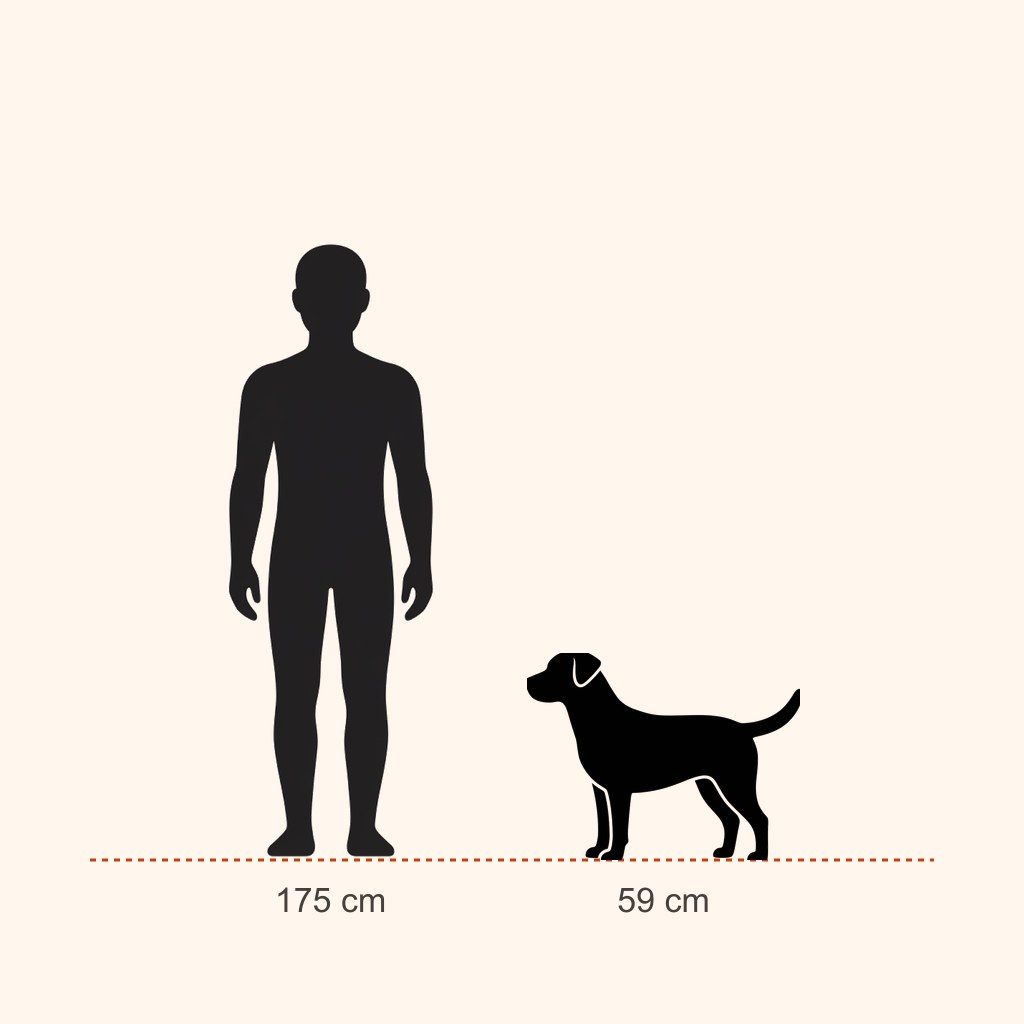
- Size
- Large
- Lifespan
- 12-14 years
- Temperament
- Friendly outgoing active adaptable
- Description
Energetic, playful and extremely social; one of the most popular family dogs in the world.
- Physical Traits
Short, dense, water-resistant double coat (yellow, black or brown/chocolate), a thick 'otter tail', a broad head and low-set ears.
- Care / Environment Info
A house with a garden is preferred but can also live in an apartment with adequate exercise. Its double coat sheds heavily, requiring regular brushing. Doesn't produce odor if properly cared for. High exercise needs, prone to obesity so diet control is important.
Labrador Retriever Owner's Guide
Last updated:
Is a Labrador Retriever right for you?
The Labrador is the most widely owned dog breed in the world. The reasons are simple: balanced temperament, easy training, effortless relationship with children. But two of its traits catch most people unprepared: its energy and its appetite.
| Situation | Suitability | Note |
|---|---|---|
| Apartment | Moderate | Workable with 1.5 hours of real exercise daily; a day spent on the balcony is not enough |
| Family with young children | Excellent | Patient and tolerant; take care when a 30 kg body pushes past a small child |
| First-time dog owner | Excellent | One of the easiest breeds to train |
| Alone 8+ hours a day | Poor | Chews when bored; separation anxiety is common |
| Household with fur allergies | Poor | Do not be fooled by the short coat; it sheds heavily and constantly |
| House with a garden | Excellent | The environment best suited to the breed |
The real question when choosing a Labrador is this: can you give this dog an hour and a half of your day? If the answer is no, do not let the breed's "easygoing" reputation mislead you. A Labrador without exercise is the most destructive dog in the house.
Before you adopt
When choosing a puppy, ask for the parents' hip and elbow x-ray results, eye examination certificate, and PRA and EIC genetic test results. Do not buy from a breeder who will not show these documents.
Also ask which line the puppy comes from. Field or working lines are leaner, far more energetic, and job-focused; they are difficult in an apartment. Show or English lines are heavier, calmer, and better suited to families.
Labrador mixes are extremely common in shelters and rescue groups. Adopting an adult has a real advantage: the temperament, size, and energy level are already known.
Temperament
If the Labrador's temperament had to be summed up in one word, it would be optimistic. It trusts people, adapts quickly to new environments, and holds no grudges. Because of its retrieving background it explores the world with its mouth; as a puppy it bites everything, and as an adult it loves carrying toys.
Do not expect guarding. A Labrador greets strangers at the door with a wagging tail. It generally gets on with other dogs and cats. It barks little, but howls, digs, and chews when bored.
Health issues and lifespan
Average lifespan is 12 to 14 years. The breed's main health risks are well known, and most are preventable or detectable early.
- Obesity: The most common and most underestimated problem in Labradors. Excess weight directly increases joint disease, diabetes, and cardiac load, and shortens life. The ribs should be easy to feel; if they are not, cut the food.
- Hip and elbow dysplasia: Poor seating of the joint. Signs are limping, avoiding stairs, difficulty sitting. Genetic predisposition plus rapid weight gain magnifies the risk.
- Exercise-induced collapse (EIC): Sudden hind-limb weakness after intense exercise. A genetic test exists; do not take a puppy from carrier parents.
- Progressive retinal atrophy (PRA): Slowly progressing blindness. Parents can be screened by DNA test.
- Gastric torsion (bloat): An emergency in deep-chested breeds. A distended abdomen, retching without producing vomit, and restlessness require an immediate vet visit; it can be fatal within hours. Splitting meals in two and avoiding heavy exercise for an hour after eating reduce the risk.
- Ear infections: Common where drop ears meet a love of water. The habit of drying the ears after swimming prevents most cases.
Feeding
An adult Labrador (28-36 kg) eats 350-450 g of quality dry food per day. Start from the chart on the bag and adjust to the dog's body condition. Two meals a day, measured with a cup; feeding "by eye" turns into weight quickly in this breed.
- Puppy (2-12 months): Large-breed puppy food. Fast growth harms joint development; keep the puppy lean, not chubby.
- Adult (1-7 years): Balanced food with 22-26% protein. Treats should not exceed 10% of daily calories.
- Senior (7+ years): Lower-calorie formula with joint support (glucosamine, omega-3).
Labradors beg professionally, and this is a genetic tendency rather than hunger. Some individuals carry a gene variant (POMC) that weakens the sense of satiety. Once you start feeding from the table, you will not be able to stop.
Avoid: chocolate, grapes and raisins, onion and garlic, xylitol, cooked bones, fatty leftovers.
Grooming and coat
Being short-coated does not make grooming easy. The Labrador's waterproof double coat sheds all year round, and during seasonal changes the house fills with hair.
- Brush once or twice a week, daily during shedding season with a deshedding rake.
- Bathe every 8 to 12 weeks; the natural oils in the coat should be preserved.
- Check ears weekly, especially after swimming.
- Trim nails every three to four weeks, brush teeth several times a week.
Labradors love water. They will go into the sea, a lake, or a pool. A rinse after salt water is necessary for coat and skin health.
Training and exercise
Daily requirement: at least one hour, preferably 1.5 hours of active movement. Walking alone is not enough; running, fetch, swimming, and scent work suit the breed's nature.
Training is easy here because the Labrador wants to please and is motivated by food. Priorities:
- Recall. You need to be able to call back a dog that chases everything.
- Loose-leash walking. Teaching a 30 kg adult not to pull starts at four months.
- Leave it and drop it. Getting the dog to release a foreign object from its mouth saves lives.
- Being alone. Start with short periods and increase gradually.
- Socialisation (8-16 weeks). Different people, dogs, surfaces, and sounds. Once this window closes it is hard to make up.
Mental tiredness matters as much as physical. Food puzzles and scent games save a rainy day.
History
Despite the name, the breed originates from the island of Newfoundland in Canada. In the 19th century, fishermen used the "St. John's water dog" to retrieve fish escaping from nets and to haul ropes from icy water. These dogs were carried to Britain on English ships and developed as gundogs in the kennels of the Earl of Malmesbury and the Duke of Buccleuch. The Kennel Club recognised the breed in 1903. Today the Labrador is the most widely deployed working breed in the world, serving above all as a guide dog, in search and rescue, and in explosives and narcotics detection.
This guide is for information only and is not a substitute for veterinary advice. Prices are approximate and vary by region and time.
Adoption Prep Checklist
Housing
-
Large-breed dog bed
A comfortable bed supports joint health.
Feeding
-
Large-breed dog food
Food matched to breed size gives the right nutritional balance.
-
Food and water bowl set
Needed for daily feeding and water access.
Grooming
-
De-shedding brush
Regular brushing reduces shedding and matting.
-
Dog nail clippers
Regular nail care matters for healthy walking.
-
Dog shampoo
Use a dog-specific shampoo for skin and coat health.
Walking & Activity
-
Running/exercise dog harness
Needed for safe walks.
-
Interactive dog puzzle toy
Mental and physical stimulation reduces behavior problems.
Training
-
Training treats / beginner training guide
Basic obedience training is recommended for first-time dog owners.
Frequently Asked Questions
Does the Labrador Retriever shed?
It sheds heavily, especially at seasonal changes. Expect near-daily brushing and regular cleaning at home; it is not a good choice for anyone sensitive to pet hair.
Can the Labrador Retriever live in an apartment?
Possible but not ideal. A house with outdoor space is preferable; in an apartment you will need to increase daily exercise substantially.
Is the Labrador Retriever good with children?
Generally yes. It adapts well to families with children. Even so, interactions should be supervised and children taught to respect the animal’s boundaries.
Is the Labrador Retriever suitable for first-time dog owners?
Yes. Its care and training are relatively forgiving, which makes it a sound choice for first-time owners.
How much exercise does the Labrador Retriever need?
It is high-energy and needs vigorous daily activity. Mental stimulation matters as much as physical exercise; without enough to do, destructive behaviour follows.
Can the Labrador Retriever be left alone during the day?
It can be left alone for a few hours. Long, routine absences can bring on boredom-driven behaviour problems; enrichment and a predictable routine reduce that risk.
How long does the Labrador Retriever live?
The Labrador Retriever lives 12-14 years on average. Diet, regular veterinary check-ups and early screening for hereditary conditions all affect this directly.
Where does the Labrador Retriever come from?
The Labrador Retriever originates from Canada. The geography a breed was developed in, and the job it was bred for, explain much of its temperament and care needs today.