

American Foxhound
The image on this page is AI-generated and does not depict a real animal.
- Species
- Dog
- Origin
- United States
- Size
- Large
- Lifespan
- 12-15 years
- Temperament
- Gentle patient energetic social
- Description
Bred for fox hunting, this hunting dog accustomed to working in packs.
- Physical Traits
Short dense coat (tricolor), long drooping ears, a long-legged athletic body.
- Care / Environment Info
A house with a garden is preferred. Its short coat sheds little, easy to maintain. High exercise needs, a vocal (baying) breed.
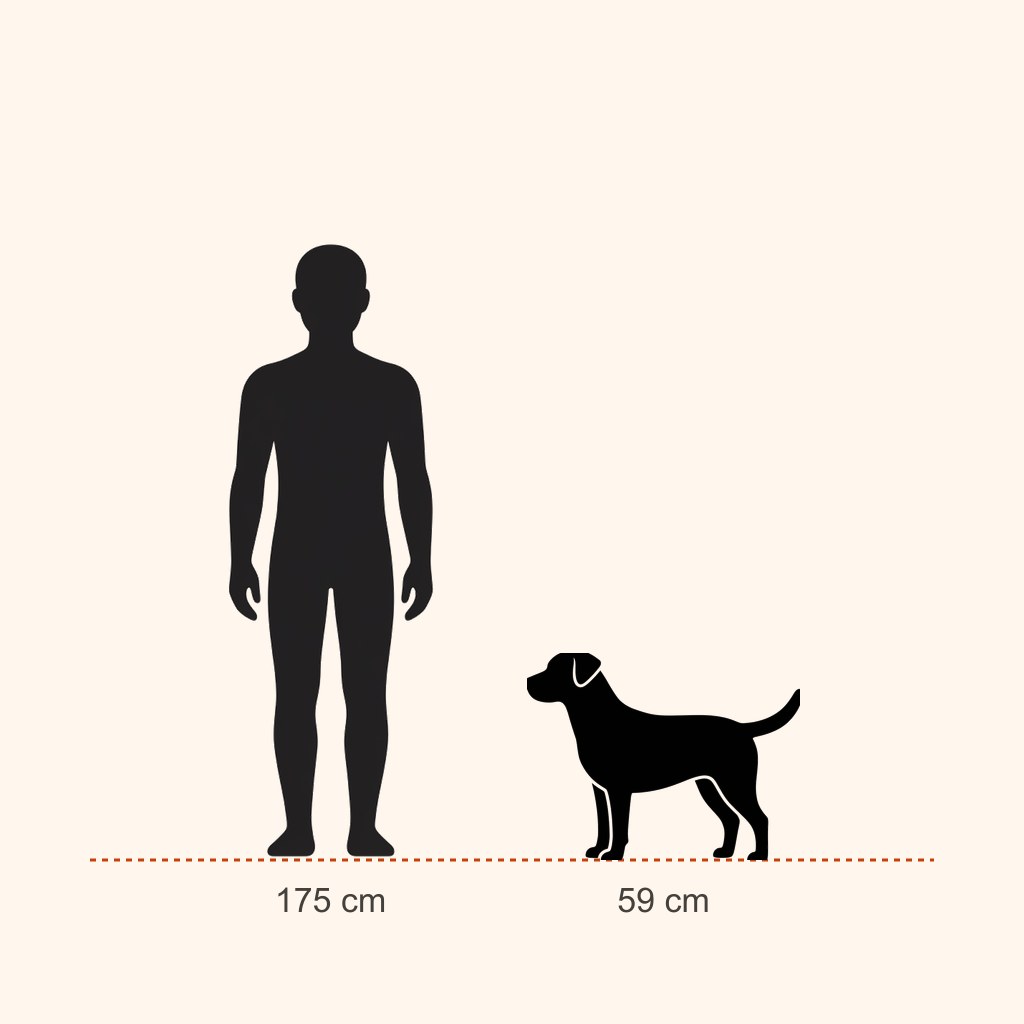
American Foxhound Owner's Guide
Last updated:
Is an American Foxhound right for you?
The American Foxhound branched off from the English Foxhound and was developed in America for fox hunting; it is a tall, lean, tireless scenthound. At home it can look calm and gentle, but the moment its nose catches a scent it becomes a different dog: the tracking instinct cannot be trained away, only managed.
| Situation | Suitability | Note |
|---|---|---|
| Apartment | Poor | Its loud voice and pack-hound energy don't fit a small space |
| Family with young children | Good | Patient and gentle; size means play should be supervised |
| First-time dog owner | Moderate to poor | The independent nose makes obedience training harder |
| Garden with a strong fence | Excellent | It will jump or dig under a fence once it catches a scent; fencing must be tall and secure |
| Alone 8+ hours a day | Poor | A pack dog; loneliness turns into howling and destructive behaviour |
| Household with fur allergies | Moderate | Short coat but sheds steadily |
| Owner into scent sports or running | Excellent | A natural at Fast CAT and tracking |
| Home needing quiet, close neighbours | Poor | The breed is generally considered a loud one |
Accept this before getting an American Foxhound: this dog is not safe off-lead. Once it picks up a scent it will not hear you call; that is not disobedience, it is behaviour bred into the breed for centuries.
Before you adopt
Because the breed still works in hunting packs in the US, rescue groups exist specifically for retired pack hounds; purebred American Foxhounds are rare on general adoption listings, so it's worth checking these channels too.
If buying from a breeder, ask for hip certification. Ask to see the mother when you visit the litter, and check the ears — redness or odour can point to a chronic ear problem in that line.
This breed is essentially unavailable in Turkey; if importing, research customs and vaccination requirements beforehand. In local shelters you are far more likely to find a mixed-breed hound-type dog than a purebred American Foxhound.
Temperament
The American Foxhound is sweet, gentle, and independent. Because it was selected to hunt in packs it gets on well with both dogs and people; aggression is not part of the breed's character. It is neutral rather than affectionate or aloof with strangers.
Though intelligent, it was bred to work independently, which makes it stubborn in obedience work much like the Beagle: it hears a cue, weighs it against the scent, and often chooses the scent.
Its voice is a breed signature — alongside barking it produces a long, melodic bay, meant historically to inform the hunter, and it cannot be fully silenced.
Energy levels are high, and without enough exercise it can become destructive or withdrawn.
Health issues and lifespan
Sources report an average lifespan of 11 to 13 years.
- Hip dysplasia: Abnormal joint development; mild cases are managed with physiotherapy, severe cases need surgery.
- Elbow dysplasia: Often occurs alongside hip dysplasia; ask breeders for parent certification.
- Thrombocytopathy: An inherited, incurable clotting disorder in which platelets don't function properly. A diagnosed dog should avoid unnecessary surgery, and any vet performing one should be informed in advance.
- Ear infections: Long, drop ears limit airflow. Head shaking, scratching, odour, and redness are the signs; regular checks and keeping ears dry help prevent most cases.
- Eye problems: Sources note a general predisposition to eye issues; regular eye exams are advisable.
Feeding
An adult American Foxhound (27-32 kg / 60-70 lb) eats roughly 400-500 g of quality dry food a day; active working dogs need more.
- Puppy (2-15 months): Large-breed puppy food, three meals a day.
- Adult: Two meals a day. 22-26% protein suits this breed.
- Senior (8+ years): Reduce calories and add joint support.
Training treats count toward daily calories — this breed's strong hunting drive gives it a high food motivation that can easily tip into overfeeding.
Grooming and coat
Short, dense, straight coat.
- Brush weekly; sheds moderately.
- Bathe monthly or as needed.
- Check ears weekly — long ears trap moisture.
- Nails every 3-4 weeks.
- A low-drool breed.
- Since it runs through brush and undergrowth, check for ticks after every walk.
Training and exercise
Daily need: at least 1-2 hours, ideally including running and scent work.
Priorities:
- Leash discipline and a secure space. It won't hear you once on a scent; keep it in a securely fenced garden or on a leash.
- Recall. Difficult but essential — start at short distances with high-value rewards.
- Scent sports. Fast CAT and tracking satisfy the breed's natural drive.
- Socialisation (8-16 weeks). Its pack background usually makes it easy with other dogs, but early exposure still matters.
- Managing the bay. It can't be eliminated entirely; preventing boredom is the best approach.
Harsh methods don't work — this breed shuts down and becomes more stubborn under pressure. Reward-based, short, enjoyable sessions work best.
History
The American Foxhound descends from English hunting hounds brought to North America in the 1650s, later crossed with French hound lines and shaped by the local climate and terrain. George Washington is known to have contributed to the breed's development, breeding hounds for his own pack.
It differs from the English Foxhound in being lighter-built with longer legs, suited to covering long distances across America's more open, less settled land. The style of hunting changed too: in England hounds were followed on horseback, while the American tradition often has hunters track the pack by sound from a fixed point.
Today the American Foxhound still works in hunting packs but is one of the AKC's least common hound breeds, with limited popularity as a household pet. Being used to living in a pack, a single dog placed in a one-dog household can become unusually attached to its owner — a transition that takes patience.
This guide is for information only and is not a substitute for veterinary advice. Prices are approximate and vary by region and time.
Adoption Prep Checklist
Housing
-
Large-breed dog bed
A comfortable bed supports joint health.
Feeding
-
Large-breed dog food
Food matched to breed size gives the right nutritional balance.
-
Food and water bowl set
Needed for daily feeding and water access.
Grooming
-
Short-hair dog brush
Regular brushing reduces shedding and matting.
-
Dog nail clippers
Regular nail care matters for healthy walking.
-
Dog shampoo
Use a dog-specific shampoo for skin and coat health.
Walking & Activity
-
Running/exercise dog harness
Needed for safe walks.
-
Interactive dog puzzle toy
Mental and physical stimulation reduces behavior problems.
Training
-
Training treats / beginner training guide
Basic obedience training is recommended for first-time dog owners.
Frequently Asked Questions
Does the American Foxhound shed?
Shedding is low. Brushing once a week is usually enough, with a mild increase during seasonal changes.
Can the American Foxhound live in an apartment?
Possible but not ideal. A house with outdoor space is preferable; in an apartment you will need to increase daily exercise substantially.
Is the American Foxhound good with children?
Generally yes. It adapts well to families with children. Even so, interactions should be supervised and children taught to respect the animal’s boundaries.
Is the American Foxhound suitable for first-time dog owners?
Yes. Its care and training are relatively forgiving, which makes it a sound choice for first-time owners.
How much exercise does the American Foxhound need?
It is high-energy and needs vigorous daily activity. Mental stimulation matters as much as physical exercise; without enough to do, destructive behaviour follows.
Can the American Foxhound be left alone during the day?
It can be left alone for a few hours. Long, routine absences can bring on boredom-driven behaviour problems; enrichment and a predictable routine reduce that risk.
How long does the American Foxhound live?
The American Foxhound lives 12-15 years on average. Diet, regular veterinary check-ups and early screening for hereditary conditions all affect this directly.
Where does the American Foxhound come from?
The American Foxhound originates from United States. The geography a breed was developed in, and the job it was bred for, explain much of its temperament and care needs today.