

Siberian
The image on this page is AI-generated and does not depict a real animal.
- Species
- Cat
- Origin
- Russia
- Size
- Large
- Lifespan
- 12 - 15 years
- Temperament
- Curious Intelligent Loyal Sweet-natured Agile Playful Affectionate
- Description
Has an affectionate, dog-like temperament, lives happily indoors.
- Physical Traits
A long thick triple-layer coat, a bushy tail, a strong muscular body.
- Care / Environment Info
Lives indoors. Sheds moderately. Easy to care for, brushing once a week is enough. Very high energy, needs plenty of play and stimulation. Very quiet. Its allergy-triggering potential is considered somewhat lower than other breeds (not fully hypoallergenic). Generally a healthy breed.
Siberian Owner's Guide
Last updated:
Is a Siberian cat right for you?
The Siberian is a large, agile breed with a dense triple coat that developed naturally over centuries in the forests of Russia. CFA describes it as dog-like, intelligent and devoted. It is playful and curious but generally steady and easygoing. The most common claim about the breed is that it is "suitable for people with allergies"; as you'll see below, that claim needs very careful handling.
| Situation | Suitability | Note |
|---|---|---|
| Apartment | Good | Adapts, but it is big and agile; vertical space is a must |
| Family with young children | Very good | Calm, tolerant and playful |
| First-time cat owner | Good | Easy temperament; factor in coat care and a large body |
| Alone 8+ hours a day | Medium | Devoted to its people; can get bored with long periods alone |
| Home with cat allergies | No guarantee | Some individuals may produce less allergen; many produce normal levels |
| Hot climate | Medium | The coat thins in summer but still struggles in heat |
| Dogs or other cats at home | Good | Usually easygoing and confident |
Before you adopt
Be realistic about allergies. The main cause of cat allergy is not hair but a protein called Fel d 1. It is found in saliva and skin secretions; as the cat grooms, it spreads onto the coat and becomes airborne when dry. Every cat produces Fel d 1.
What is known about Siberians:
- A 2017 genetic study found several mutations in the Siberian's Fel d 1 genes that were not seen in other cats. But the study included only four Siberians, and the authors state clearly that further work is needed to find out whether these mutations actually reduce allergen production. In the same study one cat had low salivary allergen levels while others had higher levels.
- According to compiled testing data, some Siberians show lower Fel d 1 levels, but roughly half of those tested produce typical allergen levels.
- Cat geneticist Leslie Lyons told Smithsonian magazine that there is no such thing as a hypoallergenic cat, although specific Siberians may trigger less of an allergic response.
The bottom line: the Siberian is not a breed for everyone with allergies; at most, some individuals may cause fewer symptoms in some people. If you have allergies:
- Talk to your allergist first; for people with severe allergy or asthma the risk is real.
- Look at the specific cat you're considering, not the breed in general. Spend several long visits with that cat.
- Ask about allergen testing some breeders offer, but don't treat the result as a guarantee.
- Don't start with a "we'll give it back if it doesn't work" plan; that means serious stress and loss for the cat.
Ask the breeder for: CFA notes that HCM and PKD can occur in the breed; ask for heart ultrasound and PKD results for the parents, pedigree papers, and a kitten at least 12 weeks old with vaccinations started. Check local microchipping rules (in Turkey, for example, owned cats must be registered in the PETVET system).
Temperament
- Dog-like and devoted: Often follows its people around the house and chooses to stay close.
- Steady: In CFA's words, mostly placid with a bit of mischief. An easygoing, confident cat.
- Purrs rather than yowls: Communicates more with purring and short sounds than loud meowing.
- Agile and playful: Despite its size it climbs and jumps well; the tops of tall cupboards are favourite spots.
- Slow to mature: Sources say full development can take up to five years, so kitten energy lasts a long time.
It usually settles well in homes with children and multiple pets.
Health issues and lifespan
As a naturally developed breed, its general health is considered good. Points to watch:
- Hypertrophic cardiomyopathy (HCM): Cornell lists the Siberian among breeds predisposed to HCM. It can be silent for a long time; rapid or laboured breathing, open-mouth breathing, lethargy and sudden hind-limb paralysis are emergencies.
- Polycystic kidney disease (PKD): CFA notes it can occur in the breed; it has been reported particularly in the colourpoint Neva Masquerade variety. Signs: increased thirst and urination, loss of appetite and weight, vomiting. Diagnosis is by ultrasound.
- Injuries: In a large study comparing breed health, Siberians scored low for overall illness risk but high for injury risk, in keeping with their athletic build. Guard against falls from heights, windows and balconies.
- Hairballs and matting: The dense undercoat can cause hairballs and belly mats, especially at seasonal coat changes.
- Obesity: Extra weight on a big cat can go unnoticed under a thick coat; check by hand.
Popular sources give varying lifespan ranges; we found no reliable breed-specific lifespan study.
Feeding
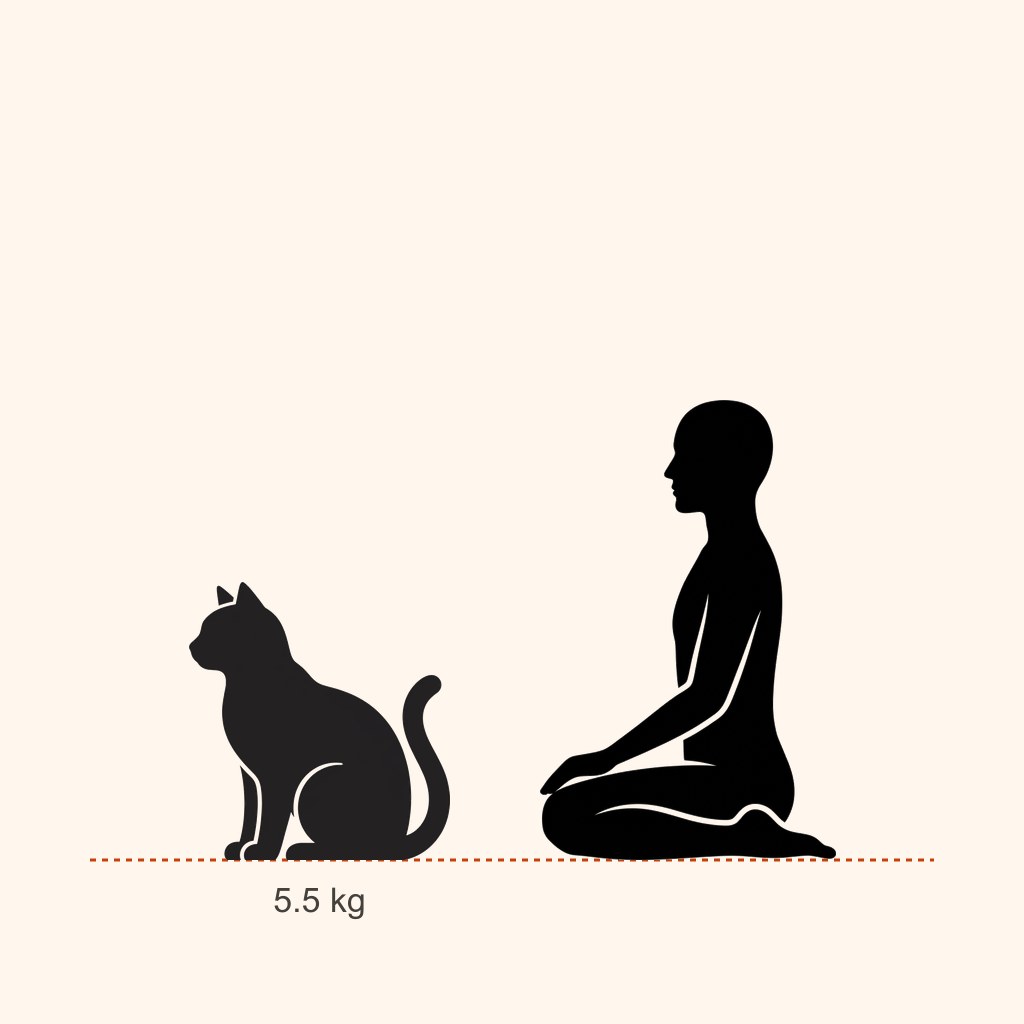
According to CFA, males weigh about 5.5-8 kg and females 3.5-5.5 kg.
- Kitten and junior (2 months - 1 year): Kitten food, initially 3-4 meals a day. Because the breed develops slowly, don't overfeed to make the kitten look big.
- Young adult (1-5 years): Still building muscle; high-protein, meat-based complete food. Adjust amounts to body condition.
- Neutered adult: Lower energy needs; weigh the food.
- Senior (8+ years): Yearly blood and urine tests and heart check.
For kidney health, use wet food and a drinking fountain. If hairballs are frequent, ask your vet about fibre support.
Grooming and coat
According to CFA, the Siberian has a triple coat that thickens in winter and becomes shorter in summer. Grooming needs vary enormously: some need weekly sessions to prevent mats, while others go for weeks without one.
- Comb at least once a week with a wide-toothed metal comb; daily during the spring shed.
- Belly, armpits and behind the ears are the most mat-prone areas.
- Baths are rarely needed; if you bathe, dry the undercoat completely.
- Nails every 2-3 weeks, teeth several times a week.
- In hot summers, remove dead undercoat with regular combing rather than shaving; ask your vet before deciding on a shave.
Living space and enrichment
- A sturdy, tall cat tree. Wide-based models that can be fixed to the wall for a big, agile cat.
- Daily hunting play. Two 15-minute sessions a day; more for high-energy youngsters.
- Window and balcony netting. An athletic, bold breed; essential against falls.
- Food puzzles and fetch games. Mental work for a clever, dog-like cat.
- A cool spot. In summer, tiled floors, shade, a cool room and several water bowls.
History
The Siberian is an old cat population that developed naturally in Russia's forested regions, with references traced back to Slavic folktales of the 10th century. CFA calls it Russia's national cat. The harsh climate shaped its dense triple coat and powerful body.
Formal breeding began in the final years of the Soviet Union. In 1987 a pair taken from St. Petersburg to Berlin became one of the foundations of registered breeding in Europe. The breed was recognised by WCF in 1991, TICA in 1996 and FIFe in 1997. The first Siberians reached the United States in 1990, and CFA granted championship status in the 2000s.
Colourpoint individuals are known as Neva Masquerade; some registries include them within the Siberian, others register them separately.
This guide is for information only and is not a substitute for veterinary advice. Prices are approximate and vary by region and time.
Sources
- cfa.org/breed/siberian/
- en.wikipedia.org/wiki/Siberian_cat
- pmc.ncbi.nlm.nih.gov/articles/PMC5753643/
- www.smithsonianmag.com/science-nature/theres-no-such-thing-hypoallergenic-cat-180968819/
- www.vet.cornell.edu/departments-centers-and-institutes/cornell-feline-health-center/health-information/feline-health-topics/hypertrophic-cardiomyopathy
Adoption Prep Checklist
Housing
-
Cat bed
Cats want a safe space of their own to rest.
-
Cat climbing tree
Satisfies the natural scratching instinct and protects furniture.
Feeding
-
Dry/wet cat food
Quality cat food is needed for balanced nutrition.
-
Food and water bowl set
Needed for daily feeding and water access.
Grooming
-
Cat litter and litter box
Essential for the cat's toilet needs.
-
Cat de-shedding brush
Regular brushing reduces hairball formation.
Activity
-
Interactive cat toy
Cats release energy through play.
-
Cat carrier
Needed for safe transport to vet visits.
Frequently Asked Questions
Does the Siberian shed?
It sheds a moderate amount. Brushing two or three times a week noticeably reduces both loose hair and matting.
Can the Siberian live in an apartment?
Yes. It lives comfortably in an apartment as long as its daily needs are met. What matters is not floor area but consistent exercise and mental stimulation.
Is the Siberian good with children?
Generally yes. It adapts well to families with children. Even so, interactions should be supervised and children taught to respect the animal’s boundaries.
Is the Siberian suitable for first-time cat owners?
Yes. Its care and training are relatively forgiving, which makes it a sound choice for first-time owners.
How much exercise does the Siberian need?
It is high-energy and needs vigorous daily activity. Mental stimulation matters as much as physical exercise; without enough to do, destructive behaviour follows.
Can the Siberian be left alone during the day?
It can be left alone for a few hours. Long, routine absences can bring on boredom-driven behaviour problems; enrichment and a predictable routine reduce that risk.
How long does the Siberian live?
The Siberian lives 12 - 15 years on average. Diet, regular veterinary check-ups and early screening for hereditary conditions all affect this directly.
Where does the Siberian come from?
The Siberian originates from Russia. The geography a breed was developed in, and the job it was bred for, explain much of its temperament and care needs today.