

Scottish Fold
The image on this page is AI-generated and does not depict a real animal.
- Species
- Cat
- Origin
- United Kingdom
- Size
- Small
- Lifespan
- 11 - 14 years
- Temperament
- Affectionate Intelligent Loyal Playful Social Sweet-natured Loving
- Description
Sweet, lovable and easygoing; comfortable with every member of the family.
- Physical Traits
Forward-folded ears, a round face, short or long dense coat.
- Care / Environment Info
Lives indoors. Sheds moderately. Very easy to care for, infrequent brushing needed. Moderate energy. Very quiet. Regular veterinary checkups and breed-specific health monitoring are important.
Scottish Fold Owner's Guide
Last updated:
Is a Scottish Fold right for you?
The Scottish Fold is known for its folded ears and has become very popular in recent years thanks to social media. This section has to open with a warning unlike other breeds: the gene that folds the ears also causes cartilage and joint disease throughout the body. This information must sit at the centre of your adoption decision.
| Situation | Suitability | Note |
|---|---|---|
| Apartment | Excellent | A calm and quiet breed |
| Family with young children | Good | Docile; rough play should be prevented because of possible joint pain |
| First-time cat owner | Moderate | Easy temperament, difficult health monitoring |
| Alone 8+ hours a day | Moderate | Attached to people; does not enjoy long solitude |
| Household with fur allergies | Poor | Dense coat, sheds regularly |
| Home not prepared for health costs | Poor | Osteochondrodysplasia may require lifelong treatment |
Ethical note: many national veterinary associations and some cat federations oppose breeding this cat, because the gene causing the ear fold inevitably carries joint disease. If you are considering adoption, stay well away from kittens produced by mating two fold-eared individuals; that pairing produces severe skeletal deformity.
Before you adopt
A healthy alternative: the straight-eared individuals from the same litter (known as Scottish Straights). Same temperament, same appearance, without the cartilage gene. For those who love this breed but do not want the health risk, this is the right choice.
If you do adopt a fold-eared cat, ask about PKD genetic testing and cardiac screening, and confirm that only one parent was fold-eared.
Temperament
The Scottish Fold is calm, gentle, and devoted to people. Its voice is soft and it speaks little. It follows its owner from room to room and does not like being left alone.
It is more willing to be held than the British Shorthair. It is tolerant of children and other animals and avoids conflict.
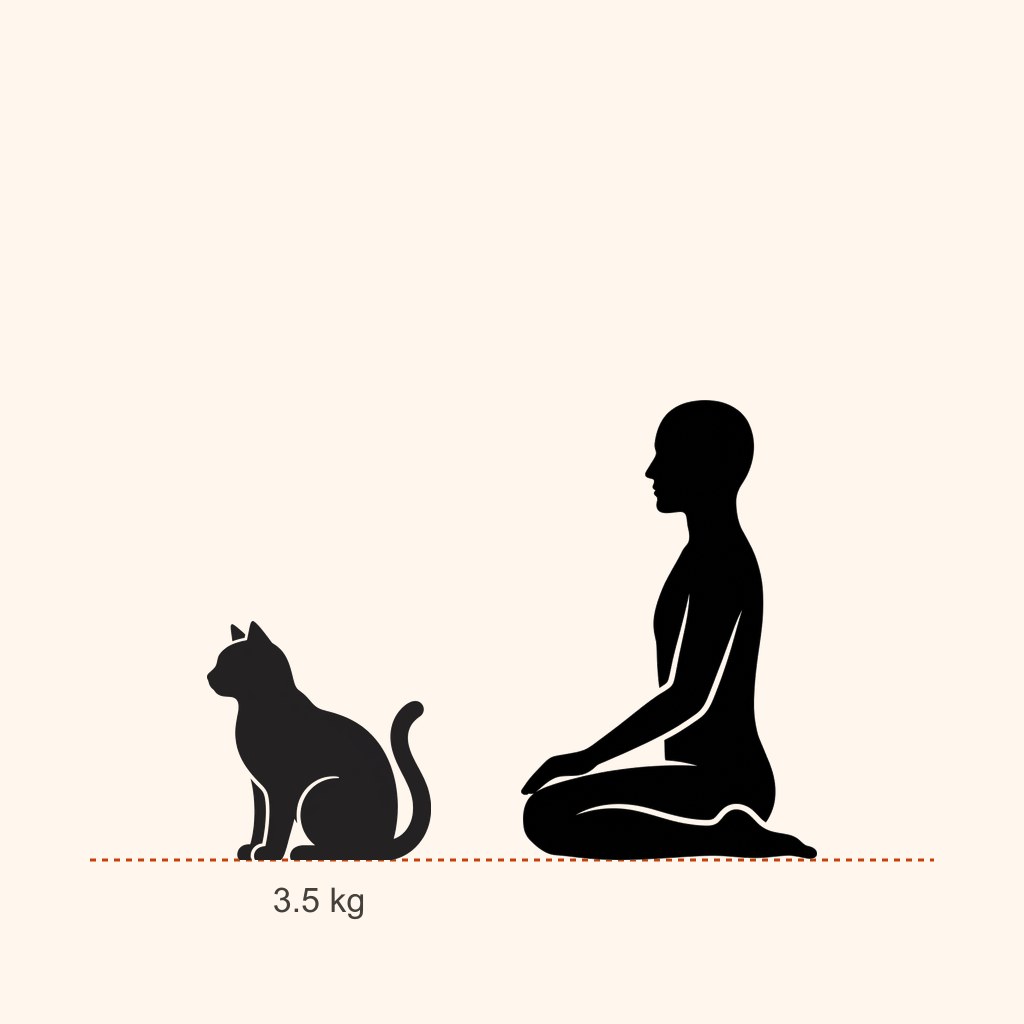
The breed's famous "Buddha sit", with the hind legs stretched forward and the back upright, is considered endearing; however, this posture can sometimes be a sign of joint discomfort, so consult a vet if it is repeated constantly.
Not all individuals are born with folded ears. Kittens are born with straight ears; if the fold is present it appears at three to four weeks. The fold may be single, double, or triple.
Health issues and lifespan
Average lifespan is 11 to 14 years.
- Osteochondrodysplasia: The defining health problem of this breed. The gene that folds the ear affects cartilage development throughout the body. Stiffness at the base of the tail, avoiding jumping, a stilted gait, short thick legs, and lameness are the signs. It is progressive and there is no cure; quality of life is maintained through pain management, weight control, and joint support. All fold-eared individuals are affected to some degree.
- Hypertrophic cardiomyopathy (HCM): The most common heart disease in cats; it occurs in this breed too. Periodic echocardiography is recommended.
- Polycystic kidney disease (PKD): A genetic test exists.
- Ear problems: Folded ears reduce ventilation, increasing the risk of wax build-up and infection. Regular checks are needed.
- Obesity: The risk of weight gain is high because of the calm temperament and restricted movement. Excess weight directly stresses joints that are already diseased.
Lifelong pain monitoring should be part of standard care in this breed. Cats hide pain; ceasing to jump, withdrawing from play, and changes in litter habits can all be signs of pain.
Feeding
An adult Scottish Fold (3-6 kg) needs the energy equivalent of 45-70 g of dry food per day. Weight control in this breed is a medical requirement.
- Kitten (2-12 months): Kitten food, three to four measured meals a day.
- Adult: High protein, low carbohydrate. Foods with joint support (glucosamine, chondroitin, omega-3) or vet-approved supplements can be started early in this breed.
- Senior (8+ years): Monitoring of kidney values, calorie reduction.
Do not free-feed. Split the food in two and give measured portions.
Grooming and coat
- Brush two to three times a week; daily in the long-haired variant (the Highland Fold).
- Ears must be checked weekly and cleaned if needed on veterinary advice. Because of the folded structure this cannot be neglected in this breed.
- Nails every two to three weeks; individuals with joint pain cannot wear their claws down enough.
- Teeth several times a week.
- Bathing is generally unnecessary.
Living space and enrichment
Joint health determines the household layout for this breed:
- Low-level access. Use stepped and ramped solutions rather than a tall cat tree. Shorten the jumping distance.
- Litter tray choice. A wide tray with a low entry. High-sided trays are an obstacle for a cat in pain and are a frequent cause of toileting outside the box.
- A soft bed. Beds that support the joints and keep the cat warm.
- Measured play. Ten minutes twice a day without jumping; toys dragged along the floor are suitable.
- Weight monitoring. Weigh monthly. In this breed a difference of 300 g matters.
History
The entire breed traces back to a single cat. In 1961, on a farm near Coupar Angus in the Tayside region of Scotland, a white cat was born with ears folded forward; her name was Susie. The shepherd William Ross took an interest in her and started the breed by breeding from her offspring. All Scottish Folds today descend from Susie.
The breed was registered in England in 1966, but in the 1970s the British cat federation (GCCF) stopped registration on the grounds of hereditary joint disease and ear infection; the breed is still not recognised in England today. In America, by contrast, it was accepted and spread.
Today the breed's future is one of the most visible ethical debates between veterinary medicine and breeding. Knowing that debate before acquiring a fold-eared cat is part of responsible adoption.
This guide is for information only and is not a substitute for veterinary advice. Prices are approximate and vary by region and time.
Adoption Prep Checklist
Housing
-
Cat bed
Cats want a safe space of their own to rest.
-
Cat scratching post
Satisfies the natural scratching instinct and protects furniture.
Feeding
-
Dry/wet cat food
Quality cat food is needed for balanced nutrition.
-
Food and water bowl set
Needed for daily feeding and water access.
Grooming
-
Cat litter and litter box
Essential for the cat's toilet needs.
-
Cat de-shedding brush
Regular brushing reduces hairball formation.
Activity
-
Cat toy
Cats release energy through play.
-
Cat carrier
Needed for safe transport to vet visits.
Frequently Asked Questions
Does the Scottish Fold shed?
It sheds a moderate amount. Brushing two or three times a week noticeably reduces both loose hair and matting.
Can the Scottish Fold live in an apartment?
Yes. It lives comfortably in an apartment as long as its daily needs are met. What matters is not floor area but consistent exercise and mental stimulation.
Is the Scottish Fold good with children?
Generally yes. It adapts well to families with children. Even so, interactions should be supervised and children taught to respect the animal’s boundaries.
Is the Scottish Fold suitable for first-time cat owners?
Partly. Someone with basic experience will manage well, but it would not be the first choice for a complete beginner.
How much exercise does the Scottish Fold need?
It needs a moderate amount of exercise. Daily activity plus some play time makes for a balanced routine.
Can the Scottish Fold be left alone during the day?
It can be left alone for a few hours. Long, routine absences can bring on boredom-driven behaviour problems; enrichment and a predictable routine reduce that risk.
How long does the Scottish Fold live?
The Scottish Fold lives 11 - 14 years on average. Diet, regular veterinary check-ups and early screening for hereditary conditions all affect this directly.
Where does the Scottish Fold come from?
The Scottish Fold originates from United Kingdom. The geography a breed was developed in, and the job it was bred for, explain much of its temperament and care needs today.