

Savannah
The image on this page is AI-generated and does not depict a real animal.
- Species
- Cat
- Origin
- United States
- Size
- Very Large
- Lifespan
- 17 - 20 years
- Temperament
- Curious Social Intelligent Loyal Outgoing Adventurous Affectionate
- Description
Seeks social interaction, deeply loyal to its person but aloof with strangers.
- Physical Traits
A spotted coat resembling a wild serval, long legs, large upright ears, a long slender body.
- Care / Environment Info
Lives indoors. Sheds moderately. Very easy to care for, infrequent brushing needed. Very high energy, needs plenty of play and stimulation. Very quiet. Generally a very healthy breed.
Savannah Owner's Guide
Last updated:
Is a Savannah right for you?
The Savannah is a breed created by crossing a serval (an African wild cat) with a domestic cat. That makes it fundamentally different from most cat breeds: how domesticated an individual behaves depends heavily on its generation, and deciding to adopt one without understanding that is risky.
| Situation | Suitability | Note |
|---|---|---|
| Apartment | Caution | Possible, but its high energy and jumping power demand serious enrichment |
| Family with young children | Caution | Energetic and playful, but early generations like F1-F2 can be difficult for inexperienced families |
| First-time cat owner | Not suitable (early generation) / Moderate (F4-F5) | Early generations need an experienced owner; later generations behave more like a typical house cat |
| Alone 8+ hours a day | Poor | Needs very high mental/physical stimulation, becomes destructive when bored |
| Household with fur allergies | Moderate | Short-coated but still sheds |
| Home with unsecured, unleashed outdoor access | Not suitable | Its high jumping and escape ability means a secure, tall enclosure or fence is essential |
| Home uncomfortable with water play | Caution | This breed can enjoy baths and water play, which surprises some owners |
The Savannah suits experienced owners with time to spare who want a very high-energy, curious cat that interacts almost like a dog. The lower the generation number (closer to F1), the higher the care demands.
Before you adopt
Savannahs are classified by generation: an F1 has a serval parent and the highest serval content (roughly half); an F2 has a serval grandparent (roughly a quarter); with each subsequent generation (F3, F4, F5) the serval content roughly halves again. Early generations like F1-F2 are the largest, most energetic, and hardest to care for; F4-F5 and later are closer to a domestic cat in size and behaviour and are generally recommended for families new to exotic-type breeds.
In Türkiye, the serval (Leptailurus serval) is listed under CITES Appendix II, meaning international trade is not banned outright but requires permits and documentation. A clear, consistent, up-to-date official source on which generation of Savannah hybrids can be freely owned in Türkiye, what documentation import requires, and how local authorities (provincial agriculture directorates, municipalities) apply the rules could not be found; this section is flagged for that reason. Before adopting or importing a Savannah, consult the Ministry of Agriculture and Forestry and the relevant provincial directorate directly.
In the United States, some states ban Savannah ownership entirely (for example Georgia, Hawaii, Nebraska, Rhode Island), while others only allow F4 or later generations (such as Alaska, Iowa, Massachusetts, New Hampshire, Vermont); some cities (New York City, Denver) impose a full ban regardless of generation. This shows that even legally, the line between "domestic cat" and "wild hybrid" is not clear-cut for this breed.
Temperament
The Savannah is highly intelligent, curious, and energetic; when properly socialised it shows dog-like devotion to its owner. It can learn to walk on a leash, fetch, and is very receptive to training.
Its relationship with water is unusual for a cat; many Savannahs enjoy baths, playing with tap water, and even wading into a kiddie pool. Its jumping power is also notable; it can easily reach high points like the top of a cabinet, so breakables are not safe up high either.
Without enough mental stimulation, boredom quickly turns into destructive behaviour: you may end up with a cat that knocks things over, opens cupboards, and constantly demands attention.
Health issues and lifespan
Sources give a wide lifespan range of 12-20 years; the breed is generally considered healthy.
- Pyruvate kinase (PK) deficiency: An inherited blood disorder; preventable with genetic testing, parent screening should be requested.
- Progressive retinal atrophy (PRA): Two forms are reported: an early-onset form starting in kittens around 2-3 months old, and a late-onset form appearing between 2-5 years old; both progress to vision loss.
- Hypertrophic cardiomyopathy (HCM): The most common heart disease in cats; regular cardiac screening is recommended.
- Taurine sensitivity: This breed is reported to be particularly prone to taurine deficiency; a high-protein diet rich in taurine (meat/fish-based) is essential, and low-quality, grain-heavy foods should be avoided.
- Anaesthesia sensitivity: Ketamine-based anaesthesia has been reported to cause complications in this breed because of how it is metabolised through the liver; always tell your vet your cat is a Savannah before any procedure.
Feeding
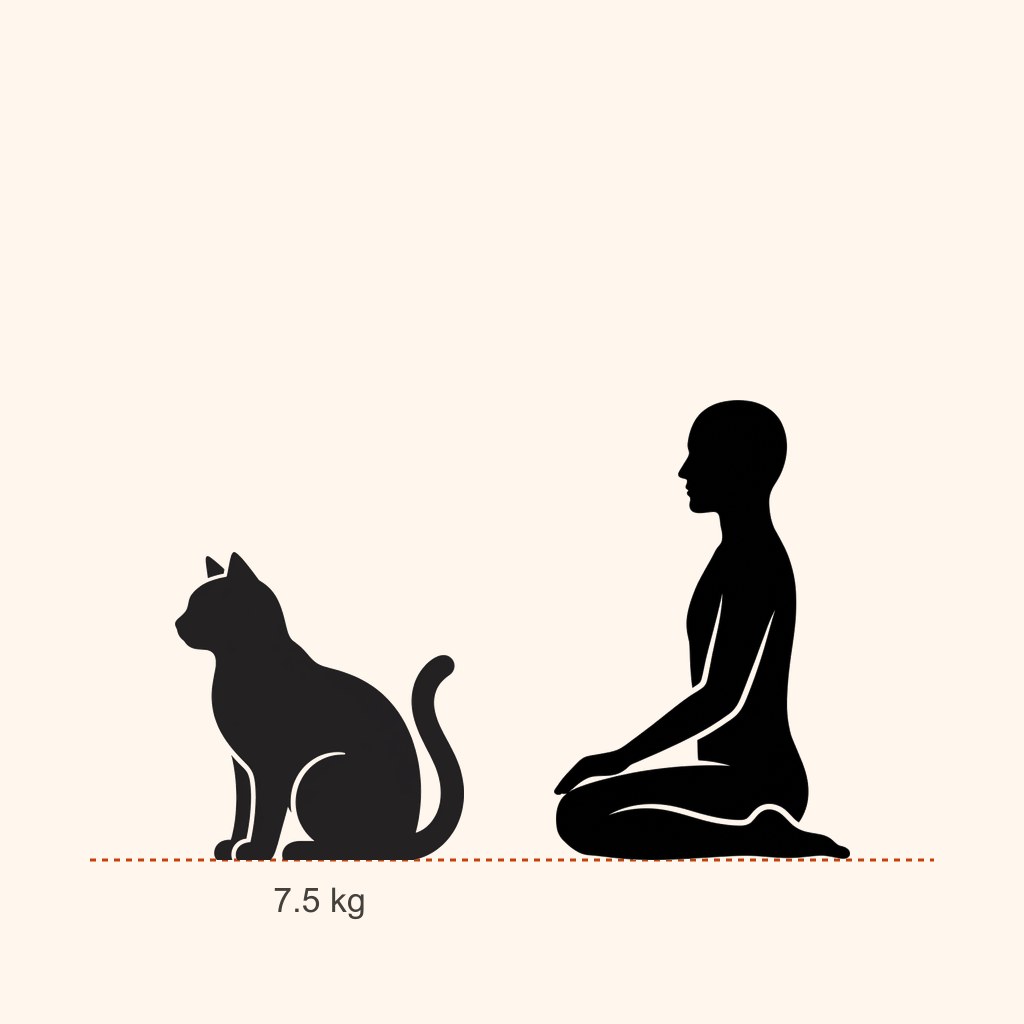
Size varies by generation; F1 individuals can reach 5-9 kg (11-20 lb), with some large males going higher, while F4-F5 individuals are usually closer to a small-to-medium domestic cat.
- Kitten (2-12 months): Kitten food, three to four meals a day.
- Adult: A high-protein, low- or no-grain diet is recommended; choose meat/fish-based foods with high taurine content.
- Senior (8+ years): Depending on cardiac screening results, a vet may recommend sodium and calorie adjustments.
Because of its high energy, this breed's calorie needs can exceed those of some house cats; monitor weight regularly.
Grooming and coat
The short coat needs relatively little upkeep.
- Weekly brushing is enough.
- Nails every two to three weeks; because of its high jumping and climbing, checking nail tips matters.
- Brush teeth several times a week.
- Check ears monthly.
- Since many enjoy baths, bathing when needed is easy — an advantage compared with most cat breeds.
Living space and enrichment
- A secure, tall-fenced outdoor space. An enclosed "catio" or a very tall garden fence; this breed can easily clear an ordinary garden fence.
- Plenty of vertical space. Tall cat trees and shelves safely meet its jumping needs.
- A water play area. A shallow basin or a fountain-type water bowl channels its interest in water positively.
- Leash walks and tracking games. Burns off excess energy safely.
- Daily interactive play. Wand toys, teasers, and fetch; not a luxury but a basic need for this breed.
History
The Savannah traces back to 1986, to the first kitten born from a mating between a serval and a domestic cat. The breed was named "Savannah" after that first hybrid. In later years, breeders Patrick Kelly and Joyce Sroufe developed today's breed standard by incorporating spotted domestic breeds such as the Egyptian Mau, Oriental Shorthair, and Ocicat into the crosses to fix the type. TICA accepted the Savannah as a registered breed in 2001 and granted it championship status in 2012.
This guide is for information only and is not a substitute for veterinary advice. Prices are approximate and vary by region and time.
Adoption Prep Checklist
Housing
-
Cat bed
Cats want a safe space of their own to rest.
-
Cat climbing tree
Satisfies the natural scratching instinct and protects furniture.
Feeding
-
Dry/wet cat food
Quality cat food is needed for balanced nutrition.
-
Food and water bowl set
Needed for daily feeding and water access.
Grooming
-
Cat litter and litter box
Essential for the cat's toilet needs.
-
Cat de-shedding brush
Regular brushing reduces hairball formation.
Activity
-
Interactive cat toy
Cats release energy through play.
-
Cat carrier
Needed for safe transport to vet visits.
Frequently Asked Questions
Does the Savannah shed?
It sheds a moderate amount. Brushing two or three times a week noticeably reduces both loose hair and matting.
Can the Savannah live in an apartment?
Yes. It lives comfortably in an apartment as long as its daily needs are met. What matters is not floor area but consistent exercise and mental stimulation.
Is the Savannah good with children?
Caution is warranted. With proper socialisation and adult supervision it can live with children, but it is not a first choice for homes with young children.
Is the Savannah suitable for first-time cat owners?
No — it suits experienced owners. Its character, energy or care requirements would be demanding for a first-time owner.
How much exercise does the Savannah need?
It is high-energy and needs vigorous daily activity. Mental stimulation matters as much as physical exercise; without enough to do, destructive behaviour follows.
Can the Savannah be left alone during the day?
It can be left alone for a few hours. Long, routine absences can bring on boredom-driven behaviour problems; enrichment and a predictable routine reduce that risk.
How long does the Savannah live?
The Savannah lives 17 - 20 years on average. Diet, regular veterinary check-ups and early screening for hereditary conditions all affect this directly.
Where does the Savannah come from?
The Savannah originates from United States. The geography a breed was developed in, and the job it was bred for, explain much of its temperament and care needs today.