

Ragdoll
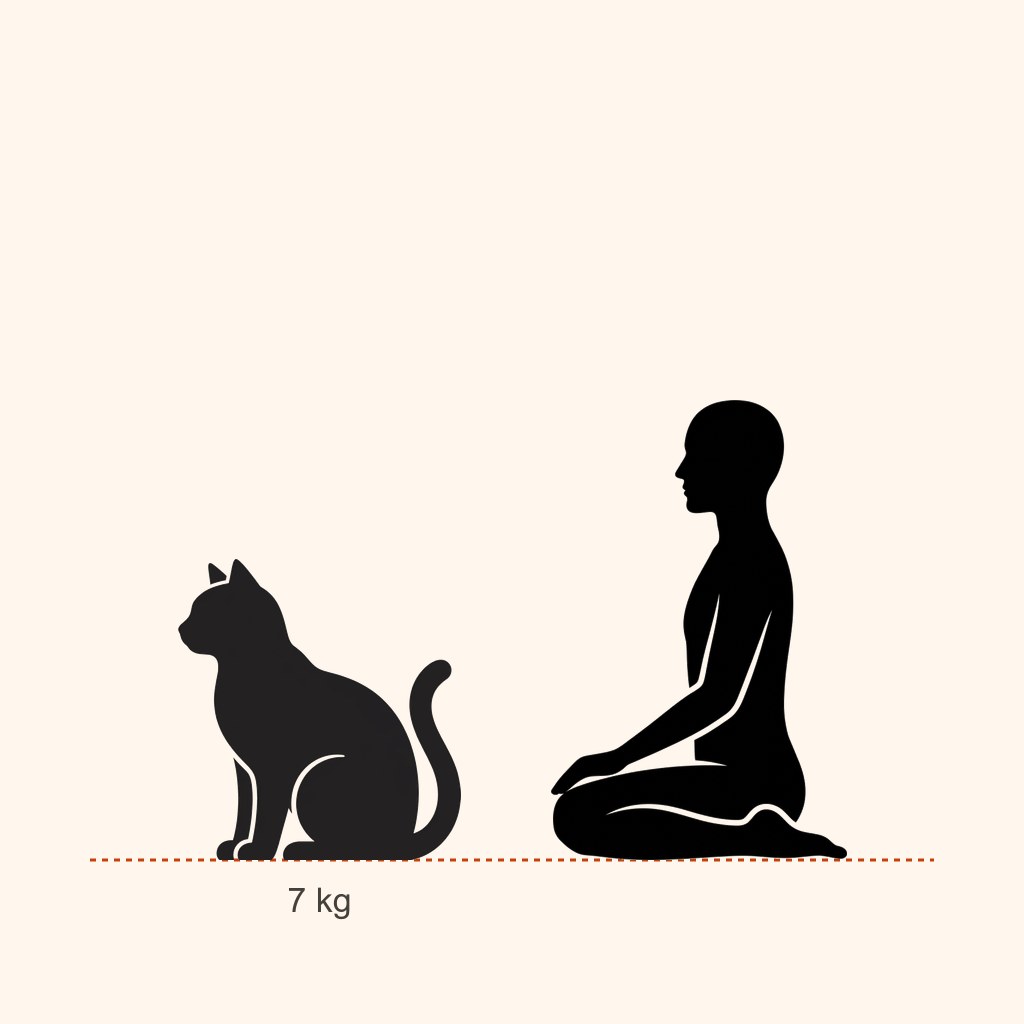
The image on this page is AI-generated and does not depict a real animal.
- Species
- Cat
- Origin
- United States
- Size
- Very Large
- Lifespan
- 12 - 17 years
- Temperament
- Affectionate Friendly Gentle Quiet Adaptable easygoing
- Description
Devoted enough to greet its person at the door, loves jumping into laps; an affectionate cat.
- Physical Traits
Medium-long silky coat, color-point pattern, blue eyes, a large body; tends to go limp and relaxed when picked up.
- Care / Environment Info
Lives indoors. Sheds moderately. Easy to care for, brushing once a week is enough. Moderate energy. Very quiet. Some breed-specific health monitoring is recommended.
Ragdoll Owner's Guide
Last updated:
Is a Ragdoll right for you?
The Ragdoll takes its name from the way it goes limp like a rag doll when picked up. A large, calm, and extraordinarily docile breed; probably the right choice for anyone looking for a lap cat. That docility is also its greatest vulnerability: a Ragdoll does not defend itself.
| Situation | Suitability | Note |
|---|---|---|
| Apartment | Perfect | Calm and not very active; strictly an indoor cat |
| Family with young children | Perfect | Patient and tolerant; the breed's greatest strength |
| First-time cat owner | Perfect | One of the easiest breeds in temperament |
| Alone 8+ hours a day | Moderate to poor | Attached to people; a second animal helps |
| Household with fur allergies | Poor | Semi-long coat, sheds regularly |
| Owner wanting a lap cat | Perfect | It relaxes in your lap and stays there; the breed's signature |
| Owner thinking of letting it outside | Not suitable | Its defensive reflexes are weak; it is defenceless outdoors |
The Ragdoll's docility carries a warning too: it may not show pain or discomfort. Regular health checks matter all the more in this breed.
Before you adopt
When buying a kitten, always ask for the HCM (hypertrophic cardiomyopathy) genetic test result. A known mutation (MyBPC3) exists in the Ragdoll, and responsible breeders test the parents.
Also ask about the PKD test and bladder stone history in the line.
Ragdolls appear in breed rescues; adopting an adult means the temperament and cardiac status can be assessed in advance.
Temperament
The Ragdoll is calm, affectionate, and devoted to people. It greets you at the door, follows you from room to room, and sits beside you. The description "a dog-like cat" is often used for this breed.
When picked up it relaxes and goes soft; this behaviour gave the breed its name. Not every individual relaxes to the same degree, but the general tendency is there.
Its voice is soft and rarely used. Its urge to climb to high places is lower than in other breeds; it generally lives at floor level.
It is extraordinarily tolerant of children and other animals and avoids conflict.
The kitten period is long; the Ragdoll keeps growing until three or four years of age and reaches its full colour in two to three years.
Kittens are born white; colour and pattern become clear over weeks.
Health issues and lifespan
Average lifespan is 12 to 17 years.
- Hypertrophic cardiomyopathy (HCM): The most important health issue in this breed. Thickening of the heart muscle; in the Ragdoll it is linked to a known genetic mutation for which a test exists. It progresses silently for a long time; the first sign may be rapid breathing, lethargy, or sudden paralysis of the hind legs (aortic thromboembolism). Periodic echocardiography is recommended from adulthood.
- Polycystic kidney disease (PKD): A genetic test exists.
- Bladder stones and urinary problems: Reported in this breed. Frequent trips to the litter tray with little urine, blood in the urine, and toileting outside the tray are the signs. In male cats a urinary blockage is an emergency.
- Obesity: A calm temperament and a large frame; excess weight accumulates easily and is confused with simply being big.
- Dental and gum disease: A general risk in cats.
- Hiding pain: Because of its docile temperament, discomfort may be noticed late; changes in behaviour should be taken seriously.
Feeding
An adult Ragdoll (4.5-9 kg; males are markedly larger) needs the energy equivalent of 65-95 g of dry food per day.
- Kitten (2-15 months): Kitten food. This breed grows slowly; do not switch to adult food early.
- Adult: High protein, low carbohydrate. Water intake is critical for urinary health; part of the daily ration should be given as wet food.
- Senior (9+ years): Annual monitoring of kidney and cardiac values.
Do not free-feed; give measured portions twice a day.
A fountain-type water bowl and multiple water points are the most practical way to reduce urinary problems.
Grooming and coat
A semi-long, silky coat that is easier to care for than expected because it has little undercoat.
- Brush two to three times a week; daily during seasonal changes.
- Matting risk is highest in the armpits, under the belly, and on the inner rear legs.
- The tail is long-haired and should be brushed.
- Bathing is generally unnecessary.
- Nails every two to three weeks; for a large cat, nail care matters for the furniture too.
- Teeth several times a week.
- Being a large breed it needs a wide litter tray; standard trays are inadequate.
Living space and enrichment
- A floor-level layout. The urge to climb is low; wide, soft resting areas and low platforms are used more.
- A sturdy, wide cat tree. If it uses one, it must carry an 8 kg cat.
- Play twice a day. If a calm temperament turns into inactivity, obesity is inevitable. Wand toys and toys dragged along the floor.
- Food puzzles. For both movement and the mind.
- Social contact. If it will be alone for long periods, a second animal should be considered.
- Strictly indoors. Because its defensive reflexes are weak this breed is defenceless outside, and the risk of theft is also high.
History
The Ragdoll was created in 1960s California by a breeder named Ann Baker. The starting point was Josephine, a white long-haired house cat; her kittens were noticed to be extraordinarily docile, and the breed was founded by selecting for that quality.
Ann Baker made claims about the breed with no scientific basis (space programme experiments, human genes) and tried to manage it under a private registry of her own with strict control. That approach led to a split among breeders.
In 1975 a group of breeders broke away from that system and worked to register the breed with the traditional cat federations. The CFA recognised it in 1993 and TICA earlier.
Today the Ragdoll is one of the most popular cat breeds in the world. The characteristic blue eyes and coloured points are part of the breed standard; three main patterns are accepted, bicolour, mitted, and colourpoint.
This guide is for information only and is not a substitute for veterinary advice. Prices are approximate and vary by region and time.
Adoption Prep Checklist
Housing
-
Cat bed
Cats want a safe space of their own to rest.
-
Cat scratching post
Satisfies the natural scratching instinct and protects furniture.
Feeding
-
Dry/wet cat food
Quality cat food is needed for balanced nutrition.
-
Food and water bowl set
Needed for daily feeding and water access.
Grooming
-
Cat litter and litter box
Essential for the cat's toilet needs.
-
Cat de-shedding brush
Regular brushing reduces hairball formation.
Activity
-
Cat toy
Cats release energy through play.
-
Cat carrier
Needed for safe transport to vet visits.
Frequently Asked Questions
Does the Ragdoll shed?
It sheds a moderate amount. Brushing two or three times a week noticeably reduces both loose hair and matting.
Can the Ragdoll live in an apartment?
Yes. It lives comfortably in an apartment as long as its daily needs are met. What matters is not floor area but consistent exercise and mental stimulation.
Is the Ragdoll good with children?
Generally yes. It adapts well to families with children. Even so, interactions should be supervised and children taught to respect the animal’s boundaries.
Is the Ragdoll suitable for first-time cat owners?
Yes. Its care and training are relatively forgiving, which makes it a sound choice for first-time owners.
How much exercise does the Ragdoll need?
It needs a moderate amount of exercise. Daily activity plus some play time makes for a balanced routine.
Can the Ragdoll be left alone during the day?
It can be left alone for a few hours. Long, routine absences can bring on boredom-driven behaviour problems; enrichment and a predictable routine reduce that risk.
How long does the Ragdoll live?
The Ragdoll lives 12 - 17 years on average. Diet, regular veterinary check-ups and early screening for hereditary conditions all affect this directly.
Where does the Ragdoll come from?
The Ragdoll originates from United States. The geography a breed was developed in, and the job it was bred for, explain much of its temperament and care needs today.