

Ragamuffin
The image on this page is AI-generated and does not depict a real animal.
- Species
- Cat
- Origin
- United States
- Size
- Large
- Lifespan
- 12 - 16 years
- Temperament
- Affectionate Friendly Gentle Calm
- Description
Calm, even-tempered and adapts easily to routine; a patient cat.
- Physical Traits
Long, soft, rabbit-fur-like coat, a large body, found in various colors.
- Care / Environment Info
Lives indoors. Sheds moderately. Requires moderate grooming, brushing a few times a week recommended. Moderate energy. Very quiet. Some breed-specific health monitoring is recommended.
Ragamuffin Owner's Guide
Last updated:
Is a RagaMuffin right for you?
The RagaMuffin is an American breed known for its large body, soft semi-long coat and exceptionally gentle nature. It shares its roots with the Ragdoll, which has its own guide on our site, so the two are often confused. In short: they are very similar in temperament and care; the differences lie mainly in accepted colours, face and eye shape, and the separate breeding histories of the two breeds. This guide focuses on what is specific to the RagaMuffin.
| Situation | Suitability | Note |
|---|---|---|
| Apartment | Perfect | A calm indoor cat that lives at ground level |
| Family with young children | Perfect | Patient and tolerant; its heavy body still needs careful handling |
| First-time cat owner | Good | Easy temperament; weight and coat monitoring need discipline |
| Alone 8+ hours a day | Moderate to poor | People-oriented; may be unhappy with long solitude |
| Household with fur allergies | Poor | Semi-long, dense coat that sheds regularly |
| Owner planning outdoor access | Not suitable | Overly trusting and non-aggressive; at risk outside |
| Owner who struggles to lift a heavy cat | Moderate | Adult males can get very heavy; carriers and furniture must be large |
The most realistic question: can you give years of space and time to a large, weight-prone cat that wants to spend its days indoors with you? If yes, the RagaMuffin is a very easy companion to live with.
Before you adopt
The RagaMuffin is uncommon in many countries, so not every kitten advertised under the name is actually one; large longhaired mixed cats are sometimes sold this way. Do not decide without registration papers (CFA, TICA or a similar registry) and without seeing the parents.
- Ask about HCM (hypertrophic cardiomyopathy) screening of the parents. CFA notes that breeders screen for heritable heart disease. A genetic test exists for the MyBPC3 mutation described in Ragdolls; ask whether it was done in Ragdoll-derived lines. Alongside the DNA test, echocardiography (heart ultrasound) screening is the most reliable approach.
- Do not take a kitten before 12 to 14 weeks; ask for vaccination and parasite-control records.
- Gentle longhaired adults also turn up in shelters. For an unpapered cat the breed name matters little; adopting an adult whose temperament and health you can see is a good option.
Temperament
The RagaMuffin is docile, people-focused and calm. It comes to your lap, follows you from room to room and usually does not hide from visitors. CFA and PetMD both stress how well it gets on with children, other cats and dogs.
Its voice is soft and rarely used. Energy is moderate to low; it joins short play sessions but does not race around all day, and its urge to climb is lower than in more athletic breeds.
This breed matures slowly. Sources state that RagaMuffins reach full development at around 4 years of age; body and coat keep filling out, and playfulness lasts a long time.
Compared with the Ragdoll there is no clear temperament difference; both are gentle lap cats. Every individual differs, though, and going limp when picked up is a tendency, not a guarantee.
Gentleness has a cost: a RagaMuffin does not defend itself well and may hide discomfort. Take small changes in appetite, movement and litter box habits seriously.
Health issues and lifespan
Sources generally give 12 to 16 years, longer with good care. CFA states there are no defined breed-specific genetic problems, but breeders screen for heritable conditions. In practice, watch for:
- Hypertrophic cardiomyopathy (HCM): Thickening of the heart muscle. Often silent; if you see fast or open-mouth breathing, lethargy, loss of appetite or sudden hind-leg paralysis, see a vet immediately. The heart should be listened to at every annual check, and echocardiography requested if a murmur is heard.
- Obesity: Its size and calm nature make weight gain easy. Excess weight accelerates diabetes, joint and liver problems. If you cannot feel the ribs with light pressure, review portions.
- Joint problems and arthritis: PetMD notes that arthritis may start earlier in this large breed, around age 10. Avoiding jumps, reluctance on stairs and difficulty entering the litter box are signs.
- Hairballs and matting-related skin problems: The coat resists matting fairly well, but the belly and armpits mat if neglected. Frequent retching, vomiting or constipation warrant a vet visit.
- Tartar and gum disease: Common in all cats; bad breath, chewing on one side or drooling are reasons for an exam.
Annual checks for life, and six-monthly checks with blood and urine tests after age 8, are recommended.
Feeding
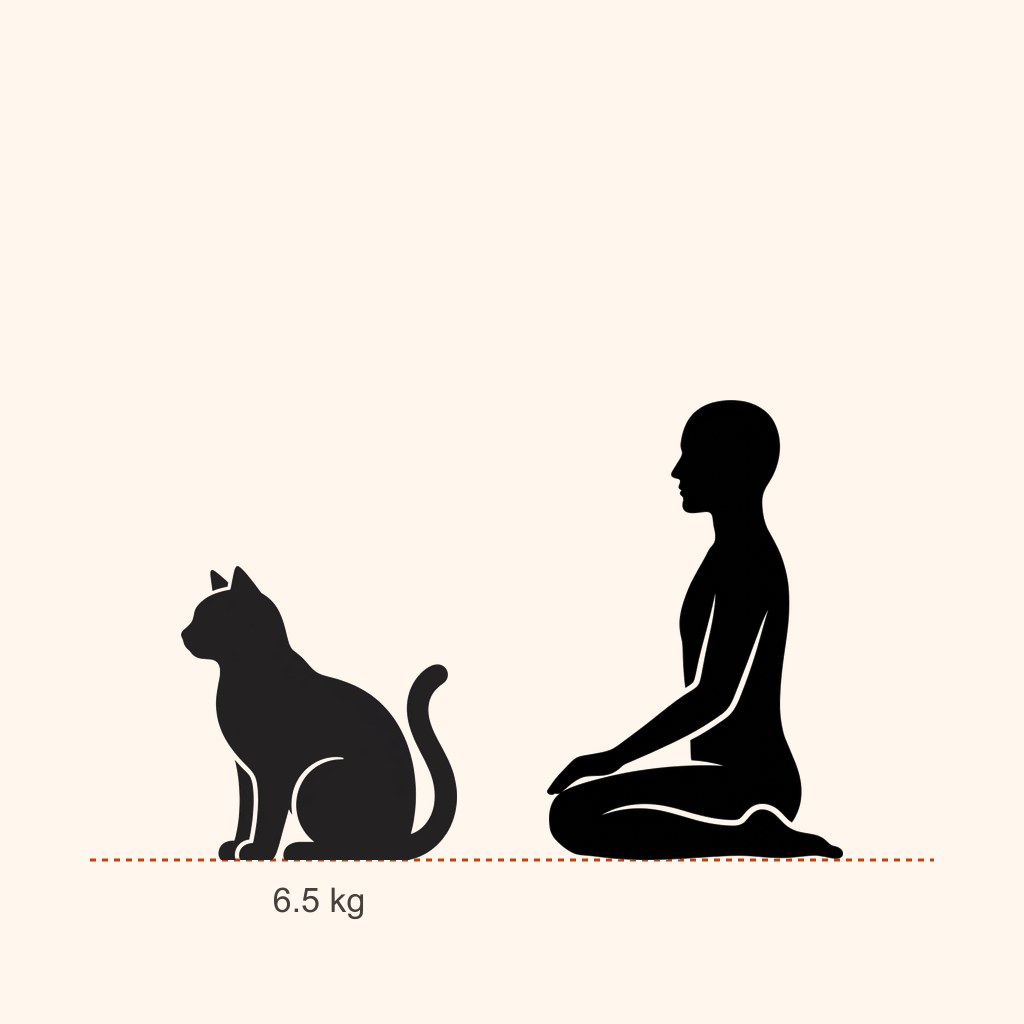
An adult female RagaMuffin usually weighs 4.5 to 7 kg, while males can exceed 9 kg. Portions should therefore be set to the cat's ideal weight; use the food package chart only as a starting point.
- Kitten (2-12 months): Kitten food, 3 to 4 meals a day. As a slow-maturing breed, do not suddenly increase portions after 12 months.
- Young adult (1-4 years): Quality, high-protein adult food; 2 to 3 measured meals a day. Avoid free feeding.
- After neutering: Energy needs drop; weigh more often.
- Senior (10+ years): A diet that supports joints and kidneys, agreed with your vet.
Wet food increases water intake and helps weight control. Use a fountain and several water points. Keep treats to a small share of daily energy.
Grooming and coat
CFA notes that the RagaMuffin coat resists matting and weekly combing is usually enough, a far lighter workload than a Persian.
- Comb once or twice a week: A wide-toothed metal comb first, then a soft brush.
- Critical areas: Belly, armpits, behind the ears and inner hind legs, where mats start.
- Seasonal changes: Shedding increases in spring and autumn; comb more often then.
- Bathing: Rarely needed. If you bathe, dry the coat completely.
- Nails every 2 to 3 weeks; teeth brushed several times a week if possible.
Large, especially overweight, cats may struggle to clean their rear end. Check that area regularly.
Living space and enrichment
- Sturdy, wide furniture. A cat tree must hold a heavy cat and have broad platforms.
- Large litter box. Choose a roomy box; follow the number of cats + 1 rule.
- Daily play. Two 10 to 15 minute sessions a day with wand toys are the easiest weight control.
- Cool summers. In hot climates, a cool room and plenty of water matter for this dense-coated cat.
- Safe windows and balconies. Net balconies and opening windows; indoor life is essential for this breed.
In homes where the cat is alone for long hours, a compatible second cat can help.
History
The RagaMuffin's story is intertwined with the Ragdoll's. Ragdoll breeding, started by Ann Baker in California in the 1960s, became governed by strict rules and licensing over time. In the early 1990s a group of breeders working with the IRCA "Cherubim" cats broke away from these restrictions.
The group outcrossed to longhaired domestic cats to broaden the gene pool and named the breed "RagaMuffin". According to CFA, the name nods to the breed's street-cat ancestry. Wikipedia dates the split to 1994.
The clearest difference from the Ragdoll is colour: pointed patterns define the Ragdoll, while the RagaMuffin is accepted in a wide range of colours and patterns, including solids and tabbies. Pointed RagaMuffins are not shown in CFA. The eyes are also rounder and walnut-shaped.
CFA recognised the breed in 2003 and granted championship status in 2011. It is bred in the United States and parts of Europe and remains little known elsewhere.
This guide is for information only and is not a substitute for veterinary advice. Prices are approximate and vary by region and time.
Adoption Prep Checklist
Housing
-
Cat bed
Cats want a safe space of their own to rest.
-
Cat scratching post
Satisfies the natural scratching instinct and protects furniture.
Feeding
-
Dry/wet cat food
Quality cat food is needed for balanced nutrition.
-
Food and water bowl set
Needed for daily feeding and water access.
Grooming
-
Cat litter and litter box
Essential for the cat's toilet needs.
-
Cat de-shedding brush
Regular brushing reduces hairball formation.
Activity
-
Cat toy
Cats release energy through play.
-
Cat carrier
Needed for safe transport to vet visits.
Frequently Asked Questions
Does the Ragamuffin shed?
It sheds a moderate amount. Brushing two or three times a week noticeably reduces both loose hair and matting.
Can the Ragamuffin live in an apartment?
Yes. It lives comfortably in an apartment as long as its daily needs are met. What matters is not floor area but consistent exercise and mental stimulation.
Is the Ragamuffin good with children?
Generally yes. It adapts well to families with children. Even so, interactions should be supervised and children taught to respect the animal’s boundaries.
Is the Ragamuffin suitable for first-time cat owners?
Partly. Someone with basic experience will manage well, but it would not be the first choice for a complete beginner.
How much exercise does the Ragamuffin need?
It needs a moderate amount of exercise. Daily activity plus some play time makes for a balanced routine.
Can the Ragamuffin be left alone during the day?
It can be left alone for a few hours. Long, routine absences can bring on boredom-driven behaviour problems; enrichment and a predictable routine reduce that risk.
How long does the Ragamuffin live?
The Ragamuffin lives 12 - 16 years on average. Diet, regular veterinary check-ups and early screening for hereditary conditions all affect this directly.
Where does the Ragamuffin come from?
The Ragamuffin originates from United States. The geography a breed was developed in, and the job it was bred for, explain much of its temperament and care needs today.