

Malayan
The image on this page is AI-generated and does not depict a real animal.
- Species
- Cat
- Origin
- United Kingdom
- Size
- Medium
- Lifespan
- 12 - 18 years
- Temperament
- Affectionate Interactive Playful Social
- Description
Curious and loves to explore, quite talkative and strong-willed.
- Physical Traits
Short coat, solid dark colors (Burmese type), found in various solid shades.
- Care / Environment Info
Lives indoors. Sheds very little. Very easy to care for, infrequent brushing needed. Very high energy, needs plenty of play and stimulation. Very talkative and can meow loudly. Generally a very healthy breed.
Malayan Owner's Guide
Last updated:
Is a Malayan cat right for you?
The Malayan is a British-originated cat, today considered part of the "Asian" breed group, that is closely related to the Burmese but carries its own standard at some registries. Its slender, muscular body, sleek short coat, and intensely people-oriented temperament closely resemble the Burmese — unsurprising, since its origin traces back to a Burmese line. It suits someone looking for an affectionate, interactive, playful, social companion, but you should know upfront about the naming confusion and its rarity.
| Situation | Suitability | Note |
|---|---|---|
| Apartment | Excellent | Adapts very well to indoor life |
| Family with young children | Good | Social and tolerant; supervise rough play |
| First-time cat owner | Good | Easy care, but needs a lot of attention |
| Alone 8+ hours a day | Not suitable | Highly attached to people; doesn't handle long solitude well |
| Household with fur allergies | Moderate-poor | Short, close-lying coat; no guarantee against allergies |
| Home with dogs or other cats | Good | Its social nature makes multi-pet households easy |
| Owner wanting a widely recognized, documented breed | Caution | Most major registries don't treat "Malayan" as a separate breed |
The most realistic question: will you actually be around for this cat, or will it spend most of its time alone? The Malayan is a people-dependent breed and doesn't do well with prolonged solitude.
Before you adopt
The name "Malayan" comes from two different, often-confused stories, and this is worth clarifying before you adopt.
The breed described here traces to Britain, where it is now known within the GCCF's "Asian" breed group as "Asian Self," a name still commonly used interchangeably with "Malayan" in the UK. The group descends from an accidental 1981 mating between a Chinchilla Persian male and a Lilac Burmese female; Baroness Miranda von Kirchberg developed this line into the shaded/tipped "Burmilla" type first, then the solid-colored "Asian Self/Malayan" variant. The GCCF gradually brought all Asian group varieties to championship status by 2003 and classifies the breed in the same section as the Burmese (Section 5) — genetically and typologically very close, but with a separate standard.
Separately, in the United States between 1974 and 1984, the CFA used the name "Malayan" for the lighter-colored (blue, chocolate, lilac) varieties of the Burmese; this designation was fully retired in 1984, and those colors are now simply part of the standard Burmese breed (as "dilute" Burmese). So the historical American "Malayan" is no longer a separate breed at any registry today — it survives only as a color reference.
Bottom line: major American organizations such as TICA and CFA don't recognize "Malayan" as a separate breed today; the GCCF still uses the name (alongside Asian Self) for the British-originated type. If a kitten is being sold as a "Malayan," ask the seller exactly which registry and standard they mean, and ask for pedigree papers; be cautious if you can't get a clear answer. This breed is extremely rare outside the UK.
Temperament
The Malayan largely carries the Burmese's signature devotion to people. The GCCF calls it a "people cat": affectionate, curious, engagement-seeking, and entertaining.
It follows you from room to room, settles in your lap, and inserts itself into whatever you're doing. It is generally open with strangers rather than shy.
It is intelligent and can learn simple games. It gets on well with other cats and cat-friendly dogs, thriving in a social household.
When bored, it shows its frustration through meowing and attention-seeking; long stretches of solitude are not ideal for this breed.
Health issues and lifespan
The GCCF reports an average lifespan of 16 to 18 years for the Asian group; this is close to, or slightly above, the 12–17 year range commonly cited for the related Burmese. There is no dedicated lifespan study for this breed specifically, but a range consistent with the closely related breed's data is reasonable.
- Hypokalemia (hypokalemic polymyopathy): A known inherited risk carried from the breed's Burmese ancestry. Falling blood potassium causes recurring muscle weakness, a downward head tilt, and a stiff gait. The GCCF-affiliated Asian Cat Association has required this genetic test for breeding cats since 2018; ask for the parents' test results when getting a kitten.
- Other inherited risks: Conditions such as polycystic kidney disease (PKD) and progressive retinal atrophy (PRA), carried by ancestor breeds (Persian, Burmese), have not been documented in the Asian group to date; responsible breeders still run general screening.
- Dental disease: A general risk across cats; regular brushing and annual checks are recommended.
- Obesity: Because it is an energetic but lap-loving breed, weight should be monitored.
Feeding
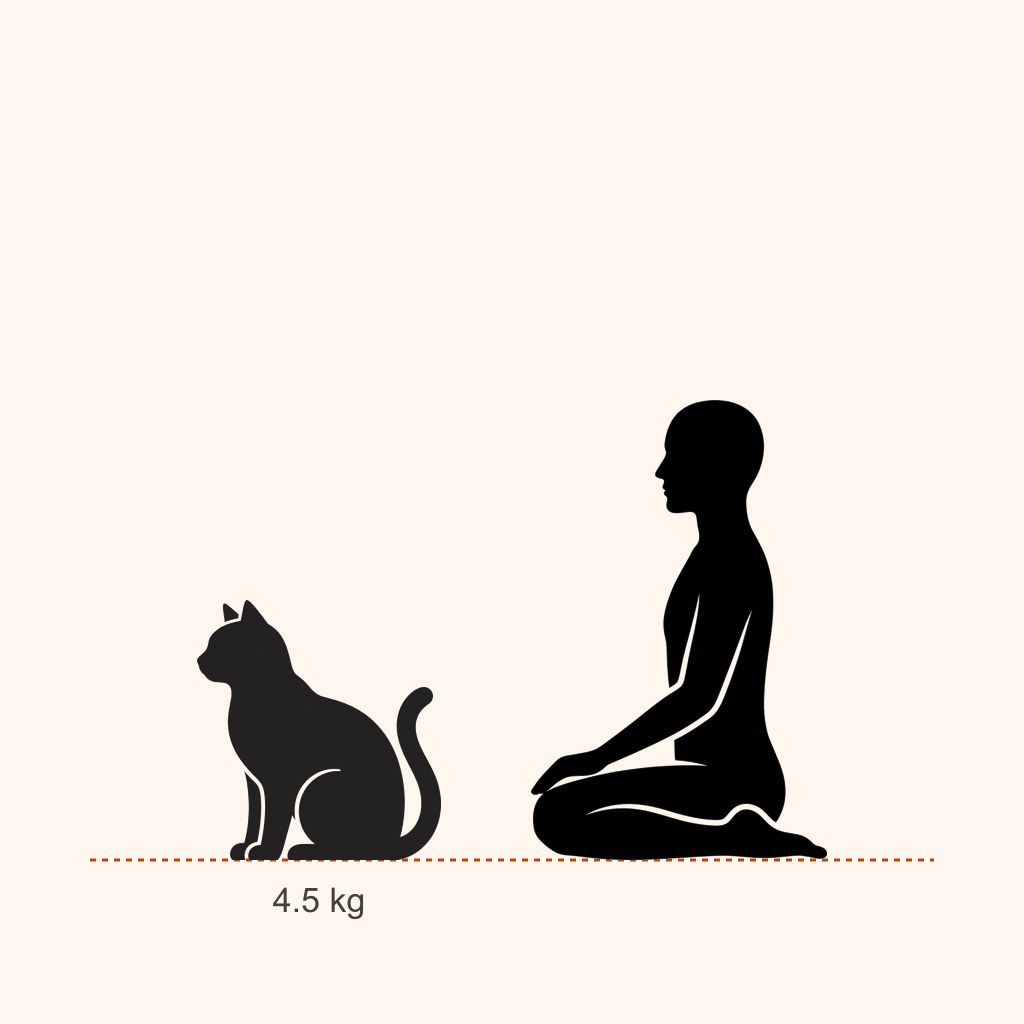
An adult Malayan ranges roughly 3.5–7 kg; males are noticeably larger than females.
- Kitten (2–12 months): Kitten food, three to four meals a day.
- Adult: High-protein, balanced food; use measured meals rather than free-feeding.
- Senior (8+ years): Age-appropriate food alongside weight and dental monitoring; because of the hypokalemia risk, seek veterinary care immediately for unusual muscle weakness regardless of feeding.
Grooming and coat
The short, fine, glossy coat needs very little upkeep.
- Weekly brushing removes dead hair and maintains shine.
- Bathing is usually unnecessary.
- Brush teeth several times a week.
- Check nails every two to three weeks.
- Check ears monthly.
Living space and enrichment
- Companionship. If no one is home most of the day, a second cat is a valuable solution for this breed.
- Daily interactive play. At least two 15-minute sessions a day, which also helps with weight control.
- Climbing and lookout spots. A sturdy cat tree and a window perch.
- Mental stimulation. Puzzle feeders and fetch games.
- Secure indoor living. Being highly people-attached, this breed should live indoors to avoid the risk of getting lost outside; screen windows and balconies.
History
The Malayan's name has a genuinely tangled origin, which is part of the breed's history. In 1981 in England, an unplanned mating between Baroness Miranda von Kirchberg's Chinchilla Persian male (Sanquist) and a Lilac Burmese female (Faberge) produced four female kittens. These kittens formed the foundation of both the shaded/tipped "Burmilla" line and the solid-colored line now called "Asian Self" (and still commonly "Malayan"). Therese Clarke founded the Burmilla Cat Club in 1984; the GCCF granted preliminary championship status in 1990, and by 2003 the whole Asian group — Self, Smoke, Shaded/Burmilla, Tabby, and the semi-longhaired Tiffanie — had achieved full recognition. The GCCF classifies this group in the same section as the Burmese but maintains it as a separate breed standard.
Independently, in the United States, the CFA began registering the blue, chocolate, and lilac colors of the Burmese under the name "Malayan" from 1974 to 1979, likely inspired by the breed's regional origins spanning Burma, Malaya, and Thailand. In 1984 the CFA dropped this distinction entirely and folded those colors directly into the Burmese standard. Today that historical usage survives only in old records and as a color reference, not as a breed name.
This guide is for information only and is not a substitute for veterinary advice. Prices are approximate and vary by region and time.
Adoption Prep Checklist
Housing
-
Cat bed
Cats want a safe space of their own to rest.
-
Cat climbing tree
Satisfies the natural scratching instinct and protects furniture.
Feeding
-
Dry/wet cat food
Quality cat food is needed for balanced nutrition.
-
Food and water bowl set
Needed for daily feeding and water access.
Grooming
-
Cat litter and litter box
Essential for the cat's toilet needs.
-
Short-hair cat brush
Regular brushing reduces hairball formation.
Activity
-
Interactive cat toy
Cats release energy through play.
-
Cat carrier
Needed for safe transport to vet visits.
Frequently Asked Questions
Does the Malayan shed?
Shedding is low. Brushing once a week is usually enough, with a mild increase during seasonal changes.
Can the Malayan live in an apartment?
Yes. It lives comfortably in an apartment as long as its daily needs are met. What matters is not floor area but consistent exercise and mental stimulation.
Is the Malayan good with children?
Generally yes. It adapts well to families with children. Even so, interactions should be supervised and children taught to respect the animal’s boundaries.
Is the Malayan suitable for first-time cat owners?
Yes. Its care and training are relatively forgiving, which makes it a sound choice for first-time owners.
How much exercise does the Malayan need?
It is high-energy and needs vigorous daily activity. Mental stimulation matters as much as physical exercise; without enough to do, destructive behaviour follows.
Can the Malayan be left alone during the day?
It can be left alone for a few hours. Long, routine absences can bring on boredom-driven behaviour problems; enrichment and a predictable routine reduce that risk.
How long does the Malayan live?
The Malayan lives 12 - 18 years on average. Diet, regular veterinary check-ups and early screening for hereditary conditions all affect this directly.
Where does the Malayan come from?
The Malayan originates from United Kingdom. The geography a breed was developed in, and the job it was bred for, explain much of its temperament and care needs today.