

Korat
The image on this page is AI-generated and does not depict a real animal.
- Species
- Cat
- Origin
- Thailand
- Size
- Medium
- Lifespan
- 10 - 15 years
- Temperament
- Active Loyal Very intelligent Expressive Trainable
- Description
Intelligent, confident and forms strong bonds with its person; a natural breed.
- Physical Traits
Short blue-silver coat, a heart-shaped face, bright green eyes.
- Care / Environment Info
Lives indoors. Sheds moderately. Very easy to care for, infrequent brushing needed. Moderate energy. Moderately vocal/talkative. Generally a very healthy breed.
Korat Owner's Guide
Last updated:
Is a Korat cat right for you?
The Korat is a naturally developed Thai breed known at home as "Si-Sawat" (silver-blue) and considered one of the country's lucky breeds. It's recognised by its shimmering silver-tipped blue coat and large peridot-green eyes; traditionally it was never sold in Thailand, only given as a gift to newlyweds for good fortune and prosperity.
| Situation | Suitability | Note |
|---|---|---|
| Apartment | Very good | Adapts well to indoor life |
| Family with young children | Good | Loyal and playful, but plays by its own rules |
| First-time cat owner | Moderate | Intelligent and trainable but demanding; has little patience for being ignored |
| Alone 8+ hours a day | Poor | Deeply attached to people, acts like the "head of the family," dislikes long solitude |
| Household with fur allergies | Moderate | Short single coat sheds, but not heavily |
| Home that needs quiet | Poor | Vocal, makes its wants known through sound |
| Adopter who cares about carrier testing for inherited disease | Very good | Look for lines tested for GM1/GM2 gangliosidosis carrier status (see below) |
The question to ask: can you give daily attention to an intelligent, demanding cat that isn't shy about using its voice? If yes, the Korat makes a loyal and visually striking companion.
Before you adopt
Two rare but serious inherited diseases have been identified in the Korat: GM1 and GM2 gangliosidosis. Both are inherited as autosomal recessive traits, meaning a kitten must inherit two copies of the mutation (one from each parent) to be affected. Cats carrying a single copy ("carriers") aren't themselves ill but can pass the gene to offspring; if two carriers are bred together, a quarter of the kittens are predicted to be affected. Genetic testing is available (offered by the UC Davis Veterinary Genetics Laboratory and similar labs); when choosing a kitten, be sure to ask whether both parents have been tested for GM1/GM2. A responsible breeder will have this documentation on hand.
Temperament
The Korat is highly intelligent, curious, and eager to learn; it can pick up tricks but prefers to decide for itself when and how to perform them. It bonds deeply with people, wants to be part of household events, and sees itself as part of the family — often as its head.
It vocalises often and effectively, making its needs and wants clear. It generally gets on well with other pets but can show jealousy if it feels its position is threatened. It's open to mental stimulation; puzzle toys and interactive play keep this breed happy.
Health issues and lifespan
Sources generally report a lifespan of 10-15 years; it's considered a naturally hardy, relatively healthy breed.
- GM1 gangliosidosis: A fatal, untreatable disease caused by abnormal lipid buildup in nerve cells. Signs typically begin with tremors around 3 months of age, progressing to blindness and seizures, and ending in death by 9-10 months. Genetic testing to identify carriers and avoid carrier-to-carrier matings prevents the disease entirely.
- GM2 gangliosidosis: A second, separate gangliosidosis caused by a different gene but working through a similar mechanism; likewise autosomal recessive, with a genetic test available.
- Hypertrophic cardiomyopathy (HCM): The most common heart disease in cats; periodic checks are recommended.
- Atherosclerosis: Rare in cats generally, but reported in this breed by some sources; its exact prevalence isn't well established.
If you notice tremors, loss of balance, or vision problems in a Korat kitten around 3-4 months of age, see a vet without delay — these can be early signs of gangliosidosis.
Feeding
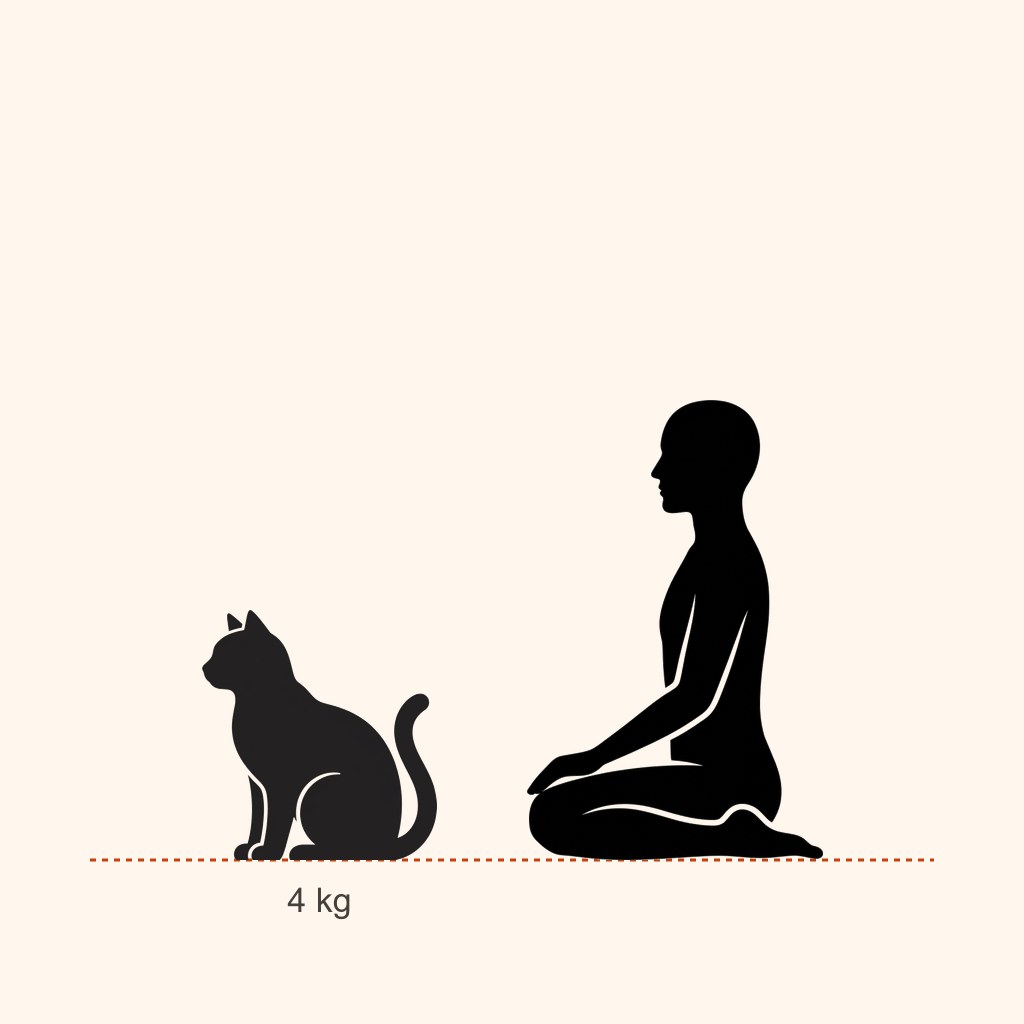
An adult Korat (2.7-4.5 kg / 6-10 lb) can be fed the standard amount for a medium-sized cat; males can be notably heavier than females.
- Kitten (2-12 months): Kitten food, three to four meals a day.
- Adult: High protein, balanced mineral content.
- Senior (8+ years): Heart health should be checked annually.
Because this is an intelligent, demanding breed, puzzle feeders both tire the mind and slow down mealtime.
Grooming and coat
The Korat's single, short, silvery coat is an easy one to maintain.
- Weekly brushing is enough to keep its shine and remove loose hair.
- Nails every two to three weeks.
- Teeth brushed several times a week.
- Bathing is rarely needed.
Living space and enrichment
- Mental stimulation. Puzzle feeders and trick training satisfy this intelligent breed.
- Social time. Several bouts of active attention a day; it doesn't like being neglected.
- Vertical space. A cat tree and shelves are valuable for a breed that loves to observe from above.
- Consistent rules. With its intelligent, strong-willed personality, a stable routine and clear boundaries make cooperation easier.
- Respond to its vocalising. This breed communicates through sound; answering it strengthens the bond.
History
The Korat is a naturally developed breed from Thailand, first recorded centuries ago; it's named among the seventeen "lucky" cats of Thailand in the "Tamra Maew" (Cat-Book Poems), dated to 1350-1767, now held in Bangkok's National Library. It takes its Western name from Korat province, where the breed was first noted, while in Thailand it's known as Si-Sawat, meaning "grey-blue."
Traditionally the Korat was never sold, only given as a gift — especially to newlyweds, as a wish for prosperity and long life. In northeastern Thailand it's still associated with rain-making ceremonies, paraded through villages and sprinkled with water to symbolise abundant water for the rice paddies. It was first brought to the United States in 1959 by Jean Johnson, with the line strengthened by nine cats imported by Daphne Negus in 1969. An earlier attempt to introduce the breed to Britain in 1889 under the name "Blue Siamese" wasn't accepted by judges of the time; its real recognition there came when it reached England in 1972. The CFA granted the Korat championship status in 1966.
This guide is for information only and is not a substitute for veterinary advice. Prices are approximate and vary by region and time.
Adoption Prep Checklist
Housing
-
Cat bed
Cats want a safe space of their own to rest.
-
Cat scratching post
Satisfies the natural scratching instinct and protects furniture.
Feeding
-
Dry/wet cat food
Quality cat food is needed for balanced nutrition.
-
Food and water bowl set
Needed for daily feeding and water access.
Grooming
-
Cat litter and litter box
Essential for the cat's toilet needs.
-
Cat de-shedding brush
Regular brushing reduces hairball formation.
Activity
-
Cat toy
Cats release energy through play.
-
Cat carrier
Needed for safe transport to vet visits.
Frequently Asked Questions
Does the Korat shed?
It sheds a moderate amount. Brushing two or three times a week noticeably reduces both loose hair and matting.
Can the Korat live in an apartment?
Yes. It lives comfortably in an apartment as long as its daily needs are met. What matters is not floor area but consistent exercise and mental stimulation.
Is the Korat good with children?
Generally yes. It adapts well to families with children. Even so, interactions should be supervised and children taught to respect the animal’s boundaries.
Is the Korat suitable for first-time cat owners?
Yes. Its care and training are relatively forgiving, which makes it a sound choice for first-time owners.
How much exercise does the Korat need?
It needs a moderate amount of exercise. Daily activity plus some play time makes for a balanced routine.
Can the Korat be left alone during the day?
It can be left alone for a few hours. Long, routine absences can bring on boredom-driven behaviour problems; enrichment and a predictable routine reduce that risk.
How long does the Korat live?
The Korat lives 10 - 15 years on average. Diet, regular veterinary check-ups and early screening for hereditary conditions all affect this directly.
Where does the Korat come from?
The Korat originates from Thailand. The geography a breed was developed in, and the job it was bred for, explain much of its temperament and care needs today.