

Dragon Li
The image on this page is AI-generated and does not depict a real animal.
- Species
- Cat
- Origin
- China
- Size
- Medium
- Lifespan
- 12 - 15 years
- Temperament
- Intelligent Friendly Gentle Loving Loyal
- Description
Loyal but not overly affectionate, intelligent and energetic; known as a skilled hunter.
- Physical Traits
Short, golden-brown ticked tabby coat, an athletic body typical of a natural breed.
- Care / Environment Info
Lives indoors. Sheds moderately. Very easy to care for, infrequent brushing needed. Moderate energy. Moderately vocal/talkative. Generally a very healthy breed.
Dragon Li Owner's Guide
Last updated:
Is a Dragon Li right for you?
The Dragon Li — known in Chinese as Li Hua Mao — comes from a natural cat population that has existed in rural China for centuries, largely untouched by deliberate human breeding. With its golden-brown mackerel tabby pattern, almond-shaped eyes, and a distinctive "M" marking on the forehead, it has a wild look but a temperament suited to living alongside people. It remains an extremely rare breed in the West, and that reality should shape your decision from the start.
| Situation | Suitability | Note |
|---|---|---|
| Adopting outside China | Nearly impossible | No established breeding network exists in most Western countries; the breed is found mainly in China |
| A home with a garden or secure outdoor access | Very good | Ideal for its strong hunting instinct and energy |
| Apartment living | Moderate | Workable, but its curious, active nature requires deliberate enrichment |
| Family with young children | Good | Sturdy and playful, generally tolerant of rough-and-tumble play |
| First-time cat owner | Moderate | Care is relatively simple, but breed-specific health and behaviour information is limited |
| Alone 8+ hours a day | Moderate | Intelligent and independent, but can develop destructive habits if bored |
| Household with fur allergies | Moderate | Short-to-medium coat with no undercoat sheds less, but does not eliminate allergens |
| Hot climate | Good | Short coat and general hardiness of a natural breed are an advantage |
The most honest question here is whether you can actually obtain this breed, not just admire it. The Dragon Li is not currently recognised by most major Western registries, and its supply chain runs almost entirely through China. In practice, finding one outside that context is close to impossible.
Before you adopt
The Dragon Li was accepted by the Cat Fanciers' Association (CFA) in Miscellaneous status in 2010, but was removed from that status effective 1 May 2015 due to insufficient population growth and breeder support. Today the breed is formally recognised mainly by China's own registry, the Cat Aficionado Association (CAA); no clear, current recognition record was found for TICA. In other words, a kitten marketed as a "Dragon Li" may not come with the pedigree and registry safeguards you would expect from an established Western breed.
A realistic alternative: mackerel tabby domestic shorthairs commonly found in shelters or as strays are visually and behaviourally close to the Dragon Li, which is itself, at its core, a selected landrace rather than an engineered breed.
Temperament
The Dragon Li is intelligent, alert, and constantly attentive to its surroundings. Sources describe it as watchful, curious, and unusually skilled at engaging with people. It is loyal to its family, though not every individual is a lap cat; some sources note this breed favours active companionship and play over constant cuddling. Affection may show as following you around the house rather than curling up in your lap.
Its hunting instinct is strong; historically it was valued in rural Chinese households for catching mice and pests, and that same drive today shows up as intense interest in interactive toys and hunt-simulation games.
It is energetic and playful, and does not do well sitting still for long stretches. It generally gets along with children and other pets, but thrives in a home with room to chase, climb, and explore; a very quiet, sedentary household may leave it understimulated.
Health issues and lifespan
Honesty matters here: the Dragon Li is not a breed with extensive, breed-specific health data published by major Western veterinary organisations or registry health committees. Because its recognition in the West was brief and limited (CFA Miscellaneous status only from 2010 to 2015), there has been far less hereditary screening or genetic research than for long-established breeds.
General sources put average lifespan at roughly 12 to 15 years; this figure comes from breed-overview sites rather than a veterinary institution and should not be treated as a guarantee. Some sources mention occasional hip dysplasia, but this claim is also supported only by scattered breed-profile text rather than a large-scale study.
Natural breeds — populations not shaped by intensive human selection — are generally understood to carry a wider gene pool and sometimes a lower incidence of certain inherited conditions; this is a general observation about natural breeds, not a proven, breed-specific claim for the Dragon Li. Before adopting, have a vet run a standard general health screening and plan ongoing care around typical feline needs rather than assumptions specific to this breed.
Feeding
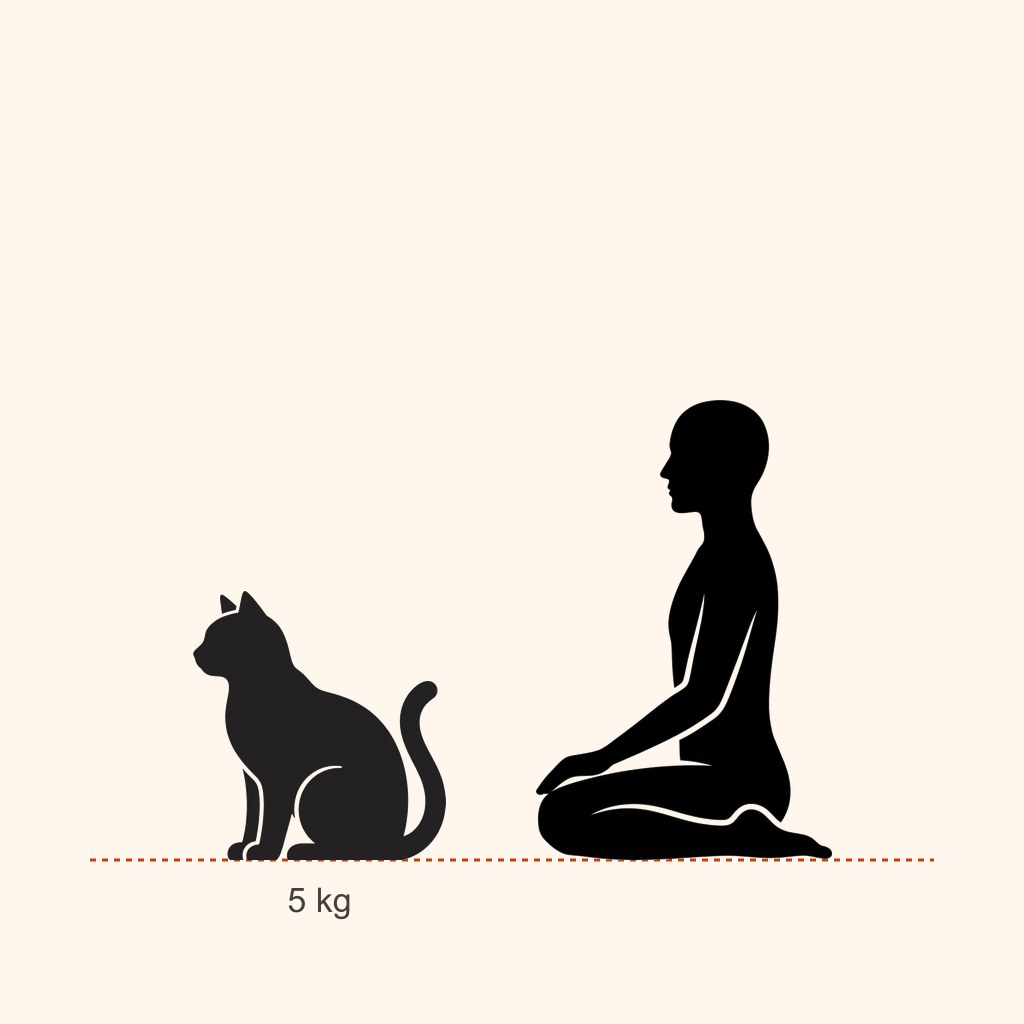
The Dragon Li is a medium-sized, muscular, energetic cat; the reference weight is around 5 kg (sources cite a range of roughly 4-5.5 kg / 9-12 lb, with some individuals reported up to about 6.8 kg).
- Kitten: Kitten food with frequent, balanced meals through the growth period.
- Adult: Choose a high-protein food rich in taurine; given the breed's energy and hunting drive, a quality protein source to support an active lifestyle matters.
- Senior: Monitoring kidney and joint health at routine vet checkups is recommended for any ageing cat, independent of any breed-specific risk.
Fresh water should always be available; hydration matters for an active breed. Work out portion sizes with your vet based on your individual cat's weight, since no official breed-specific feeding chart exists.
Grooming and coat
The Dragon Li's coat is short to medium in length, dense, silky, and lacks a distinct undercoat, which makes it considerably easier to maintain than long-haired breeds like the Persian.
- Brushing a few times a week is enough to remove loose hair and keep the coat healthy.
- The clarity and richness of the tabby pattern is best maintained through balanced nutrition and regular brushing.
- Check nails every two to three weeks and trim as needed; given the strong hunting instinct, maintaining scratching posts also matters.
- Brushing teeth a few times a week is a standard part of general cat care.
- The "M" marking on the forehead and the dark facial lines sometimes called "dragon tears" need no special care — they're simply the breed's visual signature.
Living space and enrichment
- Secure outdoor access. An enclosed garden or a "catio" best satisfies this breed's natural drive to hunt and explore, where feasible.
- Active play. At least two sessions a day with interactive, hunt-themed toys; for a high-energy breed, inactivity can lead to both behavioural problems and obesity.
- Climbing and lookout points. Cat trees, shelves, and window perches matter for a curious cat that likes to survey its surroundings.
- Mental stimulation. Puzzle feeders and hunt-simulation toys keep an intelligent, work-oriented breed from getting bored.
- Standard litter box hygiene. The usual rule applies to every cat: one box per cat plus one, cleaned daily.
History
The Dragon Li traces its origins to a native, landrace tabby cat population that has existed in rural China for centuries; its Chinese name, "Li Hua Mao," roughly translates to "leopard/fox-flower patterned cat," referring to the striped-spotted pattern of its coat. Some popular sources claim these cats date back much further, to ancient Chinese dynasties, but such claims are not backed by verifiable academic sources; the documentable history begins with the breed's exhibition as an experimental standardised breed in Beijing in 2003-2004.
International interest grew from there, and CFA accepted the Dragon Li into Miscellaneous class in February 2010. However, because population growth and breeder support did not reach the level needed, the breed was removed from that status effective 1 May 2015. No clear, current recognition record was found for TICA. Today the main registry that formally recognises the breed is China's own Cat Aficionado Association (CAA); in China, the Dragon Li is also regarded as something of a national cultural symbol.
The fact that major Western veterinary and registry bodies have not engaged with this breed in depth means that most available information relies heavily on breed-promotion sources and general knowledge about natural shorthair breeds. Keeping that limitation in mind is central to setting realistic expectations if you're researching this breed.
Legal status note: The Dragon Li is a cat breed. Dangerous-animal or breed-specific restrictions in Turkey apply only to certain dog breeds and do not apply to cats.
This guide is for information only and is not a substitute for veterinary advice. Prices are approximate and vary by region and time.
Adoption Prep Checklist
Housing
-
Cat bed
Cats want a safe space of their own to rest.
-
Cat scratching post
Satisfies the natural scratching instinct and protects furniture.
Feeding
-
Dry/wet cat food
Quality cat food is needed for balanced nutrition.
-
Food and water bowl set
Needed for daily feeding and water access.
Grooming
-
Cat litter and litter box
Essential for the cat's toilet needs.
-
Cat de-shedding brush
Regular brushing reduces hairball formation.
Activity
-
Cat toy
Cats release energy through play.
-
Cat carrier
Needed for safe transport to vet visits.
Frequently Asked Questions
Does the Dragon Li shed?
It sheds a moderate amount. Brushing two or three times a week noticeably reduces both loose hair and matting.
Can the Dragon Li live in an apartment?
Yes. It lives comfortably in an apartment as long as its daily needs are met. What matters is not floor area but consistent exercise and mental stimulation.
Is the Dragon Li good with children?
Generally yes. It adapts well to families with children. Even so, interactions should be supervised and children taught to respect the animal’s boundaries.
Is the Dragon Li suitable for first-time cat owners?
Yes. Its care and training are relatively forgiving, which makes it a sound choice for first-time owners.
How much exercise does the Dragon Li need?
It needs a moderate amount of exercise. Daily activity plus some play time makes for a balanced routine.
Can the Dragon Li be left alone during the day?
It can be left alone for a few hours. Long, routine absences can bring on boredom-driven behaviour problems; enrichment and a predictable routine reduce that risk.
How long does the Dragon Li live?
The Dragon Li lives 12 - 15 years on average. Diet, regular veterinary check-ups and early screening for hereditary conditions all affect this directly.
Where does the Dragon Li come from?
The Dragon Li originates from China. The geography a breed was developed in, and the job it was bred for, explain much of its temperament and care needs today.