

Donskoy
The image on this page is AI-generated and does not depict a real animal.
- Species
- Cat
- Origin
- Russia
- Size
- Large
- Lifespan
- 12 - 15 years
- Temperament
- Playful Affectionate Loyal Social
- Description
Affectionate, intelligent and easygoing; wants plenty of attention and interaction.
- Physical Traits
Hairless or very fine-coated, wrinkled skin, large ears, almond eyes.
- Care / Environment Info
Lives indoors. Being hairless it doesn't shed, but regular (weekly) baths are needed to maintain skin oil balance, and it's sensitive to cold/sun. Quite energetic and playful. Considered quiet. Some breed-specific health monitoring is recommended.
Donskoy Owner's Guide
Last updated:
Is a Donskoy right for you?
The Donskoy (also known as the Don Sphynx) is a Russian hairless breed known for its wrinkled, bare skin and highly social nature. It is intelligent, people-oriented, and affectionate — but "hairless" does not mean "low maintenance". Skin care, temperature control, and sun protection are a non-negotiable part of daily life with this breed.
| Situation | Suitability | Note |
|---|---|---|
| Apartment | Excellent | An indoor cat by necessity, not just preference |
| Household with someone home most of the day | Excellent | Dislikes being alone and craves attention |
| Alone 8+ hours a day | Poor | Highly social; can become stressed by isolation |
| Cold house / rooms that get chilly in winter | Poor | No coat for insulation; gets cold quickly, may need extra warmth |
| Hot, sunny climate | Poor | High sunburn risk; needs shade and protection |
| Household that can't commit to regular skin care | Not suitable | Skipping baths/wiping leads to oil buildup and skin problems |
| Household seeking a "hypoallergenic" cat | Misleading expectation | The allergen is in saliva and skin, not fur — a Donskoy can still trigger allergies |
| Playful family that enjoys interactive cats | Good | Affectionate and playful, does well with gentle handling |
Before choosing this breed, ask yourself honestly: can you check its skin weekly and wipe it down when needed, dress it warmly in winter, and keep it out of direct sun in summer? If the answer is yes, a Donskoy will reward you with an unusually devoted companion.
Before you adopt
Don't confuse the Donskoy with the Sphynx — both look hairless, but they are separate breeds and their hairlessness comes from different genes (more on this below). When choosing a kitten, check by eye that the skin is free of redness, crusting, or excessive oiliness, and that the ears are clean. Hairless kittens can be born completely bare or start with a coat and lose it over the first few months — both patterns are normal for this breed. If possible, ask the person you're getting the kitten from about the parents' skin and general health.
Temperament
The Donskoy is extremely social, curious, and devoted to its people. It dislikes being left alone, follows household members around, climbs into laps, and enjoys being the centre of attention. It generally gets along well with other cats and dogs too.
It is intelligent and eager to learn, capable of picking up simple cues, and enjoys interactive toys and new stimulation. It's energetic and playful, and can turn mischievous if bored.
It tends to be loyal and often bonds especially closely with one or two people in the household. It gets on well with children when gentle handling is taught, and it seeks out warmth and cuddling — partly a natural response to having no coat to retain body heat.
Health issues and lifespan
Average lifespan is around 12 to 15 years. Most of this breed's health agenda follows directly from its hairlessness.
- Skin oiliness: Sweat and oil glands work normally, but with no coat to absorb the secretions, oil and dirt build up directly on the skin. Signs include skin that feels sticky, looks darkened, or develops an odour. Without regular bathing or wiping, clogged pores and fungal issues can follow.
- Sunburn: With no protective coat, prolonged direct sun exposure can cause redness, crusting, flaking, and pain; repeated sunburn raises the long-term risk of skin damage. If you notice these signs, move the cat into shade and see a vet if it doesn't improve.
- Cold sensitivity: Without a coat for insulation, a Donskoy chills quickly in low temperatures — shivering, curling up, or becoming withdrawn are signs. In a home that runs cold in winter, extra heat sources or cat clothing may be needed.
- Buildup in skin folds: The wrinkles on the face and neck trap moisture and oil, creating conditions favourable to fungus or yeast. Redness or an unusual smell in these folds calls for targeted cleaning.
- Oil buildup in ears and nail beds: These areas can also accumulate more oil and debris than in a coated cat; check them regularly and clean gently when needed.
- Dental disease: As in many cat breeds, tartar and gum disease can occur; regular dental care matters.
- Overall the breed is hardy, but don't delay a vet visit for persistent scratching, open sores, or heavy crusting.
A common misconception: hairlessness does not make the Donskoy "hypoallergenic". The protein that triggers cat allergies is found in saliva and skin, not fur, so someone with a cat allergy can still react to a Donskoy.
Feeding
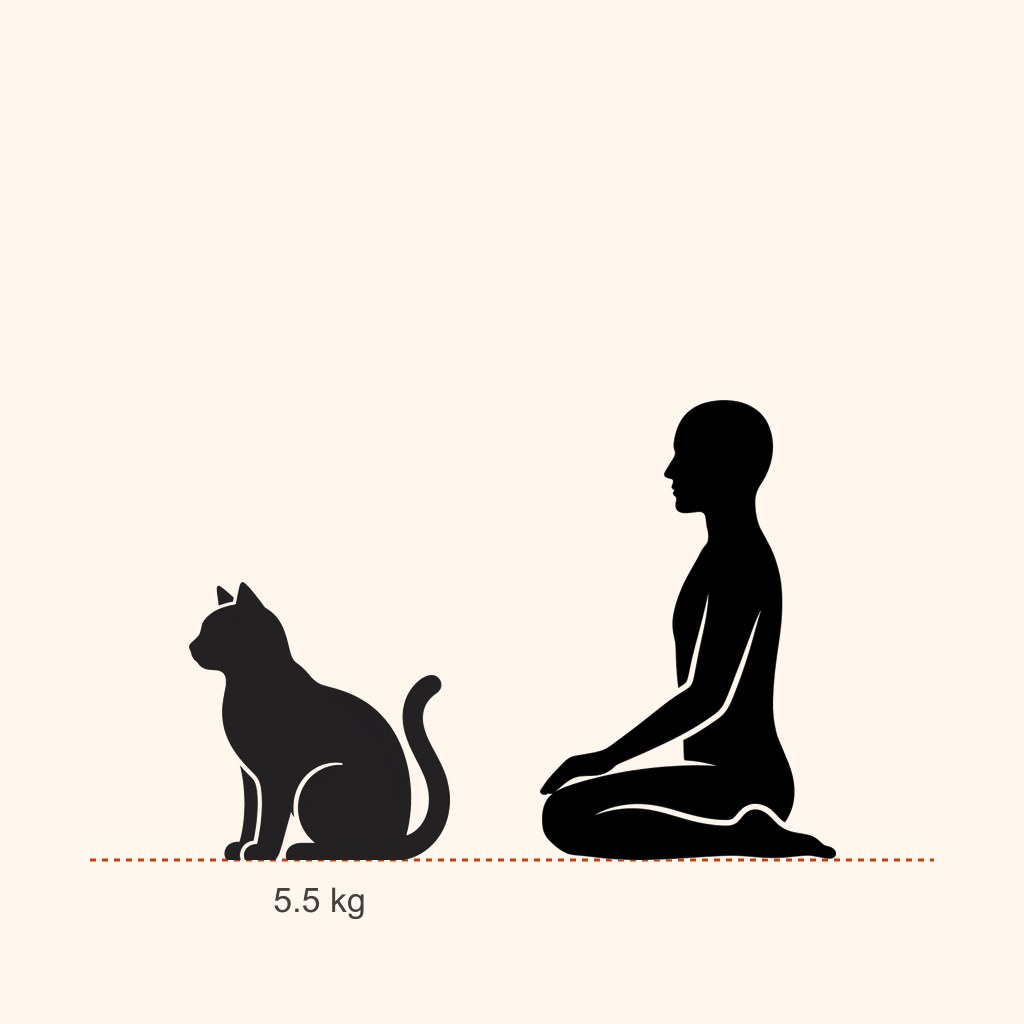
Adult Donskoy weight varies by individual (roughly 3-6 kg); work out portion size with your vet based on actual weight and activity level rather than a fixed number.
- Kitten (2-12 months): Quality kitten food, split into 3-4 meals a day.
- Adult: A balanced diet built around high-quality protein. Claims that hairless cats have a "faster metabolism and need more food" could not be confirmed from reliable sources, so we're leaving that out here — adjusting portions to weight and activity is the safer approach.
- Senior (8+ years): Review food quantity alongside weight tracking and regular veterinary checkups.
Fresh water should always be available. Wiping the mouth area after meals helps with both hygiene and reducing oil buildup in the skin folds.
Grooming and coat
The idea that a Donskoy "needs no grooming because it has no fur" is the biggest misconception about this breed — the routine simply takes a different form, it doesn't disappear.
- Regular bathing: Once or twice a week, more often if needed, adjusted to the individual cat's skin type and oil production. Use a gentle, unscented cat-specific shampoo only; over-bathing can dry the skin and trigger even more oil production, so watch the cat's skin to find the right balance.
- Wiping with a damp cloth between baths, especially in oil-prone spots (behind the ears, armpits, base of the tail), makes daily upkeep easier.
- Skin folds: Check the wrinkles on the face, neck, and between the toes regularly, and clean gently if buildup appears.
- Ears: With no coat to catch debris, ears can accumulate more oil too; check weekly and clean with a cat-safe ear cleaner if needed.
- Nails: Trim every 2-3 weeks, checking the nail bed area at the same time.
- Sun protection: Avoid prolonged, direct sun exposure; don't let the cat bask in a sunny window for long stretches. If it goes outside, favour shaded hours and consider a vet-approved cat sunscreen if needed.
- Keeping warm: In winter or air-conditioned rooms, a light cat sweater and a warm bed help if the cat seems cold.
- Brushing the teeth a few times a week is recommended for dental health.
Living space and enrichment
- A temperature-controlled indoor space. Not too cold, not too hot; provide warm, shaded corners and a cosy bed.
- Interactive play. This is an intelligent, energetic breed; daily play sessions, puzzle toys, and climbing spots keep it mentally satisfied.
- Social contact. It dislikes being alone; if long solo hours are unavoidable, a compatible cat or dog companion is worth considering.
- Shaded resting spots. A sunny window seat is appealing but shouldn't become a spot for long, unsupervised sunbathing — offer a shaded alternative nearby.
- A clean, roomy litter tray. Follow the "number of cats plus one" rule; good general hygiene also supports skin health.
It should live strictly as an indoor cat; outdoors it faces sunburn, cold, and injury risk all at once.
History
The Donskoy's story begins in 1987 in Rostov-on-Don, Russia. Breeder Elena Kovaleva took in a stray kitten she found and named Varvara; at around four months old, the cat began losing her fur. Among Varvara's own kittens were both individuals born hairless and others that started with a coat and shed it — evidence that the hairlessness was heritable.
Another breeder, Irina Nemikina, took over the line and started a structured breeding programme, and the breed took the name "Don Sphynx" — Don for the river near where Varvara was found, Sphynx for its hairlessness. This is exactly where an important genetic distinction comes in: the Canadian Sphynx's hairlessness comes from a recessive gene mutation, while the Donskoy's hairlessness comes from an entirely separate, dominant gene mutation. That genetic difference shows the two breeds arose independently, and despite their similar look, they should not be confused with one another.
The breed was officially recognised by the World Cat Federation (WCF) in 1997 and by The International Cat Association (TICA) in 2005. Today the Donskoy continues to build a following both in Russia and worldwide, known for its distinctive wrinkled skin and deeply social personality.
This guide is for information only and is not a substitute for veterinary advice. Prices are approximate and vary by region and time.
Adoption Prep Checklist
Housing
-
Cat bed
Cats want a safe space of their own to rest.
-
Cat climbing tree
Satisfies the natural scratching instinct and protects furniture.
Feeding
-
Dry/wet cat food
Quality cat food is needed for balanced nutrition.
-
Food and water bowl set
Needed for daily feeding and water access.
Grooming
-
Cat litter and litter box
Essential for the cat's toilet needs.
-
Short-hair cat brush
Regular brushing reduces hairball formation.
Activity
-
Interactive cat toy
Cats release energy through play.
-
Cat carrier
Needed for safe transport to vet visits.
Frequently Asked Questions
Does the Donskoy shed?
It sheds almost nothing. Regular care is still needed for skin and coat health; in hairless breeds that means skin cleaning rather than brushing.
Can the Donskoy live in an apartment?
Yes. It lives comfortably in an apartment as long as its daily needs are met. What matters is not floor area but consistent exercise and mental stimulation.
Is the Donskoy good with children?
Generally yes. It adapts well to families with children. Even so, interactions should be supervised and children taught to respect the animal’s boundaries.
Is the Donskoy suitable for first-time cat owners?
Partly. Someone with basic experience will manage well, but it would not be the first choice for a complete beginner.
How much exercise does the Donskoy need?
It is high-energy and needs vigorous daily activity. Mental stimulation matters as much as physical exercise; without enough to do, destructive behaviour follows.
Can the Donskoy be left alone during the day?
It can be left alone for a few hours. Long, routine absences can bring on boredom-driven behaviour problems; enrichment and a predictable routine reduce that risk.
How long does the Donskoy live?
The Donskoy lives 12 - 15 years on average. Diet, regular veterinary check-ups and early screening for hereditary conditions all affect this directly.
Where does the Donskoy come from?
The Donskoy originates from Russia. The geography a breed was developed in, and the job it was bred for, explain much of its temperament and care needs today.