

Cyprus
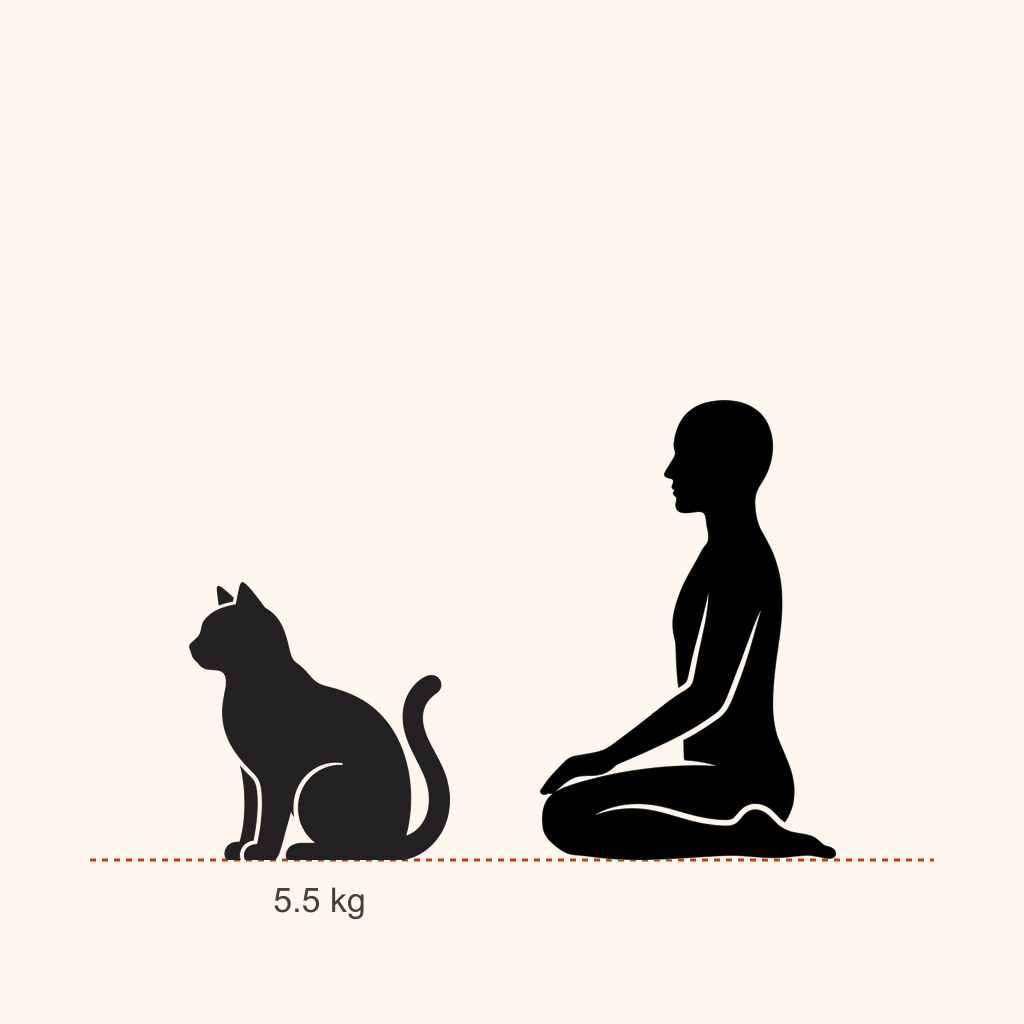
The image on this page is AI-generated and does not depict a real animal.
- Species
- Cat
- Origin
- Cyprus
- Size
- Large
- Lifespan
- 12 - 15 years
- Temperament
- Affectionate Social
- Description
Affectionate, loyal, social and curious; a calm cat that forms strong bonds with its family.
- Physical Traits
Short-to-medium coat, various colors, a naturally developed, proportionate body.
- Care / Environment Info
Lives indoors. Sheds moderately. Requires moderate grooming, brushing a few times a week recommended. Quite energetic and playful. Moderately vocal/talkative. Generally a very healthy breed.
Cyprus Owner's Guide
Last updated:
Is a Cyprus cat right for you?
The Cyprus cat is a natural (landrace) breed native to the island of Cyprus, and it remains little known worldwide. It has been fully registered with the World Cat Federation (WCF) since 2012 under the name "Aphrodite's Giant", and has held provisional status with TICA since 2017 as "Aphrodite"; larger US organisations such as CFA have not registered the breed yet. Available sources describe it as a large, muscular, people-oriented and social cat.
| Situation | Suitability | Note |
|---|---|---|
| House with a garden or large space | Good | A large, athletic build benefits from room to move |
| Apartment | Moderate | Can adapt with enrichment, but needs an outlet for its energy |
| Family with young children | Good | Sources report a social, tolerant temperament; supervision is still needed |
| First-time cat owner | Moderate | Temperament sounds easy, but finding breed-specific experience or resources outside Cyprus/Europe is hard |
| Wanting to adopt one outside Cyprus/Europe | Difficult | Registered breeders are concentrated on Cyprus and in a few European countries; do not expect to find this specific breed in a shelter elsewhere |
| Living with other pets | Good | Sources describe a social, tolerant nature |
| Hot, dry climate | Good | A breed naturally adapted to Cyprus's hot summers |
| Household where the cat is alone for long stretches | Moderate | Sources describe a people-attached temperament that reportedly does not enjoy being left alone |
Before you adopt
The most important thing to know before adopting is that the registered breeder network is limited to Cyprus and a handful of European countries; no reliable source points to an established breeder network for this specific breed elsewhere, including Türkiye. The name "Cyprus cat" is also used for the free-roaming local cat population on the island (also called the Saint Helen cat or Saint Nicholas cat), and that is not the same thing as the registered Aphrodite's Giant breed. One is a natural, unstandardised island population; the other is a registered breed being developed from that population since 2006 through selective breeding. Make sure you know which one you are actually getting.
The WCF breed standard notes that skeletal and muscle development progresses quickly in kittens, so a kitten that looks leaner at a young age can still be normal for the breed. No sources mention a mandatory breed-specific genetic screening panel; the general heart and kidney checks recommended for any cat remain a reasonable baseline.
Temperament
Sources (TICA's breed description and breed-profile sites) describe this cat as social, affectionate, and inclined to follow people around the house, with some behaviours described as "dog-like". It is said to enjoy lap time, bond closely with its family, and want to take part in household activities.
Despite its large, muscular build, it is reported to be calm rather than boisterous, with a balanced, non-aggressive temperament built into the breed standard. Some sources note that the breed can take a few years to reach full physical maturity, so kitten-like behaviour may persist longer than in some other breeds.
Most of this comes from breed-club and breed-profile sources rather than an independent, large-scale temperament study. Even so, it lines up with the "affectionate, social" tags in the database.
Health issues and lifespan
Direct, breed-specific data from major veterinary organisations (CFA, TICA, VCA) is quite limited for this breed; VCA Hospitals' cat breed directory does not even list a separate page for it. The information below comes from available breed-profile sources and general knowledge about natural breeds, not from a single authoritative source.
- Natural breeds — those shaped by their environment rather than deliberate human selection — generally carry a wider gene pool, which can lower the risk of some inherited conditions seen in breeds with a narrow founder population. That is a general tendency of natural breeds, not a proven, breed-specific finding for the Cyprus cat.
- Weight: sources disagree noticeably. The official WCF standard gives no exact figure, describing only a "big, strong, muscular" body. Various breed-profile sites cite roughly 6.8-10.9 kg for males and 4.5-6.4 kg for females, while other sources mix up body length and weight figures. The database's 5.5 kg sits somewhere in that inconsistent range but does not appear to trace back to one verified, breed-specific source.
- Lifespan: several breed-profile sources give a range around 12-15 years, which matches the database figure. This has not been independently confirmed by a major veterinary body, though; it can be treated as a general range for a natural short-to-semi-long-haired breed.
- No sources point to a proven, breed-specific hereditary condition. That does not mean the breed is disease-free — it may simply be that no large-scale health survey has been published yet.
- A sensible baseline for a responsible adopter is the standard annual check-up, a listen for signs of hypertrophic cardiomyopathy, and routine dental care — none of which are unique to this breed, but all of which apply to it.
Feeding
No breed-specific daily feeding amount appears in the available sources. Since the WCF standard describes a "big, strong body", the general feeding principles for a medium-to-large short/semi-long-haired cat are a reasonable starting point.
- Kitten: given the reportedly fast skeletal and muscular development, a quality kitten food fed in three to four meals a day is recommended.
- Adult: choose a quality adult food with enough protein to support a large-boned frame.
- Weight monitoring: a large-framed cat can easily be mistaken for an overweight one. Checking body condition by feeling for the ribs is more reliable than watching the scale alone.
- Water access matters for every cat; multiple water points and consistently fresh water support urinary health.
Grooming and coat
The WCF standard covers both a shorthaired and a semi-longhaired version of this breed. The coat is described as a soft, cotton-woolly texture with a dense undercoat in winter, becoming much shorter with the undercoat largely disappearing in summer — meaning a noticeable seasonal shed.
- Shorthaired cats need brushing once or twice a week; semi-longhaired cats, several times a week.
- Shedding increases noticeably during the spring and autumn coat changes; brushing more often during those periods helps both the home and the cat's comfort.
- The coat type makes matting less likely than in long-haired breeds such as the Persian, but regular brushing is still worthwhile.
- Nail trims, dental care, and ear checks should follow the standard routine used for any cat.
Living space and enrichment
- Room to move. Given its large, athletic build, this cat benefits from enough space to climb, run, and explore.
- Sturdy cat furniture. Choose a scratching post and cat tree built to handle a large, muscular cat rather than a standard-size one.
- A social household. Sources describe a people-attached temperament that reportedly does not enjoy being left alone; a routine that leaves the cat alone for long stretches is not ideal for this breed.
- A larger litter tray. Standard-size trays can be too small for this cat's frame; choose a bigger, deeper one.
- Indoor living as the priority. Even though the breed is naturally adapted to a hot, dry climate, a safe, enriched indoor life is always the lower-risk option given traffic and disease exposure outdoors.
History
The earliest evidence of cats on Cyprus comes from a roughly 9,500-year-old human-and-cat joint burial found at the Shillourokambos site on the island, considered one of the oldest known pieces of evidence for cat domestication anywhere.
According to a local legend, in the 4th century Saint Helen of Cyprus (mother of Constantine) sent two boatloads of cats from Egypt or Palestine to the monastery of Saint Nicholas to help fight a plague of venomous snakes. As Wikipedia notes, though, there is no scientific evidence that today's Cyprus cats are direct descendants of that ancient population; this is passed down as a legend, not an established lineage.
An effort to turn this island population — which had bred with comparatively little outside influence for centuries — into a registered breed began with local breeders in 2006. A WCF delegation visited the island in 2008; a subsequent DNA fingerprinting study at a US genetics research lab was reported to find that the sampled Aphrodite's Giant cats formed a genetically consistent group. On the strength of that study, the WCF granted full recognition to the breed under the name "Aphrodite's Giant" on 1 July 2012. TICA followed with provisional recognition as "Aphrodite" in 2017; organisations such as CFA have not recognised the breed to date.
The scientific strand of this history (the archaeological finds, the existence of a genetic study) and the legendary strand (the Saint Helen story) should be kept separate: the latter is a cultural narrative, not a proven scientific claim about the breed's origin.
This guide is for information only and is not a substitute for veterinary advice. Prices are approximate and vary by region and time.
Adoption Prep Checklist
Housing
-
Cat bed
Cats want a safe space of their own to rest.
-
Cat climbing tree
Satisfies the natural scratching instinct and protects furniture.
Feeding
-
Dry/wet cat food
Quality cat food is needed for balanced nutrition.
-
Food and water bowl set
Needed for daily feeding and water access.
Grooming
-
Cat litter and litter box
Essential for the cat's toilet needs.
-
Cat de-shedding brush
Regular brushing reduces hairball formation.
Activity
-
Interactive cat toy
Cats release energy through play.
-
Cat carrier
Needed for safe transport to vet visits.
Frequently Asked Questions
Does the Cyprus shed?
It sheds a moderate amount. Brushing two or three times a week noticeably reduces both loose hair and matting.
Can the Cyprus live in an apartment?
Yes. It lives comfortably in an apartment as long as its daily needs are met. What matters is not floor area but consistent exercise and mental stimulation.
Is the Cyprus good with children?
Generally yes. It adapts well to families with children. Even so, interactions should be supervised and children taught to respect the animal’s boundaries.
Is the Cyprus suitable for first-time cat owners?
Partly. Someone with basic experience will manage well, but it would not be the first choice for a complete beginner.
How much exercise does the Cyprus need?
It is high-energy and needs vigorous daily activity. Mental stimulation matters as much as physical exercise; without enough to do, destructive behaviour follows.
Can the Cyprus be left alone during the day?
It can be left alone for a few hours. Long, routine absences can bring on boredom-driven behaviour problems; enrichment and a predictable routine reduce that risk.
How long does the Cyprus live?
The Cyprus lives 12 - 15 years on average. Diet, regular veterinary check-ups and early screening for hereditary conditions all affect this directly.
Where does the Cyprus come from?
The Cyprus originates from Cyprus. The geography a breed was developed in, and the job it was bred for, explain much of its temperament and care needs today.