

Cymric
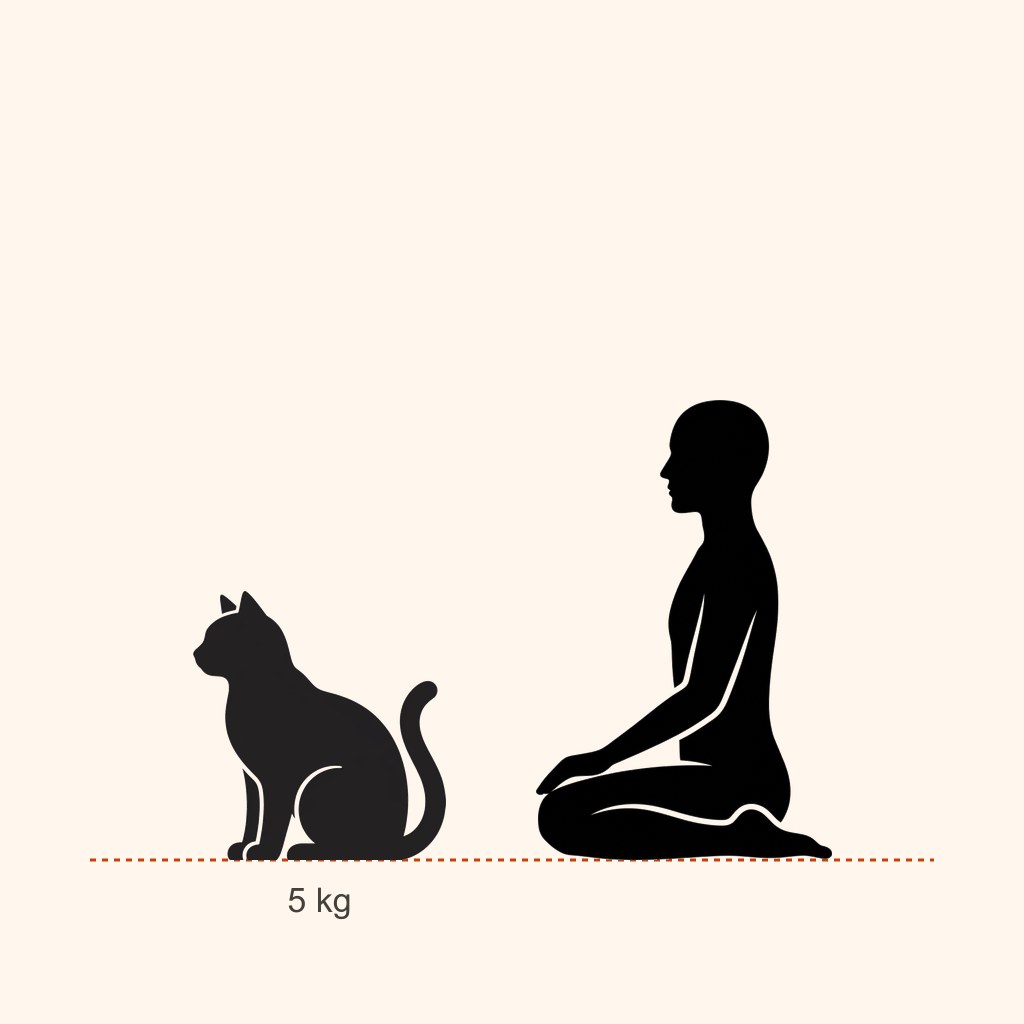
The image on this page is AI-generated and does not depict a real animal.
- Species
- Cat
- Origin
- Canada
- Size
- Medium
- Lifespan
- 8 - 14 years
- Temperament
- Gentle Loyal Intelligent Playful
- Description
Calm, sweet-natured and rarely upset about anything; a people-friendly cat.
- Physical Traits
Tailless or very short-tailed (a Manx variation), medium-long/long coat, a round body.
- Care / Environment Info
Lives indoors. Sheds heavily (regular brushing is important). Requires moderate grooming, brushing a few times a week recommended. Very high energy, needs plenty of play and stimulation. Moderately vocal/talkative. Some breed-specific health monitoring is recommended.
Cymric Owner's Guide
Last updated:
Is a Cymric cat right for you?
The Cymric is, genetically, the same breed as the Manx; the only difference is a separate gene that produces long or semi-long fur. Some registries, such as CFA, classify the Cymric as "Longhair Manx", a variety rather than a breed of its own. TICA treats Manx and Cymric as one breed group under a shared standard. Other federations, including FIFe, register the Cymric as a fully independent breed. In practice this naming split has one real consequence: your cat carries all of the Manx temperament and all of the Manx genetic risks, plus the extra grooming that comes with a longer coat.
| Situation | Suitability | Note |
|---|---|---|
| Apartment | Good | Calm and adaptable to indoor life |
| Family with young children | Good | Playful and loyal, with a dog-like attachment |
| First-time cat owner | Good | Easy temperament, but coat care and health monitoring need attention |
| Alone 8+ hours a day | Moderate | Social by nature; needs enrichment during long absences |
| Household with fur allergies | Moderate-poor | The semi-long coat sheds, though less heavily than a Persian's |
| Home that cannot brush regularly | Moderate | Needs more grooming than a Manx; an unbrushed coat mats |
| Breeder considering mating two tailless cats | Not suitable | Carries a serious, potentially lethal genetic risk (see below) |
The real question when choosing this breed: are you willing to accept the health risk that comes with taillessness, and can you brush a semi-long coat several times a week? If both answers are yes, the Cymric makes an affectionate and entertaining family cat.
Before you adopt
Two separate genetic traits combine in the Cymric: the dominant gene for taillessness, and an unrelated gene that determines coat length. A single copy of the taillessness gene is enough to produce it, but an embryo that inherits two copies (one from each parent) cannot survive in the womb. The practical rule follows directly: two tailless (rumpy) Cymrics or Manx cats should never be bred together. Responsible breeders pair a tailless cat with a stumpy or longy individual, which reduces both the risk of a lethal double dose and the severity of Manx syndrome described below.
When choosing a kitten, ask the breeder about the parents' tail types and whether Manx syndrome has appeared in the line. Waiting until at least 12-16 weeks is a reasonable precaution, since weak hind legs, an unsteady gait, or litter box accidents tend to become more visible by that age. It is also hard to predict exactly how long a kitten's coat will grow; some Cymrics end up semi-long, others nearly full-length.
Temperament
The Cymric is attached to its people to a degree that is often described as dog-like; it follows its owner from room to room, can learn to fetch, and takes well to new tricks. It is curious, playful, and generally sociable, getting along well with children and other pets.
Because its hind legs are longer than its front legs, it moves with a characteristic hopping gait and, thanks to powerful hindquarters, can jump surprisingly high. It prefers playing on the floor to climbing to high shelves. It vocalises little, settles easily into a calm household, and likes a consistent routine; sudden changes are not welcome.
Its appetite is strong, and this breed gains weight easily, so encouraging movement through play matters for both its physical and mental health.
Health issues and lifespan
Sources give different lifespan ranges: some cite 9-13 years, others 10-15 years, and some report a longer upper limit for well-cared-for individuals. A healthy cat with regular veterinary care can reach the higher end of that range.
- Manx syndrome (sacrocaudal dysgenesis): Caused by incomplete development of the lower spine and spinal cord. It can affect hind leg strength, bladder, and bowel function, ranging from a mild hopping gait to urinary or faecal incontinence, recurrent urinary tract infections, and, in severe cases, paralysis. Risk is highest in fully tailless (rumpy) cats and markedly lower in stumpy and longy individuals. Signs usually appear within the first few months; if you notice hind-leg weakness or accidents outside the litter box, see a vet promptly.
- Megacolon: Nerve damage can lead to an enlarged colon and chronic constipation; severe cases may need surgery.
- Joint problems: Early-onset arthritis has been reported, particularly in short-tailed individuals.
- Corneal dystrophy: An eye condition some sources report appearing around 4 months of age; regular eye checks are worthwhile.
- Excess weight: This breed has a strong appetite and gains weight quickly if under-exercised; extra weight adds strain to hind legs and joints that may already be vulnerable.
- Skin irritation from matted fur: Neglected mats in a long coat can pull tight and irritate the skin, especially around the armpits and rear.
Feeding
An adult Cymric typically weighs around 3.5-6 kg; a standard adult portion suits cats near the breed's average of about 5 kg.
- Kitten (2-12 months): Kitten food, three to four meals a day.
- Adult: Balanced protein; given the strong appetite, portion control and regular weigh-ins matter. Feed with a measuring cup rather than free-feeding.
- Senior (8+ years): Calorie needs drop; a joint-support diet can help some individuals.
For cats with weaker bowel or bladder function, increasing water intake and choosing a food with good-quality fibre is a simple, effective way to counter nerve-related sluggish digestion. Talk to a vet about any sudden constipation, diarrhoea, or change in toileting frequency.
Grooming and coat
The Cymric's coat demands noticeably more work than the shorthaired Manx's; it is semi-long, silky, and usually backed by a dense undercoat that forms a ruff around the neck.
- Brushing three to four times a week is a reasonable baseline; during heavy shedding, daily brushing is worth the effort.
- Mats start most often in the armpits, behind the ears, under the belly, and on the inner hind legs; check these spots specifically.
- Rear hygiene matters for two combined reasons in the Cymric: both the tailless build and the long coat make it easy for soft stool to stick to the fur. Keeping the area trimmed short is a practical fix.
- Trim nails every two to three weeks and brush teeth a few times a week.
- Bathe every few months if mats become an issue, and dry the coat completely afterwards; a damp undercoat left to sit can irritate the skin.
If you cannot keep up with regular brushing, a professional short clip is a reasonable solution for the cat's comfort.
Living space and enrichment
- Floor-level play. The Cymric prefers chasing and fetch on the ground to climbing high, and its strong hindquarters let it jump impressively from a standing start.
- A wide, low-sided litter tray. Easier access for cats with possible bladder or bowel sensitivity; follow the one-tray-per-cat-plus-one rule.
- Regular toileting checks. Changes in litter box habits can be an early warning sign of Manx syndrome.
- Daily social play. Its dog-like attachment and strong appetite both make daily interaction important, for behaviour and for weight control alike.
- Modest climbing options. Low shelves and window perches are a safer alternative to a full-height cat tree.
History
The taillessness mutation arose naturally centuries ago on the Isle of Man, between Britain and Ireland — the origin the Cymric shares with the Manx. Within the same population, an unrelated gene for coat length occasionally produced long-haired kittens, but for a long time these were treated as a deviation and left out of breeding programmes.
The turning point came in Canada in the 1960s, when breeders began deliberately selecting and breeding these long-haired cats, and the line quickly gained recognition of its own. The name comes from the Welsh word "Cymru", meaning Wales, even though the breed has no real connection to Wales; the choice was simply meant to give it a Celtic-sounding name.
TICA accepted both Manx and Cymric for championship status in 1979 under one shared standard. CFA recognised the Cymric as "Longhair Manx" in 1994, after which it allowed the two coat lengths to be interbred, with kittens registered according to their actual coat. FIFe and some other federations, meanwhile, register the Cymric as a fully independent breed. That tangled recognition history is why the answer to "is the Cymric a separate breed or a Manx variety?" still depends on which registry you ask.
This guide is for information only and is not a substitute for veterinary advice. Prices are approximate and vary by region and time.
Adoption Prep Checklist
Housing
-
Cat bed
Cats want a safe space of their own to rest.
-
Cat climbing tree
Satisfies the natural scratching instinct and protects furniture.
Feeding
-
Dry/wet cat food
Quality cat food is needed for balanced nutrition.
-
Food and water bowl set
Needed for daily feeding and water access.
Grooming
-
Cat litter and litter box
Essential for the cat's toilet needs.
-
Cat de-shedding brush
Regular brushing reduces hairball formation.
Activity
-
Interactive cat toy
Cats release energy through play.
-
Cat carrier
Needed for safe transport to vet visits.
Frequently Asked Questions
Does the Cymric shed?
It sheds heavily, especially at seasonal changes. Expect near-daily brushing and regular cleaning at home; it is not a good choice for anyone sensitive to pet hair.
Can the Cymric live in an apartment?
Yes. It lives comfortably in an apartment as long as its daily needs are met. What matters is not floor area but consistent exercise and mental stimulation.
Is the Cymric good with children?
Generally yes. It adapts well to families with children. Even so, interactions should be supervised and children taught to respect the animal’s boundaries.
Is the Cymric suitable for first-time cat owners?
Partly. Someone with basic experience will manage well, but it would not be the first choice for a complete beginner.
How much exercise does the Cymric need?
It is high-energy and needs vigorous daily activity. Mental stimulation matters as much as physical exercise; without enough to do, destructive behaviour follows.
Can the Cymric be left alone during the day?
It can be left alone for a few hours. Long, routine absences can bring on boredom-driven behaviour problems; enrichment and a predictable routine reduce that risk.
How long does the Cymric live?
The Cymric lives 8 - 14 years on average. Diet, regular veterinary check-ups and early screening for hereditary conditions all affect this directly.
Where does the Cymric come from?
The Cymric originates from Canada. The geography a breed was developed in, and the job it was bred for, explain much of its temperament and care needs today.