

Cornish Rex
The image on this page is AI-generated and does not depict a real animal.
- Species
- Cat
- Origin
- United Kingdom
- Size
- Small
- Lifespan
- 11 - 14 years
- Temperament
- Affectionate Intelligent Active Curious Playful
- Description
Confident, fond of human affection and always looking for a chance to sit on a lap.
- Physical Traits
Very short, wavy/curly coat (no guard hairs), a slender body, large ears, an egg-shaped head.
- Care / Environment Info
Lives indoors. Sheds very little. Very easy to care for, infrequent brushing needed. Very high energy, needs plenty of play and stimulation. Very quiet. Its allergy-triggering potential is considered somewhat lower than other breeds (not fully hypoallergenic). Generally a healthy breed.
Cornish Rex Owner's Guide
Last updated:
Is a Cornish Rex right for you?
The Cornish Rex is one of the most unusual-looking cats, with a short, velvety, wavy coat, large ears, an arched back, and a slim, greyhound-like build. Its coat lacks the outer guard hairs of a normal cat, so it feels like silk or rabbit fur. Its character is just as unusual: a people-glued clown with kitten energy for life.
| Situation | Suitability | Note |
|---|---|---|
| Apartment | Perfect | Should be an indoor cat; poorly protected against cold and sun |
| Family with young children | Very good | Playful and loves contact; its slim frame needs gentle handling |
| First-time cat owner | Good | Easy temperament; skin, ear, and warmth needs must be learned |
| Alone 8+ hours a day | Poor | A very dependent breed; takes solitude badly |
| Household with cat allergies | A false expectation | Shedding little does not mean no allergen |
| Cold home | Poor | The coat holds no heat; needs heating and a warm bed in winter |
| Owner wanting a calm lap cat | Fair | Affectionate, but mostly in "full speed or asleep" mode |
Allergy warning: the protein that causes cat allergy is in saliva and skin secretions, not hair. Sources are clear that the Cornish Rex is not hypoallergenic. For an allergic person, "less hair = safe" is misleading.
Before you adopt
Ask about the parents' heart screening (echocardiography for HCM). International Cat Care lists the Cornish Rex among the Burmese-related breeds affected by inherited hypokalaemia (WNK4 gene); ask whether this DNA test has been done.
Adopting an adult Cornish Rex lets you see its skin and energy level in advance. Be honest with yourself, too, about how warm your home stays in winter.
Temperament
The Cornish Rex is curious, athletic, and always on the move. Sources describe it as a cat with two speeds: it is either running, leaping, and playing or fast asleep in a warm spot.
It is extremely people-oriented. It climbs into your lap, onto your shoulder, and under the duvet; whatever you are doing, it is there. CFA calls these cats "Velcro kitties" for this reason.
It runs to the door to greet visitors and is not shy with strangers. It can learn to fetch and do simple tricks; it is clever and quickly works out how to open cupboards.
It usually gets on well with other cats and cat-friendly dogs. In fact, a playmate is a good answer to this breed's dislike of being alone.
Health issues and lifespan
Sources generally give a lifespan of 11-15 years, and some mention individuals living to 15-20. The breed's main sensitivities are the heart, the skin needs created by its coat, and a few inherited conditions.
- Hypertrophic cardiomyopathy (HCM): Thickening of the heart muscle. It can be silent for a long time; later signs include lethargy, fast or open-mouth breathing, and poor appetite. Sudden hind-leg paralysis with cold legs (a clot) is an emergency. Regular echocardiography is recommended in at-risk lines.
- Inherited hypokalaemia: Episodes of low blood potassium. It usually starts at 2-6 months or within the first year; signs include a drooping neck (unable to lift the head), weak and stiff legs. Stress, exercise, and cold can trigger episodes. A simple blood test gives the diagnosis and it is managed with potassium supplements; any breathing difficulty is life-threatening.
- Progressive retinal atrophy (PRA): Vision loss from retinal degeneration; night blindness usually starts at a few years of age. There is no cure, but cats adapt well.
- Sunburn: Without guard hairs, ears and thinly haired areas can burn, especially in light-coloured cats. Even hours on a sunny windowsill in a hot summer are risky. Crusting or sores that don't heal need a vet visit.
- Oily skin and ear wax: The coat doesn't absorb skin oils, so the skin gets greasy and ear wax builds up quickly. Bad smell, scratching, or head shaking suggest an ear infection.
- Getting cold: The thin coat holds no heat. Seeking out heat sources is normal, but feeling cold together with lethargy can be a sign of illness.
Feeding
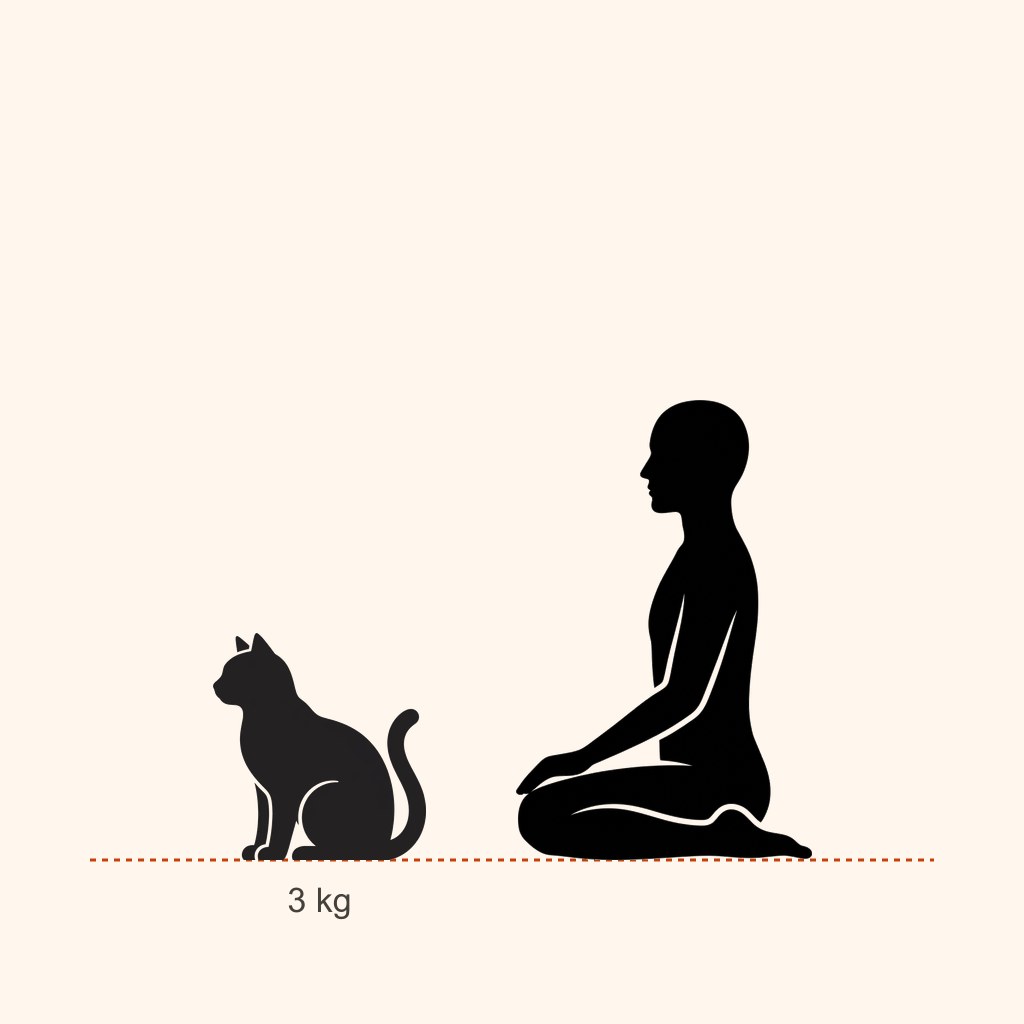
An adult Cornish Rex typically weighs 2.7-4.5 kg. Because of heat loss and high activity, its appetite is large for its size. An active adult needs roughly the energy of 40-60 g of dry food a day, depending on the food's energy density.
- Kitten (2-12 months): Kitten food, 3-4 meals a day.
- Adult: A complete food rich in animal protein, split into several small meals.
- Senior (10+ years): Monitor weight and muscle loss, with a yearly blood test.
Despite the big appetite, free-feeding can lead to obesity, and extra weight shows at once on this slim breed. Food puzzles slow eating and keep its mind busy. Use wet food and a water fountain to encourage drinking.
Grooming and skin
There is no long coat to brush, but care isn't "zero" either.
- No brushing needed. A stiff brush can break the waves; stroking with your hand or a soft grooming mitt is enough.
- Bathing: When the skin gets greasy, usually every few weeks, with a mild cat shampoo. Towel dry thoroughly and keep in a warm room; a hair dryer ruins the curls.
- Ears: Check weekly; clean with a vet-recommended solution if wax builds up.
- Nails: Every 2-3 weeks; greasy dirt can collect at the nail beds, wipe gently.
- Teeth: Brush several times a week.
- Warmth: A heated bed, blankets, and a cat sweater if needed in winter. Keep out of direct sun in summer.
Living space and enrichment
- Warm spots. A shelf near a radiator, an igloo bed, a window that gets light but offers shade.
- Vertical space. An athletic breed that loves to leap; a tall cat tree is a must.
- Daily play. At least two 10-15 minute sessions of running play.
- Mental work. Fetch, trick training, food puzzles.
- Company. If you are out for long hours, a second cat makes a big difference.
- Indoors. Cold, sun, and its trust in people make outdoor life unsuitable; net your balcony.
History
The breed's story began in 1950 in Cornwall, England, when a curly-coated male kitten was born in a farm cat's litter. The kitten, named Kallibunker, was bred back to his mother and two more curly kittens were born, showing that the mutation was inherited.
In 1956 a California breeder imported the first cats to the United States. CFA accepted the breed for registration in 1962 and granted championship status in 1964, making the Cornish Rex the oldest recognised Rex breed.
Although it looks similar, the curly coat comes from a different gene than the Devon Rex's. Today the Cornish Rex is bred in more than 40 colours and patterns.
This guide is for information only and is not a substitute for veterinary advice. Prices are approximate and vary by region and time.
Adoption Prep Checklist
Housing
-
Cat bed
Cats want a safe space of their own to rest.
-
Cat climbing tree
Satisfies the natural scratching instinct and protects furniture.
Feeding
-
Dry/wet cat food
Quality cat food is needed for balanced nutrition.
-
Food and water bowl set
Needed for daily feeding and water access.
Grooming
-
Cat litter and litter box
Essential for the cat's toilet needs.
-
Short-hair cat brush
Regular brushing reduces hairball formation.
Activity
-
Interactive cat toy
Cats release energy through play.
-
Cat carrier
Needed for safe transport to vet visits.
Frequently Asked Questions
Does the Cornish Rex shed?
Shedding is low. Brushing once a week is usually enough, with a mild increase during seasonal changes.
Can the Cornish Rex live in an apartment?
Yes. It lives comfortably in an apartment as long as its daily needs are met. What matters is not floor area but consistent exercise and mental stimulation.
Is the Cornish Rex good with children?
Generally yes. It adapts well to families with children. Even so, interactions should be supervised and children taught to respect the animal’s boundaries.
Is the Cornish Rex suitable for first-time cat owners?
Yes. Its care and training are relatively forgiving, which makes it a sound choice for first-time owners.
How much exercise does the Cornish Rex need?
It is high-energy and needs vigorous daily activity. Mental stimulation matters as much as physical exercise; without enough to do, destructive behaviour follows.
Can the Cornish Rex be left alone during the day?
It can be left alone for a few hours. Long, routine absences can bring on boredom-driven behaviour problems; enrichment and a predictable routine reduce that risk.
How long does the Cornish Rex live?
The Cornish Rex lives 11 - 14 years on average. Diet, regular veterinary check-ups and early screening for hereditary conditions all affect this directly.
Where does the Cornish Rex come from?
The Cornish Rex originates from United Kingdom. The geography a breed was developed in, and the job it was bred for, explain much of its temperament and care needs today.