

Colorpoint Shorthair
The image on this page is AI-generated and does not depict a real animal.
- Species
- Cat
- Origin
- United States
- Size
- Small
- Lifespan
- 12 - 16 years
- Temperament
- Affectionate Intelligent Playful Social
- Description
Affectionate, loyal and sensitive to its owner's mood; loves being on your lap.
- Physical Traits
Short coat with a wide color range of color-point pattern, blue eyes, a slender elegant body.
- Care / Environment Info
Lives indoors. Sheds moderately. Easy to care for, brushing once a week is enough. Quite energetic and playful. Very talkative and can meow loudly. Generally a healthy breed.
Colorpoint Shorthair Owner's Guide
Last updated:
Is a Colorpoint Shorthair right for you?
The Colorpoint Shorthair looks almost identical to a Siamese, but comes in point colors the Siamese standard doesn't allow — red, cream, lynx/tabby, tortie, and more. Its personality is pure Siamese too: talkative, social, intelligent, and constantly craving attention. If you're after a quiet cat, this isn't the breed.
| Situation | Suitability | Note |
|---|---|---|
| Apartment | Very good | Wants attention and vertical space, not floor space |
| Family with young children | Good | Social and playful, but dislikes rough handling |
| First-time cat owner | Good | Easy upkeep; be ready for the chatter and the demands |
| Alone 8+ hours a day | Poor | A dependent breed; long stretches alone cause stress |
| Household with fur allergies | Moderate-good | Short, single-layer coat, low shedding |
| Home that needs quiet | Not suitable | As vocal as a Siamese, sometimes even more insistent |
| Household with another cat or dog | Very good | Sociable and enjoys companionship |
| Adopting outside North America | Limited | Not widely bred; often found only through Siamese breeders or imported lines |
The real question when choosing this breed: do you have time for a cat that follows you around, talks constantly, and demands attention? If yes, the Colorpoint Shorthair rewards you with an easy-care coat and one of the most interactive companions in the cat world.
Before you adopt
The Colorpoint Shorthair has an unusual origin: it was created by crossing a seal point Siamese with a red tabby American Shorthair, then breeding back to Siamese over several generations until the body type returned fully to the Siamese standard — only the color palette expanded. The result is a cat that is genetically and structurally almost identical to a Siamese, just with extra colors. The Cat Fanciers' Association (CFA) recognized it as a separate breed in 1964, while organizations such as TICA treat these colors simply as a variant within the Siamese breed. This split is mostly a matter of registry and show politics; day to day, there's no practical difference in care, health, or temperament between the two.
When choosing a kitten, ask the breeder whether the parents have been screened for heart disease (HCM), and whether there's any known history of inherited conditions in the line. Responsible breeders use genetic screening to remove carriers from their breeding programs.
Temperament
The Colorpoint Shorthair inherits the Siamese personality wholesale: social, intelligent, and an outstanding communicator. Its voice is loud and insistent; it calls to you, waits for an answer, and keeps up the "conversation."
It bonds strongly to people, often forming an especially close attachment to one or two individuals and following them from room to room. It doesn't take well to being left alone for long periods.
It's intelligent and eager to learn — many pick up fetch, simple commands, and even leash walking with ease. It's active and athletic, enjoying high perches and vantage points.
It generally gets along well with children and other pets, including cats and sometimes dogs; it's a genuinely social breed that enjoys company.
Health issues and lifespan
Sources generally put average lifespan at 12 to 15 years, sometimes reaching 16 in well-cared-for cats. Because it comes from the same genetic stock as the Siamese, it carries a similar risk profile for the hereditary and breed-linked conditions seen in Siamese — amyloidosis, progressive retinal atrophy (PRA), asthma and respiratory issues, early dental and gum disease, hypertrophic cardiomyopathy (HCM), and pica (eating non-food items); see our Siamese breed page for details on these.
A few points specific to, or distinctive in, the Colorpoint Shorthair:
- The type standard is identical to the Siamese. CFA's official standard calls for "type identical to the Siamese, but with its own distinct and unique colors," so the classic Siamese-type traits occasionally seen in the line — such as crossed eyes or a kinked tail — can also turn up here. They don't seriously affect vision and are simply undesirable under show standards.
- Fine bone structure and low body fat. This is a lean, muscular breed, so weight tracking and portion control matter; sudden thinness or weight loss should be noticed quickly.
- Heart screening is recommended. Breeders and vets recommend periodic cardiac checks because of HCM risk.
- Overall it's considered a robust breed — its health burden comes from inherited Siamese-line predispositions rather than structural issues like those seen in brachycephalic breeds.
See a vet promptly for lethargy, appetite loss, coughing or wheezing, excessive thirst, or behavior changes.
Feeding
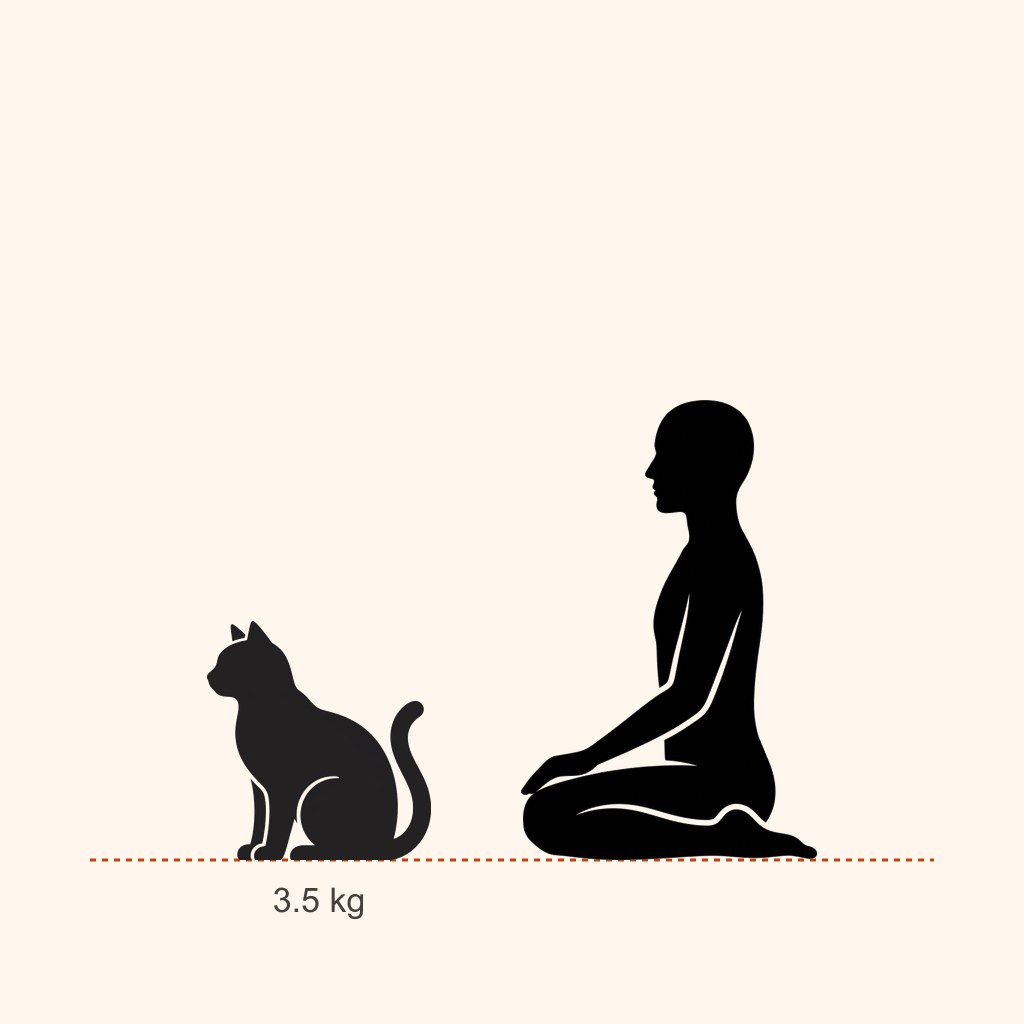
An adult Colorpoint Shorthair typically weighs 2.5-4.5 kg, with a lean but muscular build — looking "slim" is normal for this breed.
- Kitten (2-12 months): Kitten food, three to four meals a day.
- Adult: A high-quality diet that's high in protein and low in carbohydrate; protein matters especially for maintaining muscle. As an active breed its energy needs are good for its size, but portions should be measured daily and weight checked regularly.
- Senior (9+ years): Check heart and kidney values annually; this matters given the amyloidosis risk inherited from the Siamese line.
Puzzle feeders provide mental stimulation and slow down fast eaters — a good enrichment tool given this breed's intelligence.
Grooming and coat
One of the easiest breeds to groom.
- Short, single-layer coat with no undercoat; a weekly rub with a rubber grooming glove or soft brush is enough.
- Low shedder, making it a relatively reasonable choice for people with mild fur allergies.
- Bathing is rarely needed.
- Check and trim nails every two to three weeks.
- Brush teeth several times a week; dental and gum disease can start early in this line.
- Check ears monthly; the large, upright ears collect dust.
- Its lean build and low body fat can make it sensitive to cold; a warm bed or blanket helps in winter.
Living space and enrichment
- Social contact comes first. Several sessions of active attention a day matter more to this breed than floor space.
- Vertical space. It loves climbing; provide a cat tree, shelves, and vantage points.
- Active play twice a day. Wand toys and fetch games suit its athletic, energetic nature.
- Mental work. Trick training, puzzle feeders, leash training — this is a breed that enjoys learning.
- Companionship. If it will be alone for long stretches, seriously consider a second cat or a compatible dog.
- A warm spot. A heated bed or a sunny window; its lean build makes it seek out warmth.
This breed is not common outside North America and Europe's larger cat-fancy circles; adopting one may mean going through a Siamese breeder or an imported line, which limits your options.
History
The Colorpoint Shorthair's origins trace back to the late 1940s, in the years following the Second World War. Breeders in the US and UK wanted to give the Siamese new colors beyond its standard four (seal, chocolate, blue, and lilac point), so a seal point Siamese was crossed with a red tabby American Shorthair. Over subsequent generations, the offspring were bred back to Siamese until body type and structure fully returned to the Siamese standard — only the color range had expanded.
CFA accepted red-point cats for registration in the late 1950s, applications for championship judging followed in the early 1960s, and despite resistance from some traditional Siamese breeders, "Red Colorpoints" were formally recognized as a separate breed in April 1964, initially with only cream and red point colors accepted. In 1969, with contributions from British breeders, lynx (tabby) and tortie point colors were added to the standard.
Today CFA recognizes the breed as independent from the Siamese with its own standard, while organizations such as TICA, the GCCF, and FIFe treat the same cats not as a separate breed but as part of the accepted Siamese color range. The World Cat Federation recognizes the breed under the name "Colourpoint Shorthair." This registry split has no practical consequence for an adopter — whichever name a given federation uses, the cat in front of you is, for care, temperament, and health purposes, a Siamese.
This guide is for information only and is not a substitute for veterinary advice. Prices are approximate and vary by region and time.
Adoption Prep Checklist
Housing
-
Cat bed
Cats want a safe space of their own to rest.
-
Cat climbing tree
Satisfies the natural scratching instinct and protects furniture.
Feeding
-
Dry/wet cat food
Quality cat food is needed for balanced nutrition.
-
Food and water bowl set
Needed for daily feeding and water access.
Grooming
-
Cat litter and litter box
Essential for the cat's toilet needs.
-
Cat de-shedding brush
Regular brushing reduces hairball formation.
Activity
-
Interactive cat toy
Cats release energy through play.
-
Cat carrier
Needed for safe transport to vet visits.
Frequently Asked Questions
Does the Colorpoint Shorthair shed?
It sheds a moderate amount. Brushing two or three times a week noticeably reduces both loose hair and matting.
Can the Colorpoint Shorthair live in an apartment?
Yes. It lives comfortably in an apartment as long as its daily needs are met. What matters is not floor area but consistent exercise and mental stimulation.
Is the Colorpoint Shorthair good with children?
Generally yes. It adapts well to families with children. Even so, interactions should be supervised and children taught to respect the animal’s boundaries.
Is the Colorpoint Shorthair suitable for first-time cat owners?
Yes. Its care and training are relatively forgiving, which makes it a sound choice for first-time owners.
How much exercise does the Colorpoint Shorthair need?
It is high-energy and needs vigorous daily activity. Mental stimulation matters as much as physical exercise; without enough to do, destructive behaviour follows.
Can the Colorpoint Shorthair be left alone during the day?
It can be left alone for a few hours. Long, routine absences can bring on boredom-driven behaviour problems; enrichment and a predictable routine reduce that risk.
How long does the Colorpoint Shorthair live?
The Colorpoint Shorthair lives 12 - 16 years on average. Diet, regular veterinary check-ups and early screening for hereditary conditions all affect this directly.
Where does the Colorpoint Shorthair come from?
The Colorpoint Shorthair originates from United States. The geography a breed was developed in, and the job it was bred for, explain much of its temperament and care needs today.