

Chausie
The image on this page is AI-generated and does not depict a real animal.
- Species
- Cat
- Origin
- Egypt
- Size
- Medium
- Lifespan
- 12 - 14 years
- Temperament
- Affectionate Intelligent Playful Social
- Description
Despite its wild-looking appearance, has the manners of a house cat; a playful cat.
- Physical Traits
Short ticked tabby coat (in brown tones), long legs, large ears, a build resembling a jungle cat.
- Care / Environment Info
Lives indoors. Sheds moderately. Requires moderate grooming, brushing a few times a week recommended. Quite energetic and playful. Very quiet. Generally a very healthy breed.
Chausie Owner's Guide
Last updated:
Is a Chausie cat right for you?
The Chausie comes from crossing the wild jungle cat (Felis chaus) with the domestic cat, producing a long-legged, athletic, and extremely energetic breed. As with the Savannah, the concept of "generation" (F1, F2, F3, F4...) is decisive here: the lower the generation number, the higher the proportion of wild ancestry, the larger and more energetic the cat, and the lower the degree of domestication.
| Situation | Suitability | Note |
|---|---|---|
| Apartment | Caution | Possible, but its high energy demands serious enrichment and daily active play |
| Family with young children | Caution | Social and playful, but early generations (F1-F2) can be difficult for inexperienced families |
| First-time cat owner | Not suitable (early generation) / Moderate (F4+) | Early generations need an experienced owner; later generations behave more like a typical house cat |
| Alone 8+ hours a day | Poor | Wants 1-2 hours of active interaction a day; can become destructive when bored |
| Household with small pets (birds, hamsters) | Not suitable | A strong prey drive makes this risky |
| Household with fur allergies | Moderate | Short coat, easy to groom, but still sheds |
| Home with an unfenced garden | Caution | Its athletic build and jumping power call for a secure, high fence or enclosure |
The Chausie suits experienced owners with time to spare who want a highly energetic, curious cat that interacts almost like a dog. As you move toward earlier generations (closer to F1), both the care difficulty and the legal uncertainty increase.
Before you adopt
Chausie generations run from F1 (closest to the wild parent, with the highest proportion of "wild" genes) through to F4 and beyond, which are considered fully domestic and are recorded by TICA as "SBT." F1-F3 males are generally sterile; full fertility and a settled domestic temperament typically appear from the fourth generation onward.
The Chausie's wild ancestor, Felis chaus (the jungle cat), is listed under CITES Appendix II, meaning international trade is not entirely free but requires permits/documentation. This species also occurs naturally, though rarely and in limited numbers, in a number of countries — including Turkey, for example in wetlands along the southern coast — and hunting it is prohibited there, meaning the jungle cat is protected as native wildlife in some of these places. However, no current, consistent official source could confirm what documentation is required to import or own a Chausie hybrid bred abroad in such a country, from which generation onward it is treated as unrestricted, or how local authorities apply this in practice; this section is flagged for that reason. Before adopting or importing a Chausie, consult your national agriculture/wildlife authority and relevant local office directly.
Some countries, such as the Netherlands and Belgium (Flanders and Brussels), reportedly restrict ownership of early-generation (F1-F4) hybrid cats; this shows that the line between "domestic cat" and "wild hybrid" is not clearly settled worldwide for this breed.
Temperament
The Chausie is highly intelligent, curious, and energetic; when properly socialized it forms a strong bond with its owner. It can adapt to leash walking, play fetch, and eagerly joins interactive games.
Its athletic build stands out; its long legs let it jump to high places easily. Its prey drive is strong, which should be kept in mind both during play and when living alongside small pets.
Without mental stimulation, boredom can quickly turn into destructive behavior: you may find a cat that knocks things over, opens cabinets, and constantly demands activity. It is a social breed and does not like being left alone for long.
Health issues and lifespan
Sources generally give a lifespan of around 12 to 15 years; it is considered a generally healthy, robust breed.
- Inflammatory bowel disease (IBD): Digestive tract inflammation reported in this breed; shows as vomiting, diarrhea, abdominal discomfort, reduced appetite, or weight loss. See a vet if symptoms last more than a few days.
- Shorter digestive tract and sensitivity to plant-based content: Inherited from its wild ancestor, this can make some Chausies struggle to digest grain- and plant-based ingredients; gluten sensitivity has also been reported in some individuals.
- Food allergies: Can present as itchy skin, ear irritation, or digestive upset; a diet change usually helps.
- Minor exercise-related injuries: Sprains and similar minor injuries have been reported due to high athletic activity.
- Gum disease: A risk that increases with age and is preventable with regular dental care.
Feeding
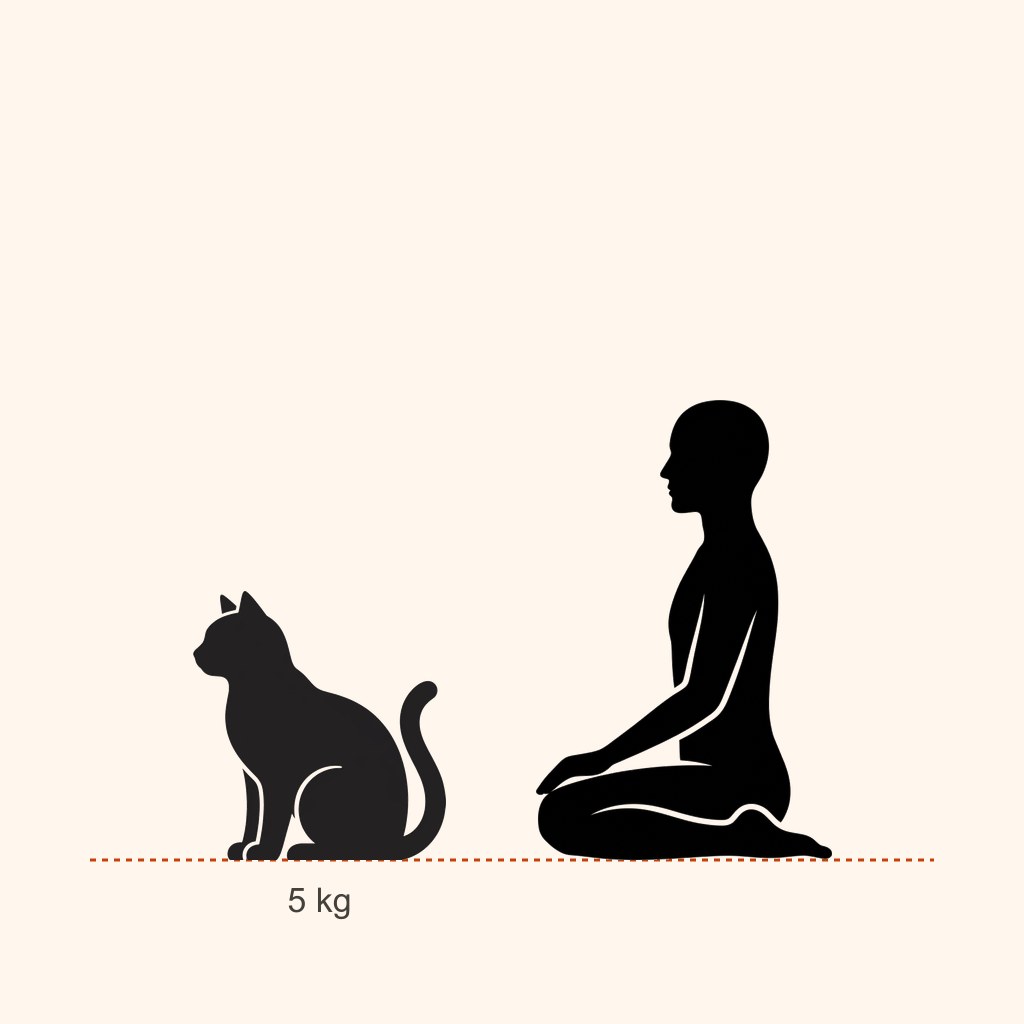
Size varies by generation; males can range 5-7.5 kg and females 3.5-6 kg, with some sources reporting even heavier individuals in earlier generations.
- Kitten (2-12 months): Kitten food, three to four meals a day.
- Adult: A high-protein, meat-forward diet; because of the shorter digestive tract inherited from its wild ancestor, grain-free or low-grain formulas tend to work better.
- Senior (8+ years): A diet set with your vet based on digestive and dental health.
If you see chronic diarrhea, vomiting, or weight loss, don't normalize it as "just how Chausies are" — investigate for food sensitivity and IBD.
Grooming and coat
Its short coat needs relatively little care.
- Weekly brushing is enough.
- Bathing is usually unnecessary.
- Nails every two to three weeks; nail-tip checks matter for this athletic, climbing breed.
- Teeth brushed several times a week.
- Ears checked monthly.
Living space and enrichment
- 1-2 hours of active interaction daily. Wand toys and hunting simulation; play is a necessity for this breed.
- Plenty of vertical space. Tall cat trees and shelves safely meet its need to jump.
- A secure, high-fenced outdoor area. An enclosed "catio" or a very high fence; an ordinary garden fence is easily cleared.
- Leash walks and scent-trail games. A safe way to burn off extra energy.
- Puzzle feeders. Earning food through effort engages the mind and reduces boredom.
Living safely alongside small pets like birds or hamsters is generally not recommended.
History
The Chausie's origins trace back several thousand years to Egypt, where the jungle cat (Felis chaus) naturally lived alongside domestic cats; there is evidence that ancient Egyptians attempted to tame this species. Deliberate breeding work on the modern Chausie breed began in the late 1960s and 1970s, aiming to offer a similar look and character without the risks and difficulties of keeping a full jungle cat.
TICA officially recognized and registered the breed in 1995. In breeding programs, the jungle cat was typically crossed with domestic breeds such as the Abyssinian to fix the type. Today the Chausie remains a breed known both for its striking looks and high energy, but one that calls for careful research into generation and legal status.
This guide is for information only and is not a substitute for veterinary advice. Prices are approximate and vary by region and time.
Adoption Prep Checklist
Housing
-
Cat bed
Cats want a safe space of their own to rest.
-
Cat climbing tree
Satisfies the natural scratching instinct and protects furniture.
Feeding
-
Dry/wet cat food
Quality cat food is needed for balanced nutrition.
-
Food and water bowl set
Needed for daily feeding and water access.
Grooming
-
Cat litter and litter box
Essential for the cat's toilet needs.
-
Cat de-shedding brush
Regular brushing reduces hairball formation.
Activity
-
Interactive cat toy
Cats release energy through play.
-
Cat carrier
Needed for safe transport to vet visits.
Frequently Asked Questions
Does the Chausie shed?
It sheds a moderate amount. Brushing two or three times a week noticeably reduces both loose hair and matting.
Can the Chausie live in an apartment?
Yes. It lives comfortably in an apartment as long as its daily needs are met. What matters is not floor area but consistent exercise and mental stimulation.
Is the Chausie good with children?
Generally yes. It adapts well to families with children. Even so, interactions should be supervised and children taught to respect the animal’s boundaries.
Is the Chausie suitable for first-time cat owners?
Partly. Someone with basic experience will manage well, but it would not be the first choice for a complete beginner.
How much exercise does the Chausie need?
It is high-energy and needs vigorous daily activity. Mental stimulation matters as much as physical exercise; without enough to do, destructive behaviour follows.
Can the Chausie be left alone during the day?
It can be left alone for a few hours. Long, routine absences can bring on boredom-driven behaviour problems; enrichment and a predictable routine reduce that risk.
How long does the Chausie live?
The Chausie lives 12 - 14 years on average. Diet, regular veterinary check-ups and early screening for hereditary conditions all affect this directly.
Where does the Chausie come from?
The Chausie originates from Egypt. The geography a breed was developed in, and the job it was bred for, explain much of its temperament and care needs today.