

Chartreux
The image on this page is AI-generated and does not depict a real animal.
- Species
- Cat
- Origin
- France
- Size
- Medium
- Lifespan
- 12 - 15 years
- Temperament
- Affectionate Loyal Intelligent Social Lively active Playful
- Description
Generally quiet but communicative, fond of short play sessions and long naps.
- Physical Traits
Dense, woolly blue-grey double coat, a round face with a 'smiling' expression, copper/orange eyes.
- Care / Environment Info
Lives indoors. Sheds moderately. Very easy to care for, infrequent brushing needed. A calm energy level. Very quiet. Its allergy-triggering potential is considered somewhat lower than other breeds (not fully hypoallergenic). Generally a healthy breed.
Chartreux Owner's Guide
Last updated:
Is a Chartreux right for you?
The Chartreux is a rare French breed known for its blue-grey, slightly woolly, water-repellent coat, copper-to-orange eyes and a face that seems to be smiling. Quiet and calm yet playful, it often bonds especially closely with one person and is known for dog-like behaviour. It has a strong hunting heritage and is slow to reach maturity.
| Situation | Suitability | Note |
|---|---|---|
| Apartment | Very good | Calm and adaptable given climbing and play space |
| Family with young children | Good | Calm and tolerant; dislikes noisy households |
| First-time cat owner | Very good | Balanced temperament, easy care |
| Alone 8+ hours a day | Medium | Independent but likes to be near its person |
| Home with cat allergies | Poor | CFA does not recommend it for allergy sufferers due to the woolly undercoat |
| Home with birds or rodents | Poor | Strong prey drive |
| Wants a chatty, vocal cat | Not suitable | Most are very quiet, some almost silent |
Before you adopt
The Chartreux is rare in most countries. Not every blue-grey shorthair is a Chartreux; it is most often confused with the blue British Shorthair and the Russian Blue. The Russian Blue has green eyes and a finer, silkier coat; the British Shorthair is cobbier, rounder-faced and shorter-legged. The Chartreux's eyes range from copper to gold, with a deep brilliant orange preferred, and the coat is slightly woolly and water-resistant.
Be wary of "Chartreux" adverts without papers. Ask the breeder for:
- The parents' pedigree (from a registry such as CFA or FIFe).
- Patellar luxation checks on parents and kitten; according to CFA, breeders screen kittens and avoid breeding affected cats.
- Heart checks on the parents; Cornell lists the Chartreux among breeds predisposed to HCM.
- A kitten at least 12 weeks old with vaccinations started.
Check local microchipping rules (in Turkey, for example, owned cats must be registered in the PETVET system).
Temperament
- Quiet communication: According to CFA, many Chartreux are mute or have tiny voices. They communicate with murmurs, chirps, expressive eyes and body language. This means discomfort shows as behaviour change rather than noise; keep an eye on appetite and litter box habits.
- Bonds with one person: Often attaches especially to one household member and prefers to stay near them, while remaining friendly with the rest of the family.
- Dog-like habits: Some retrieve toys, respond to their names, and even learn to walk on a harness.
- Calm but playful: Keeps playing into adulthood and has lightning-fast reflexes.
- Adaptable: Copes relatively well with new places and changes in routine.
Its hunting instinct remains strong. If you keep budgies or hamsters, secure their cages and never leave the cat alone with them.
Health issues and lifespan
CFA describes the Chartreux as a generally healthy breed. Points to watch:
- Patellar luxation: The heritable problem CFA specifically mentions for the breed. Signs include holding a hind leg up for a few steps, skipping, or reluctance to jump. See a vet if you notice these; severe cases may need surgery.
- Weight gain: CFA notes weight gain can be a problem in mature cats. A muscular body can hide extra weight; check waistline and ribs by hand.
- Hypertrophic cardiomyopathy (HCM): On Cornell's list of predisposed breeds. Rapid or laboured breathing, open-mouth breathing, lethargy and sudden hind-limb paralysis are emergencies. Because it can be silent, listening to the heart at the annual check matters.
- Dental and gum disease: Bad breath, red gums, chewing on one side. A quiet cat may not show mouth pain.
- Urinary blockage in males: A male visiting the litter box often, passing little urine or straining should see a vet the same day.
Popular sources usually quote a lifespan of 12-15 years; we found no reliable breed-specific study supporting this range.
Feeding
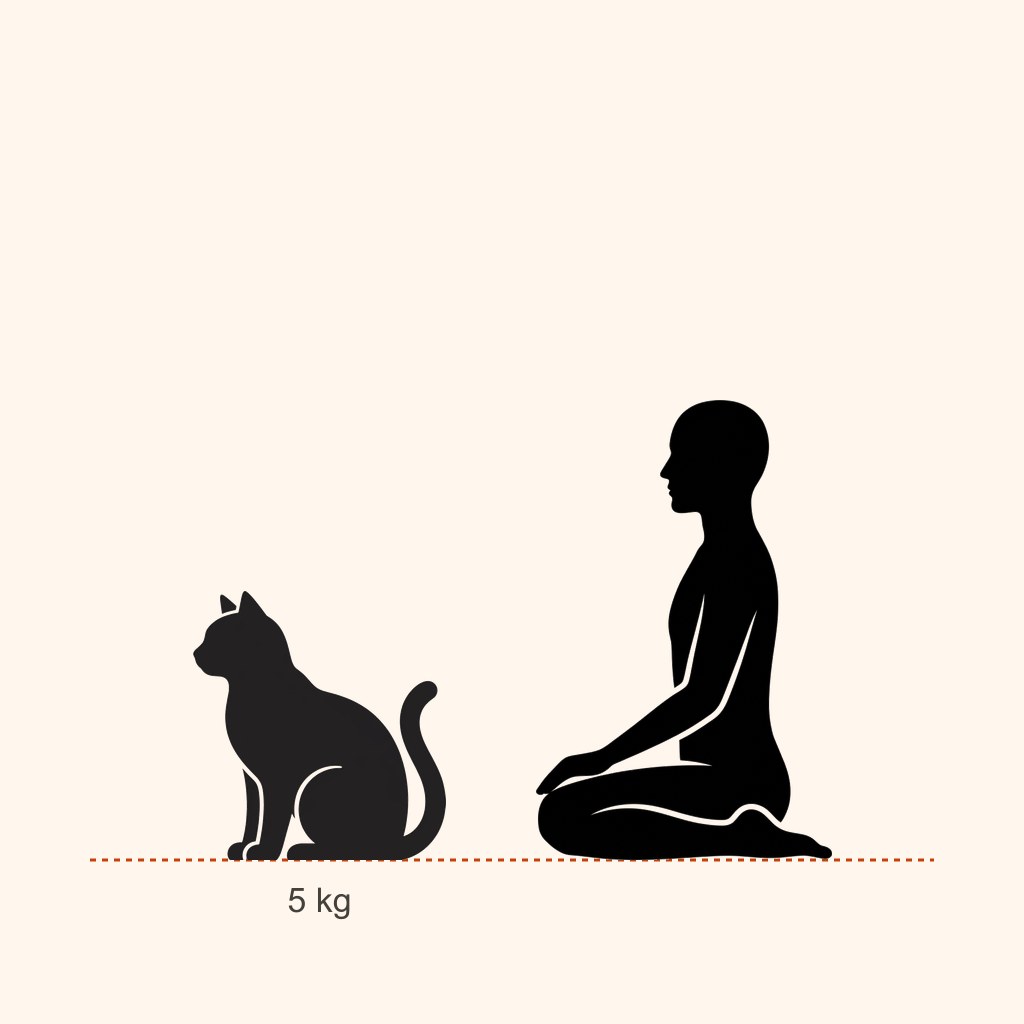
According to CFA, males can reach around 6 kg; females are significantly smaller. The breed matures slowly, taking three to five years, with males especially slow.
- Kitten (2-12 months): Kitten food, 3-4 meals a day.
- Young adult (1-3 years): Still building muscle and bone; good-quality, high-protein complete food. Review portions after neutering.
- Mature adult: Weigh the food because of the tendency to gain weight; avoid free-feeding.
- Senior (8+ years): Yearly blood and urine tests and weight monitoring.
Extra weight also worsens kneecap problems, so keeping an ideal weight is part of joint health in this breed. Wet food and a drinking fountain increase water intake.
Grooming and coat
CFA describes the coat as medium-short and slightly woolly, with a resilient undercoat and a longer protective topcoat.
- Occasional combing with a wide-toothed metal comb prevents mats and hairballs.
- Seasonal shedding: Heavy in spring and autumn; comb more often then.
- A comb rather than a soft brush suits the woolly texture.
- Baths are rarely needed, and the water-resistant coat is hard to wet through anyway.
- Nails every 2-3 weeks, teeth several times a week.
Living space and enrichment
- Hunting play. Two 10-15 minute sessions a day with wand toys for those fast reflexes.
- Fetch games. A small ball or paper ball for individuals that retrieve.
- Harness training. For interested cats, short walks on a harness in a safe, quiet area.
- Vertical space. An agile breed; sturdy cat trees and shelves.
- Food puzzles. Help with weight control and mental stimulation.
- Safe windows. Bird-watching is strong stimulation; make sure windows are netted.
History
References to the blue cats of France appear in literature as early as the 16th century. The best-known story says Carthusian monks at the Grande Chartreuse monastery kept these cats and gave the breed its name. However, in 1972 the Prior of the Grande Chartreuse stated that the archives held no record of the monks keeping any cat resembling the Chartreux, so the story is regarded as legend.
Selective breeding began in France in the 1920s from natural colonies of blue cats with consistent type. The breed almost disappeared during the Second World War and was saved by European enthusiasts afterwards. The Chartreux reached North America in the early 1970s, and CFA granted it championship status in 1987.
The writer Colette and French president Charles de Gaulle are among the famous people named as Chartreux owners.
This guide is for information only and is not a substitute for veterinary advice. Prices are approximate and vary by region and time.
Adoption Prep Checklist
Housing
-
Cat bed
Cats want a safe space of their own to rest.
-
Cat scratching post
Satisfies the natural scratching instinct and protects furniture.
Feeding
-
Dry/wet cat food
Quality cat food is needed for balanced nutrition.
-
Food and water bowl set
Needed for daily feeding and water access.
Grooming
-
Cat litter and litter box
Essential for the cat's toilet needs.
-
Cat de-shedding brush
Regular brushing reduces hairball formation.
Activity
-
Cat toy
Cats release energy through play.
-
Cat carrier
Needed for safe transport to vet visits.
Frequently Asked Questions
Does the Chartreux shed?
It sheds a moderate amount. Brushing two or three times a week noticeably reduces both loose hair and matting.
Can the Chartreux live in an apartment?
Yes. It lives comfortably in an apartment as long as its daily needs are met. What matters is not floor area but consistent exercise and mental stimulation.
Is the Chartreux good with children?
Generally yes. It adapts well to families with children. Even so, interactions should be supervised and children taught to respect the animal’s boundaries.
Is the Chartreux suitable for first-time cat owners?
Yes. Its care and training are relatively forgiving, which makes it a sound choice for first-time owners.
How much exercise does the Chartreux need?
Its energy level is low. Short, regular activity is enough; strenuous exercise is not required.
Can the Chartreux be left alone during the day?
It tolerates being alone well. That makes it workable for someone employed full time, though it will still expect attention and activity on your return.
How long does the Chartreux live?
The Chartreux lives 12 - 15 years on average. Diet, regular veterinary check-ups and early screening for hereditary conditions all affect this directly.
Where does the Chartreux come from?
The Chartreux originates from France. The geography a breed was developed in, and the job it was bred for, explain much of its temperament and care needs today.