

Chantilly-Tiffany
The image on this page is AI-generated and does not depict a real animal.
- Species
- Cat
- Origin
- United States
- Size
- Medium
- Lifespan
- 14 - 16 years
- Temperament
- Affectionate Demanding Interactive Loyal
- Description
Prefers company over being left alone, sweet-natured and loyal.
- Physical Traits
Medium-long silky coat, usually a solid chocolate color, tufted ears.
- Care / Environment Info
Lives indoors. Sheds heavily (regular brushing is important). Requires intensive grooming, daily brushing/grooming needed. Quite energetic and playful. Very talkative and can meow loudly. Generally a very healthy breed.
Chantilly-Tiffany Owner's Guide
Last updated:
Is a Chantilly-Tiffany cat right for you?
The Chantilly-Tiffany stands out for its semi-long, silky coat with no undercoat, a fox-like "plumed" tail, and a calm temperament. Instead of meowing, it makes soft chirps and trills, one of the breed's most distinctive traits. But the most important thing to know if you want to adopt one today is this: finding a registered, pedigreed Chantilly-Tiffany is extremely difficult, close to impossible.
| Situation | Suitability | Note |
|---|---|---|
| Apartment | Excellent | A calm cat well suited to indoor life |
| Family with young children | Good | Affectionate and interactive; does well with calm children |
| First-time cat owner | Good | Easy temperament; the real challenge is finding the breed |
| Alone 8+ hours a day | Poor | Attached to its owner; can become unsettled with long solitude |
| Household with fur allergies | Moderate | Semi-long coat with no undercoat, but still sheds |
| Someone wanting a quiet home | Good | Chirps softly instead of meowing |
| An adopter seeking a registered, pedigreed individual | Not suitable (currently) | The breed is extremely rare; most "Chantilly-Tiffany" listings are undocumented |
The most honest question: are you looking for a cat that carries this breed's name, or a genuinely registered Chantilly-Tiffany? For most adopters, the answer will be to warm up to a similarly-looking long-haired chocolate cat — which is a fine option in its own right.
Before you adopt
Sources disagree about the Chantilly-Tiffany's current status. Some sources say the breed is effectively extinct, after its last registered breeder (Amorino Cattery in the US) lost its archives and cats in a 2012 fire, and the last known individual, "Frosty," died in Norway in 2015. Other sources, such as the Chantilly/Tiffany Cat Project founded in 2016, say the breed's origins are being re-researched and that some lines are being maintained (for example through a Balinese outcross at a Canadian cattery). This section is therefore flagged: no clear, current, and consistent source could confirm whether the breed is "extinct" or "extremely rare but still ongoing."
The practical takeaway: if you see a listing selling a "Chantilly-Tiffany kitten" today, ask for genuine pedigree documentation and breeder history; what you're most likely looking at is a similar-looking but unregistered long-haired mixed-breed cat. That isn't a bad option — you just need to decide with your eyes open.
Temperament
The Chantilly-Tiffany is affectionate, social, and interactive; it bonds strongly with its owner and follows them around the house. It has a somewhat demanding side: it wants attention and lets you know.
Its voice is this breed's signature. Instead of meowing, it produces soft chirps and trills; that's an advantage if you want a quiet home, and equally satisfying if you enjoy a cat that "talks" with you.
It has a calm, even temperament and prefers lap time over rough play. It doesn't enjoy being alone for long and can become unsettled when separated from its owner.
Health issues and lifespan
Sources generally give a lifespan of 11 to 15 years. No known breed-specific hereditary disease has been reported; it is considered a generally healthy breed. That said, since it came historically from a very small breeding population, the long-term effects of that limited gene pool have not been studied at scale.
- Ear blockage: Long coat hairs can get into the ears and build up; regular checking and cleaning is needed.
- Digestive issues from hairballs: Hair swallowed during self-grooming can cause gastrointestinal upset; regular brushing reduces this.
- Tartar and weight monitoring: As with any cat, regular dental care and portion control matter.
Feeding
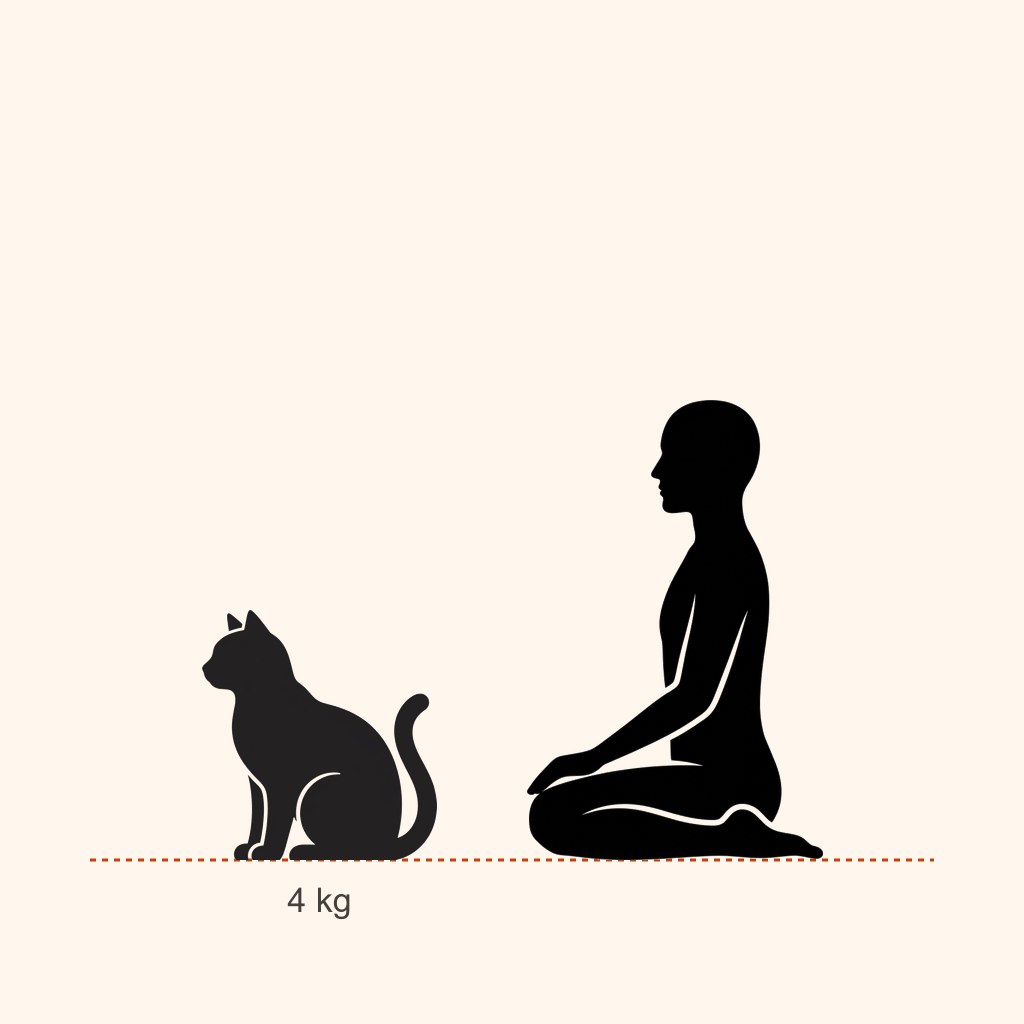
An adult Chantilly-Tiffany is medium-sized (roughly 3-6 kg).
- Kitten (2-12 months): Kitten food, three to four meals a day.
- Adult: A balanced, high-protein diet; fiber-rich or hairball-formula foods can help reduce hairball issues.
- Senior (8+ years): A diet set with your vet based on weight and dental health.
Adding wet food to support water intake reduces hairball risk and supports general health.
Grooming and coat
Its coat is semi-long, silky, and has no undercoat, which reduces matting but still needs daily attention.
- Brush every other day to prevent tangling and hairballs.
- Check areas like the tail and under the belly in particular.
- Nails every two to three weeks.
- Teeth brushed several times a week.
- Ears checked weekly; long hairs can get into the ear canal.
Living space and enrichment
- A quiet corner. This breed doesn't much enjoy noise and likes a resting spot of its own.
- Daily interaction. Time with its owner is a necessity, not a luxury, for this breed; long solitude causes unease.
- Measured play. Two short play sessions a day strengthen the bond and support activity.
- A medium-height climbing spot. Not extremely athletic, but it enjoys an observation point.
- An indoor life. Given its valuable and rare coat, it should not be allowed to roam freely outdoors.
History
The Chantilly-Tiffany's story begins in 1967 in New York, when breeder Jennie Robinson bought two semi-longhaired, chocolate-colored cats with golden eyes and made them the breed's foundation. TICA first recognized the breed in 1979 under the Burmese category, but rescinded that recognition in 1992 once it became clear there was no genetic relation to the Burmese; it reinstated recognition of the breed as its own in 1994.
The breed never reached a large population and came close to extinction twice, in the late 1980s and again in the late 2000s. The 2012 fire that destroyed the archives and cats of its last registered breeder, Amorino Cattery, was a serious blow to the breed's future. Today there are sources saying the breed is extinct and sources describing small-scale preservation and outcrossing efforts trying to keep the line going; the only certainty is that a registered Chantilly-Tiffany remains extremely rare worldwide.
This guide is for information only and is not a substitute for veterinary advice. Prices are approximate and vary by region and time.
Adoption Prep Checklist
Housing
-
Cat bed
Cats want a safe space of their own to rest.
-
Cat climbing tree
Satisfies the natural scratching instinct and protects furniture.
Feeding
-
Dry/wet cat food
Quality cat food is needed for balanced nutrition.
-
Food and water bowl set
Needed for daily feeding and water access.
Grooming
-
Cat litter and litter box
Essential for the cat's toilet needs.
-
Cat de-shedding brush
Regular brushing reduces hairball formation.
Activity
-
Interactive cat toy
Cats release energy through play.
-
Cat carrier
Needed for safe transport to vet visits.
Frequently Asked Questions
Does the Chantilly-Tiffany shed?
It sheds heavily, especially at seasonal changes. Expect near-daily brushing and regular cleaning at home; it is not a good choice for anyone sensitive to pet hair.
Can the Chantilly-Tiffany live in an apartment?
Yes. It lives comfortably in an apartment as long as its daily needs are met. What matters is not floor area but consistent exercise and mental stimulation.
Is the Chantilly-Tiffany good with children?
Generally yes. It adapts well to families with children. Even so, interactions should be supervised and children taught to respect the animal’s boundaries.
Is the Chantilly-Tiffany suitable for first-time cat owners?
No — it suits experienced owners. Its character, energy or care requirements would be demanding for a first-time owner.
How much exercise does the Chantilly-Tiffany need?
It is high-energy and needs vigorous daily activity. Mental stimulation matters as much as physical exercise; without enough to do, destructive behaviour follows.
Can the Chantilly-Tiffany be left alone during the day?
It can be left alone for a few hours. Long, routine absences can bring on boredom-driven behaviour problems; enrichment and a predictable routine reduce that risk.
How long does the Chantilly-Tiffany live?
The Chantilly-Tiffany lives 14 - 16 years on average. Diet, regular veterinary check-ups and early screening for hereditary conditions all affect this directly.
Where does the Chantilly-Tiffany come from?
The Chantilly-Tiffany originates from United States. The geography a breed was developed in, and the job it was bred for, explain much of its temperament and care needs today.