

Greyhound
The image on this page is AI-generated and does not depict a real animal.
- Species
- Dog
- Origin
- England
- Size
- Very Large
- Lifespan
- 10-12 years
- Temperament
- Calm gentle loyal docile
- Description
One of the fastest dog breeds in the world; quite calm and lazy-tempered at home.
- Physical Traits
Very short smooth coat, various colors, a deep-chested, very slender long-legged athletic body.
- Care / Environment Info
Very suitable for apartment living (known at home as a 'couch potato'). Its very short coat barely sheds. Low-to-moderate exercise is enough, loves short bursts of running. Sensitive to cold.
Greyhound Owner's Guide
Last updated:
Is a Greyhound right for you?
The Greyhound is the fastest runner in the dog world, capable of speeds above 60 km/h. Yet at home it is surprisingly calm, gentle, and quiet, spending much of the day asleep on the sofa. Most pet Greyhounds today are retired racing dogs rehomed after their track careers.
| Situation | Suitability | Note |
|---|---|---|
| Apartment | Good | Calm and quiet indoors; daily walks and an occasional safe sprint are enough |
| Family with children | Good | Gentle and patient; best with older children who respect its space |
| First-time dog owner | Good | Docile and easy-going; prey drive and special health points must be learned |
| Home with cats or small pets | Caution | Strong prey drive; only consider dogs assessed as cat-tolerant |
| Off-lead park walks | Not suitable | Can vanish within seconds after a small moving animal |
| Cold winters, poorly heated home | Poor | Thin coat and very little body fat; needs a winter coat and a warm bed |
| Alone for long hours | Moderate | Calm by nature, but ex-racers need time to adjust to home life and solitude |
Two facts to know before adopting: the prey drive is real and it is not safe off-lead, and the breed has anaesthesia and blood-test quirks your vet needs to know about.
Before you adopt
Adopting a retired racer: Most Greyhounds retire from racing between three and five years of age and can live up to 15 years, so they have many years to share with a new family. Rehoming organisations exist in the UK, Ireland, and several other countries. If you are considering adopting from abroad, find out at the start how the organisation handles health checks, vaccinations, microchipping, neutering, and travel paperwork.
Retired racers have spent most of their lives in kennels. In the first weeks, stairs, glass doors, slippery floors, television noise, and house-training may all be new. Be patient; most adapt quickly.
Homes with cats: Rehoming organisations assess how a dog reacts to cats (often called "cat testing"). If you have a cat, say so and take only a dog assessed as able to live with one. Even then, a muzzle and controlled introductions are advisable for the first weeks; to a Greyhound, the cat on your sofa and a cat running in the street are not the same thing.
Muzzles: Ex-racers are used to muzzles. The Greyhound Trust recommends muzzling outdoors until you are confident of the dog's behaviour around other breeds. This does not mean the dog is aggressive.
The Greyhound is not on restricted-breed lists in most countries, but check local rules.
Temperament
The Greyhound is gentle, calm, loyal, and somewhat independent. It moves little indoors, rarely barks, and likes to be near you without being all over you. It is not a lap dog.
It usually gets on well with other dogs, especially other Greyhounds and dogs of similar size. Some individuals may see very small dogs as prey, so introduce them carefully.
It is sensitive. It responds poorly to harsh voices and punishment, learns quickly, and bores quickly.
Some ex-racers startle when woken suddenly from deep sleep; teach children not to wake a sleeping dog and give it a quiet bed area.
Health issues and lifespan
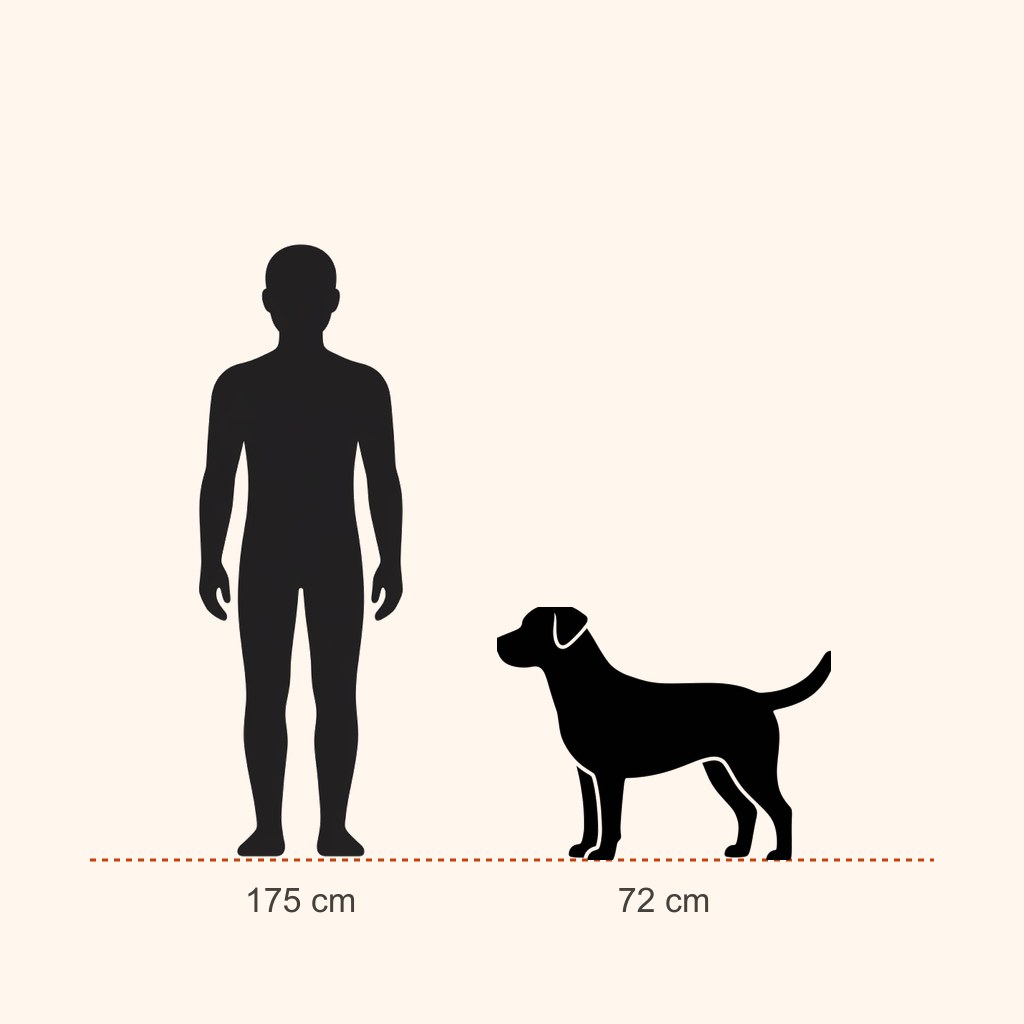
Sources usually give a lifespan of 10-13 years; a UK study found an average life expectancy of 11.5 years. Adult males are roughly 27-40 kg and 71-76 cm; females 25-34 kg and 66-71 cm.
- Anaesthetic sensitivity: Greyhounds have a documented sensitivity to some anaesthetic drugs; very low body fat affects drug distribution, and barbiturate-type drugs are not metabolised normally. Remind your vet of the breed before any surgery, dental cleaning, or sedation, and choose a vet experienced with sighthounds where possible.
- Different blood values: A Greyhound's normal blood results (for example red cell levels, thyroid, and platelet values) can differ from other dogs' and may be misread by a vet unfamiliar with the breed.
- Delayed post-operative bleeding: Some Greyhounds bleed 36-72 hours after surgery. Report bruising or oozing at the incision straight away.
- Cold sensitivity and thin skin: Thin coat and little body fat mean it chills fast. The skin is thin and tears easily on nails, wire, loose fencing, or other dogs' claws and teeth. Shivering and curling up tightly mean it is cold. Wounds over about 1 cm, wounds that look deep or cause lameness or swelling, and all bite wounds should be seen by a vet; many need stitches.
- Bloat (GDV): A risk with its deep chest. A swollen belly, retching without producing anything, and restlessness are a life-threatening emergency.
- Polyneuropathy: An inherited nerve disease causing muscle weakness and exercise intolerance; a genetic test is available.
Feeding
An adult Greyhound (25-40 kg) typically eats 300-450 g of quality dry food a day depending on activity, split into two meals.
- Puppy (2-15 months): Large-breed puppy food, three meals a day.
- Adult: Two meals a day. Greyhounds are naturally lean; faintly visible hip bones are normal. VCA notes that owners often overfeed this breed.
- Senior (8+ years): Calorie needs drop; good-quality protein helps maintain muscle.
When an ex-racer arrives, change its food gradually to avoid diarrhoea. To reduce bloat risk, avoid hard running around mealtimes.
Grooming and coat
- Very short, fine coat; a soft mitt or rubber brush once a week. Light shedding and very little odour.
- Bathe rarely, with a mild dog shampoo suited to thin skin.
- A winter coat and a soft, thick bed are essential; its bony, lean body is uncomfortable on hard floors.
- Take care in summer too: the short coat and thin skin are affected by sun and hot pavement, so walk in cooler hours.
- Brush teeth several times a week.
- Nails every three to four weeks.
- Check the skin for scrapes and cuts after walks and play; the tail tip can also be injured when wagged in tight spaces.
Training and exercise
Greyhounds are built for speed, not stamina. According to the Greyhound Trust, two walks of about twenty minutes a day suit most individuals, plus a short sprint a few times a week in a secure, fully fenced area.
Priorities:
- Always on lead. Free running only in fully enclosed areas, and muzzled at first. A Greyhound covers hundreds of metres in seconds, and recall cannot be relied on.
- A collar that suits its head. Its head is narrower than its neck, so it slips ordinary collars easily; use a wide martingale ("sighthound") collar or a well-fitted harness.
- Adjusting to home life. Teach stairs, slippery floors, and alone time step by step.
- Managed life with cats and small pets. Follow the rehoming organisation's assessment and don't leave the dog unsupervised in risky situations.
- Short, reward-based sessions. Learns fast but bores easily; harsh methods damage its sensitive nature.
History
The Greyhound is considered a representative of one of the oldest dog types. Sighthound-like figures are reported from very early sites such as Çatalhöyük in Anatolia and in ancient Iran, while the earliest remains conclusively identified as Greyhounds date from medieval Europe.
In the Middle Ages, owning Greyhounds in England and France was often restricted to nobility. The breed was used for coursing, hunting game by sight rather than scent and catching it at speed.
Modern track racing spread in the 1920s. In recent years commercial Greyhound racing has declined in many countries, with tracks closing or racing being phased out by law in some places, drawing attention to the number of retired Greyhounds awaiting homes.
This guide is for information only and is not a substitute for veterinary advice. Prices are approximate and vary by region and time.
Adoption Prep Checklist
Housing
-
Large-breed dog bed
A comfortable bed supports joint health.
Feeding
-
Large-breed dog food
Food matched to breed size gives the right nutritional balance.
-
Food and water bowl set
Needed for daily feeding and water access.
Grooming
-
Short-hair dog brush
Regular brushing reduces shedding and matting.
-
Dog nail clippers
Regular nail care matters for healthy walking.
-
Dog shampoo
Use a dog-specific shampoo for skin and coat health.
Walking & Activity
-
Dog leash and collar set
Needed for safe walks.
-
Plush dog toy
Mental and physical stimulation reduces behavior problems.
Training
-
Training treats / beginner training guide
Basic obedience training is recommended for first-time dog owners.
Frequently Asked Questions
Does the Greyhound shed?
Shedding is low. Brushing once a week is usually enough, with a mild increase during seasonal changes.
Can the Greyhound live in an apartment?
Yes. It lives comfortably in an apartment as long as its daily needs are met. What matters is not floor area but consistent exercise and mental stimulation.
Is the Greyhound good with children?
Generally yes. It adapts well to families with children. Even so, interactions should be supervised and children taught to respect the animal’s boundaries.
Is the Greyhound suitable for first-time dog owners?
Yes. Its care and training are relatively forgiving, which makes it a sound choice for first-time owners.
How much exercise does the Greyhound need?
Its energy level is low. Short, regular activity is enough; strenuous exercise is not required.
Can the Greyhound be left alone during the day?
It can be left alone for a few hours. Long, routine absences can bring on boredom-driven behaviour problems; enrichment and a predictable routine reduce that risk.
How long does the Greyhound live?
The Greyhound lives 10-12 years on average. Diet, regular veterinary check-ups and early screening for hereditary conditions all affect this directly.
Where does the Greyhound come from?
The Greyhound originates from England. The geography a breed was developed in, and the job it was bred for, explain much of its temperament and care needs today.