

Bulldog
The image on this page is AI-generated and does not depict a real animal.
- Species
- Dog
- Origin
- England
- Size
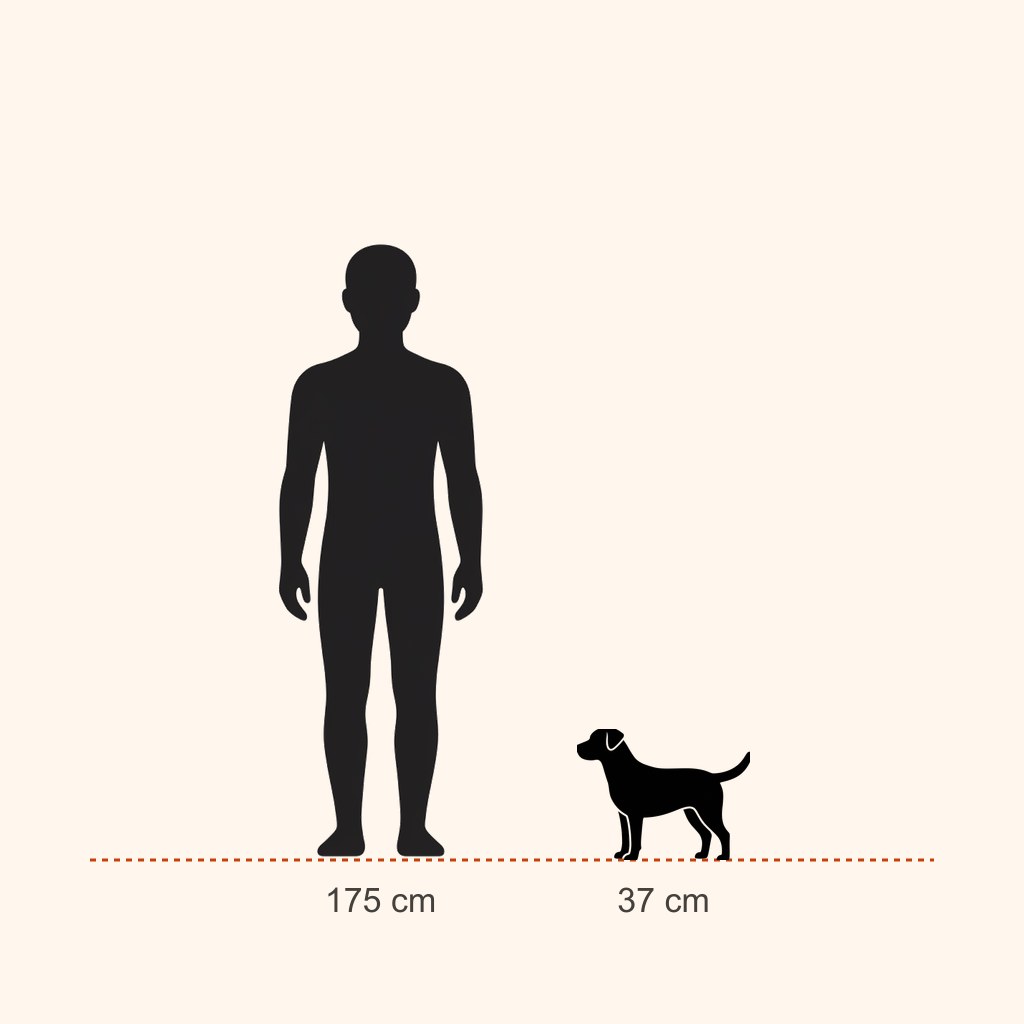
- Small
- Lifespan
- 8-10 years
- Temperament
- Calm friendly stubborn brave
- Description
Dignified and calm-natured, a homely family dog; low energy level.
- Physical Traits
Short smooth coat, loose wrinkled skin, a flat broad face, a stocky short-legged broad-shouldered body.
- Care / Environment Info
Very suitable for apartment living. Its short coat sheds little but facial wrinkles need regular cleaning (otherwise risk of odor and infection). Very low exercise needs. Its flat nose structure makes it heat-intolerant and it snores.
Bulldog Owner's Guide
Last updated:
Is an English Bulldog right for you?
The Bulldog is loved for its calm temperament and recognisable appearance. Gentle, child-friendly, low-energy. In return it is one of the breeds whose health burden is most debated in veterinary medicine. Reading this section honestly is essential before deciding.
| Situation | Suitability | Note |
|---|---|---|
| Apartment | Excellent | Very low exercise needs |
| Family with young children | Excellent | Patient and gentle |
| First-time dog owner | Moderate | Easy temperament, intensive health care |
| Alone 8+ hours a day | Moderate | Dependent but calm; long absences are still not good |
| Household with fur allergies | Moderate | Short coat, moderate shedding |
| Hot climate | Very poor | Very high heat-stroke risk |
| Swimming, running, long walks | Not suitable | Cannot swim, cannot sustain effort |
| Low veterinary budget | Not suitable | Health costs are the rule in this breed, not the exception |
An average lifespan of 8 to 10 years is short for a dog of this size and reflects the breed's structural problems.
Before you adopt
Breeder selection in this breed directly determines the animal's lifelong comfort. What you are looking for is not a "typical" Bulldog but a Bulldog that can breathe.
When you go to see the puppy, check these things: are the nostrils open, does it breathe noisily at rest, does it tire quickly after a short play session. A puppy that breathes with a wheeze even at rest will have respiratory problems for life.
Ask the breeder for hip certification and cardiac and eye examination certificates. Also ask about the parents' breathing assessment; grading schemes such as the BOAS system used in the UK are becoming more common in this breed.
Prefer breeders producing longer-muzzled, less wrinkled, more athletic individuals. This choice directly affects the breed's future health.
Note that whelping in this breed almost always requires a caesarean section. Do not consider breeding from a Bulldog.
Temperament
The Bulldog is calm, gentle, and stubborn. Its energy level is low; it spends most of the day asleep and is content that way.
It is attached to its family and extraordinarily patient with children. Aggression is rare in the modern Bulldog; the breed has been taken entirely away from its fighting past.
Its stubbornness is famous. Once it has decided to sit somewhere, it is hard to move. This is not a training failure but character; working with rewards is the only way.
Snoring, wheezing, drooling, and flatulence are part of daily life with this breed. The first two relate to its respiratory structure.
Health issues and lifespan
Average lifespan is 8 to 10 years.
- Brachycephalic obstructive airway syndrome (BOAS): The breed's central problem. Narrow nostrils, an elongated soft palate, a narrow trachea. Noisy breathing, exercise intolerance, apnoea during sleep. Surgical correction is needed in many individuals and markedly improves quality of life.
- Heat stroke: A fatal risk. Take care above 25 °C and do not go out above 28 °C. Never leave the dog in a vehicle.
- Skin fold dermatitis: In the facial, nose-bridge, and tail folds. Daily cleaning is essential.
- Hip and elbow dysplasia: Very common in this breed; joint conformation is structurally poor.
- Cherry eye: Prolapse of the third eyelid gland; surgery is required.
- Entropion and ectropion: Eyelid deformities.
- Tail spine anomalies: A screw or inset tail is associated with vertebral deformity and inflammation of the tail pocket.
- Whelping difficulty: Natural birth is usually impossible because of the wide head and narrow pelvis.
- Anaesthetic risk: Anaesthesia is riskier in this breed because of the airway structure; choose a clinic experienced with brachycephalic dogs.
Feeding
An adult Bulldog (18-25 kg) eats 250-350 g of quality dry food per day. Portion control is critical because of low activity.
- Puppy (2-14 months): Medium-breed puppy food, three meals a day.
- Adult: 22-26% protein. Food allergy is common in this breed; if itching and ear problems recur, limited-ingredient food may be tried under veterinary supervision.
- Senior (7+ years): Calories reduced, joint support added.
Use a slow-feeder bowl; it reduces air swallowing. A raised bowl makes eating easier for some individuals.
Grooming and coat
In this breed grooming is about skin rather than coat.
- The facial and nose-bridge folds must be wiped with a damp cloth and dried thoroughly every day. A fold that stays damp becomes inflamed quickly.
- Tail pocket: in individuals with an inset tail, the pocket beneath the tail must be cleaned regularly; neglect leads to serious inflammation and possibly surgery.
- A rubber brush once or twice a week.
- Bathe every four to six weeks with a skin-friendly shampoo.
- Daily eye checks.
- Nails every three to four weeks; nails are thick in this breed.
- Teeth several times a week; dental crowding is common in the short jaw.
Training and exercise
Daily requirement: 20 to 30 minutes on level ground in cool conditions, in short segments. "Little exercise" here is not a preference but a medical limit.
Swimming: Bulldogs cannot swim. The heavy front end and short muzzle cause them to sink rapidly. Never leave one alone by a pool.
Priorities:
- Heat management. In summer, walks must move to early morning and late evening. Provide a cooling mat and cool flooring.
- Knowing the emergency signs. Extremely noisy breathing, a purple tongue, and inability to stand are an emergency; cool the dog and go straight to a vet.
- Harness. A neck collar constricts the airway.
- Short, reward-based training. It is stubborn; motivate rather than force.
- Socialisation (8-16 weeks).
- Weight monitoring. Weigh monthly; in this breed excess weight shows directly in breathing.
History
The Bulldog's name comes from the brutal spectacle of bull-baiting, practised in England from the 13th to the 19th century. The dogs were bred to seize the bull by the nose; the wide jaw, the set-back nose (so it could breathe), and the low centre of gravity were products of that function.
England banned these spectacles in 1835 and the breed lost its purpose. Bulldog enthusiasts, to save the breed from extinction, set about eliminating aggressive individuals and producing a companion dog. This is one of the most successful temperament transformations in the history of dog breeding; today's Bulldog, unlike its ancestors, is exceptionally gentle.
At the same time, however, appearance changed too: a shorter muzzle, a wider head, and a thicker body were preferred. That aesthetic direction is the source of today's health problems.
The breed became one of England's national symbols, an image reinforced by its association with Winston Churchill during the Second World War. Today some countries, such as the Netherlands and Norway, have introduced regulations restricting the breeding of extreme types, and returning the breed to a healthier form is under discussion.
This guide is for information only and is not a substitute for veterinary advice. Prices are approximate and vary by region and time.
Adoption Prep Checklist
Housing
-
Small-breed dog bed
A comfortable bed supports joint health.
Feeding
-
Small-breed dog food
Food matched to breed size gives the right nutritional balance.
-
Food and water bowl set
Needed for daily feeding and water access.
Grooming
-
Short-hair dog brush
Regular brushing reduces shedding and matting.
-
Dog nail clippers
Regular nail care matters for healthy walking.
-
Dog shampoo
Use a dog-specific shampoo for skin and coat health.
Walking & Activity
-
Dog leash and collar set
Needed for safe walks.
-
Plush dog toy
Mental and physical stimulation reduces behavior problems.
Frequently Asked Questions
Does the Bulldog shed?
Shedding is low. Brushing once a week is usually enough, with a mild increase during seasonal changes.
Can the Bulldog live in an apartment?
Yes. It lives comfortably in an apartment as long as its daily needs are met. What matters is not floor area but consistent exercise and mental stimulation.
Is the Bulldog good with children?
Generally yes. It adapts well to families with children. Even so, interactions should be supervised and children taught to respect the animal’s boundaries.
Is the Bulldog suitable for first-time dog owners?
Partly. Someone with basic experience will manage well, but it would not be the first choice for a complete beginner.
How much exercise does the Bulldog need?
Its energy level is low. Short, regular activity is enough; strenuous exercise is not required.
Can the Bulldog be left alone during the day?
It can be left alone for a few hours. Long, routine absences can bring on boredom-driven behaviour problems; enrichment and a predictable routine reduce that risk.
How long does the Bulldog live?
The Bulldog lives 8-10 years on average. Diet, regular veterinary check-ups and early screening for hereditary conditions all affect this directly.
Where does the Bulldog come from?
The Bulldog originates from England. The geography a breed was developed in, and the job it was bred for, explain much of its temperament and care needs today.