

Beagle
The image on this page is AI-generated and does not depict a real animal.
- Species
- Dog
- Origin
- England
- Size
- Small
- Lifespan
- 12-15 years
- Temperament
- Cheerful curious friendly determined
- Description
Known for its keen sense of smell, a cheerful and social small-to-medium hunting dog.
- Physical Traits
Short dense coat (usually tricolor: white-brown-black), long low drooping ears, a compact muscular body.
- Care / Environment Info
Can live in an apartment but is a vocal breed (can bark and howl). Its short coat sheds moderately, easy to maintain. High exercise needs. Its strong scenting drive means a high tendency to track scents, a fenced/secure area is important.
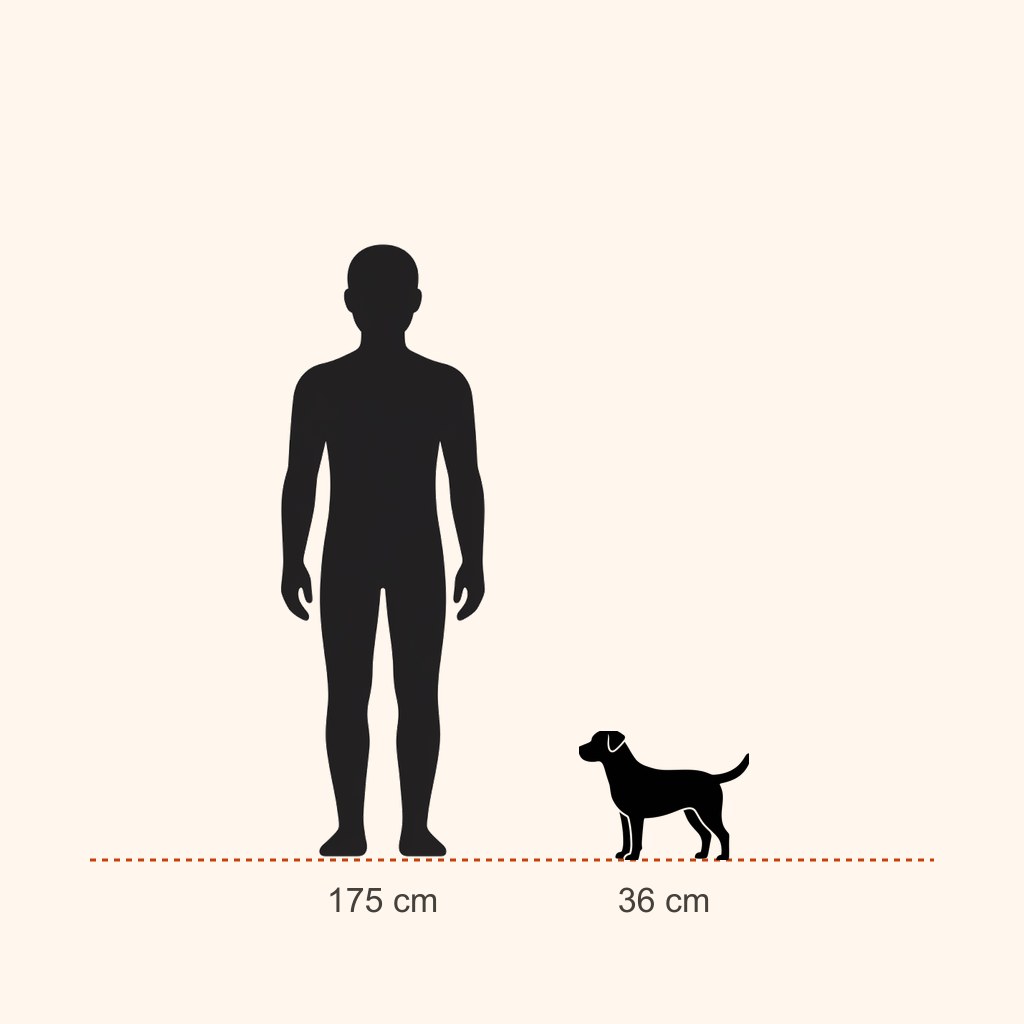
Beagle Owner's Guide
Last updated:
Is a Beagle right for you?
The Beagle is widely chosen as a family dog for its cheerful temperament and medium size. It can be a good choice, but two of its features are not negotiable: its nose and its voice. This breed was bred to follow a scent and does not abandon a trail once found; it also has a distinctive, long, resonant call.
| Situation | Suitability | Note |
|---|---|---|
| Apartment | Moderate | Possible, but the voice can cause problems with neighbours |
| Family with young children | Excellent | Patient, playful, sturdy; the breed's greatest strength |
| First-time dog owner | Moderate | Easy temperament but training is challenging because of stubbornness |
| Alone 8+ hours a day | Poor | A pack dog; howls and becomes destructive when left alone |
| Household with fur allergies | Moderate to poor | Short coat but constant shedding |
| Garden with a low fence | Poor | Escapes on a scent; the fence must be high with a closed base |
| Home needing quiet | Poor | Howling is this breed's natural way of communicating |
One truth to accept before getting a Beagle: this dog is not safe off-lead. When it picks up a scent it does not hear you; that is not disobedience but hard-wired behaviour.
Before you adopt
Beagles are among the breeds most often seen in shelters and rehoming pages; consider adoption as your first option.
If buying from a breeder, ask for hip certification, an eye examination, and the MLS (Musladder Beagle syndrome) genetic test result. When you visit the puppy, ask to see the mother as well; if she is absent or not shown, walk away.
Look at the ears: redness, odour, or brown discharge may indicate chronic ear problems in that puppy and its line. The puppy must have stayed with its mother for at least eight weeks.
Beagles are still used as laboratory animals, and rehoming programmes exist for retired individuals; these dogs require patience but are a very worthwhile option.
Temperament
The Beagle is cheerful, curious, and friendly. Because it was bred to hunt in a pack it gets on well with both dogs and people; aggression is not part of the breed's character.
It is stubborn. Despite being intelligent it ranks low in obedience lists, because the Beagle was selected to work independently. It hears a cue, weighs it against the scent, and usually chooses the scent.
Its voice is the breed's signature: alongside barking it produces a long, melodic "bay". This call was meant to inform the hunter during a hunt and cannot be entirely silenced.
Its devotion to food is extraordinary. It climbs onto kitchen counters, raids bins, and steals food from bags. This is an advantage in training (easily motivated by food) and a problem in daily life.
Health issues and lifespan
Average lifespan is 12 to 15 years. It is generally a healthy breed.
- Obesity: The most common problem here. An insatiable appetite combined with moderate activity. Excess weight triggers disc problems and joint disease.
- Ear infections: The long, drop ears prevent ventilation. Head shaking, scratching at the ear, odour, and redness are the signs. Weekly checks and keeping the ears dry prevent most cases.
- Intervertebral disc disease (IVDD): The long back carries a risk. Sudden pain, inability to walk, hind-limb weakness. Weight control and limiting jumping are protective.
- Epilepsy: Usually starts between one and five years; can be controlled with medication.
- Hypothyroidism: Weight gain, lethargy, hair loss. Diagnosed by blood test.
- Eye problems: Glaucoma, cataracts, and eyelash abnormalities occur.
- Musladder Beagle syndrome (MLS): An inherited connective tissue disorder specific to the breed; a genetic test exists.
Feeding
An adult Beagle (9-15 kg) eats 180-250 g of quality dry food per day. Portion control is central to health in this breed.
- Puppy (2-12 months): Medium-breed puppy food, three meals a day.
- Adult: 22-26% protein. Measure with a cup; a Beagle always looks hungry, which relates to a weak satiety signal rather than genuine hunger.
- Senior (8+ years): Calories reduced.
A slow-feeder bowl and food puzzles both slow eating and satisfy the scenting instinct.
Kitchen and bin security is a genuine issue with this breed; use a locking bin and keep counters out of reach.
Grooming and coat
- Short double coat; a rubber brush once or twice a week. It sheds more than expected.
- Bathe every six to eight weeks.
- Ears must be checked weekly and cleaned if needed on veterinary advice. This is the breed's most important grooming task.
- Nails every three to four weeks.
- Teeth several times a week.
- Check for ticks after walks; it dives into undergrowth while following a scent.
Training and exercise
Daily requirement: 1 to 1.5 hours. Walking, running, and above all the opportunity to sniff. For a Beagle, a walk where it can use its nose is more satisfying than one twice as long in a straight line.
Priorities:
- Scent work. The best mental exercise for this breed. Hide food in the garden or house for it to find, and play tracking games.
- Recall. Difficult but essential. Use high-value rewards and start in low-distraction environments. Even so, do not trust it off-lead.
- Managing howling. It cannot be eliminated; preventing boredom is the most effective approach.
- Leash discipline. Pulling on a scent should be corrected in puppyhood.
- Socialisation (8-16 weeks).
Punishment does not work with this breed; a Beagle shuts down and becomes more stubborn. Motivate with food and keep sessions short and enjoyable.
History
The Beagle's origins lie with the small scent hounds used for hare hunting in England. The origin of the name is disputed, linked either to the French "begueule" (open throat) or to Old English "beag" (small).
In the 16th century English nobles kept hunting dogs of various sizes; the smallest were tiny enough to fit into a saddlebag and were known as "pocket beagles". The modern standard type was standardised for hare hunting in 19th-century England and taken to America.
The Beagle's sense of smell is extraordinary, with roughly 220 million olfactory receptors. For this reason it is used worldwide at airports as an agricultural and food detection dog; its small size and friendly appearance are preferred because it does not intimidate passengers. Its best-known representative in popular culture is the comic-strip character Snoopy.
This guide is for information only and is not a substitute for veterinary advice. Prices are approximate and vary by region and time.
Adoption Prep Checklist
Housing
-
Small-breed dog bed
A comfortable bed supports joint health.
Feeding
-
Small-breed dog food
Food matched to breed size gives the right nutritional balance.
-
Food and water bowl set
Needed for daily feeding and water access.
Grooming
-
De-shedding brush
Regular brushing reduces shedding and matting.
-
Dog nail clippers
Regular nail care matters for healthy walking.
-
Dog shampoo
Use a dog-specific shampoo for skin and coat health.
Walking & Activity
-
Running/exercise dog harness
Needed for safe walks.
-
Interactive dog puzzle toy
Mental and physical stimulation reduces behavior problems.
Training
-
Training treats / beginner training guide
Basic obedience training is recommended for first-time dog owners.
Frequently Asked Questions
Does the Beagle shed?
It sheds a moderate amount. Brushing two or three times a week noticeably reduces both loose hair and matting.
Can the Beagle live in an apartment?
Yes. It lives comfortably in an apartment as long as its daily needs are met. What matters is not floor area but consistent exercise and mental stimulation.
Is the Beagle good with children?
Generally yes. It adapts well to families with children. Even so, interactions should be supervised and children taught to respect the animal’s boundaries.
Is the Beagle suitable for first-time dog owners?
Yes. Its care and training are relatively forgiving, which makes it a sound choice for first-time owners.
How much exercise does the Beagle need?
It is high-energy and needs vigorous daily activity. Mental stimulation matters as much as physical exercise; without enough to do, destructive behaviour follows.
Can the Beagle be left alone during the day?
It can be left alone for a few hours. Long, routine absences can bring on boredom-driven behaviour problems; enrichment and a predictable routine reduce that risk.
How long does the Beagle live?
The Beagle lives 12-15 years on average. Diet, regular veterinary check-ups and early screening for hereditary conditions all affect this directly.
Where does the Beagle come from?
The Beagle originates from England. The geography a breed was developed in, and the job it was bred for, explain much of its temperament and care needs today.