

Vizsla
The image on this page is AI-generated and does not depict a real animal.
- Species
- Dog
- Origin
- Hungary
- Size
- Large
- Lifespan
- 12-15 years
- Temperament
- Affectionate energetic intelligent sensitive
- Description
Known for its golden-red coat, a very energetic hunting dog extremely devoted to people.
- Physical Traits
Short smooth golden-red (rust) coat, drooping ears, a slender muscular athletic body.
- Care / Environment Info
A house with a garden is preferred but can also live in an apartment with plenty of exercise. Its short coat sheds little, easy to maintain. Very high exercise needs. Very devoted to people, sensitive to being left alone.
Vizsla Owner's Guide
Last updated:
Is a Vizsla right for you?
The Vizsla (Hungarian Vizsla) is a Hungarian gundog known for its short golden-rust coat and elegant build. It is affectionate, gentle and intensely people-focused. PetMD notes that the breed is nicknamed the "Velcro dog" because it wants to stick by its owner at all times, and that as a sensitive dog it struggles when left alone. That clinginess looks endearing, but it is a serious problem for a dog that would be home alone all day.
| Situation | Suitability | Note |
|---|---|---|
| Apartment | Poor | A gundog that needs at least one, often two hours of running a day |
| Alone 8+ hours a day | Unsuitable | Struggles to be left alone; barking, chewing, damage |
| Active family that runs | Excellent | VCA rates it among the best jogging partners |
| Family with young children | Moderate | Gentle and playful with children but can bowl over a toddler |
| First-time dog owner | Moderate | Keen and trainable, but energy and sensitivity need managing |
| Home with birds, rabbits or small pets | Poor | Strong prey drive |
| Looking for a guard dog | Poor | VCA describes it as sociable with strangers |
| Household with fur allergies | Moderate | Short coat, average shedding |
In a nutshell: a Vizsla is a running, outdoors and sofa companion that joins your life; it is not a dog that waits at home.
Before you adopt
Assess your daily routine honestly. A Vizsla follows you from room to room and waits outside the bathroom door. Long working hours, frequent travel or a plan to leave it alone in the garden do not fit this breed. Without home working, daycare or a sitter, consider another breed.
Ask the breeder: For the American breed club's CHIC health database, parents need hip and thyroid evaluations and an eye examination. Also ask about any family history of epilepsy, Vizsla inflammatory polymyopathy (VIP) and sebaceous adenitis.
Rescue: Adult Vizslas are sometimes surrendered precisely because of problems being left alone. If you adopt one, do not leave it alone for long in the first weeks, and follow a gradual plan.
Legal status: The breed is not typically restricted; in Turkey, for example, it is not on the dangerous-breed list under Law No. 5199.
Temperament
VCA describes the Vizsla as gentle and playful with children, sociable with strangers, but potentially over-excitable if not well managed.
The Velcro dog: The breed's defining trait is its dependence on people. At home it stays at your side, tries to fit on your lap and burrows into beds and sofas. That attachment can turn into anxiety when it is left alone. Signs include restlessness while you get ready, prolonged whining, barking or howling after you leave, scratching around doors, chewing belongings and house-soiling.
It is sensitive. Harsh voices, shouting and punishment quickly damage its trust; it learns very well with positive reinforcement. It is intelligent and eager to please.
Without enough exercise it becomes, as VCA notes, overactive and destructive. A properly tired Vizsla is calm and affectionate at home.
Health issues and lifespan
VCA and PetMD give a lifespan of 10-14 years. The main breed concerns are:
- Epilepsy: One of the main problems listed by PetMD. Seizures usually begin in young adulthood. See a vet after the first seizure; seizures lasting more than five minutes or in clusters are an emergency.
- Vizsla inflammatory polymyopathy (VIP): Immune-mediated muscle inflammation. In a published clinical study the most common signs were difficulty swallowing, excessive drooling, wasting of the jaw muscles and regurgitation, with an average age of onset of 2.4 years. Immunosuppressive treatment improved signs in most dogs, but the disease was chronic. See a vet for swallowing difficulty, increased drooling or thinning of the jaw muscles; recurrent aspiration pneumonia is the most serious complication.
- Hypothyroidism: Weight gain, lethargy, hair loss. Diagnosed by blood test, treated with lifelong tablets.
- Sebaceous adenitis: An immune-mediated disease that destroys the skin's oil glands. Scaling, dandruff, circular hairless patches and itching. Diagnosed by skin biopsy.
- Hip dysplasia: Limping, difficulty rising; parent evaluation matters.
- Progressive retinal atrophy (PRA): Progressive vision loss beginning with poor night vision.
- Cancers: Breed health resources list types such as haemangiosarcoma and lymphoma. Sudden weakness, pale gums and a swollen belly are emergency signs.
Feeding
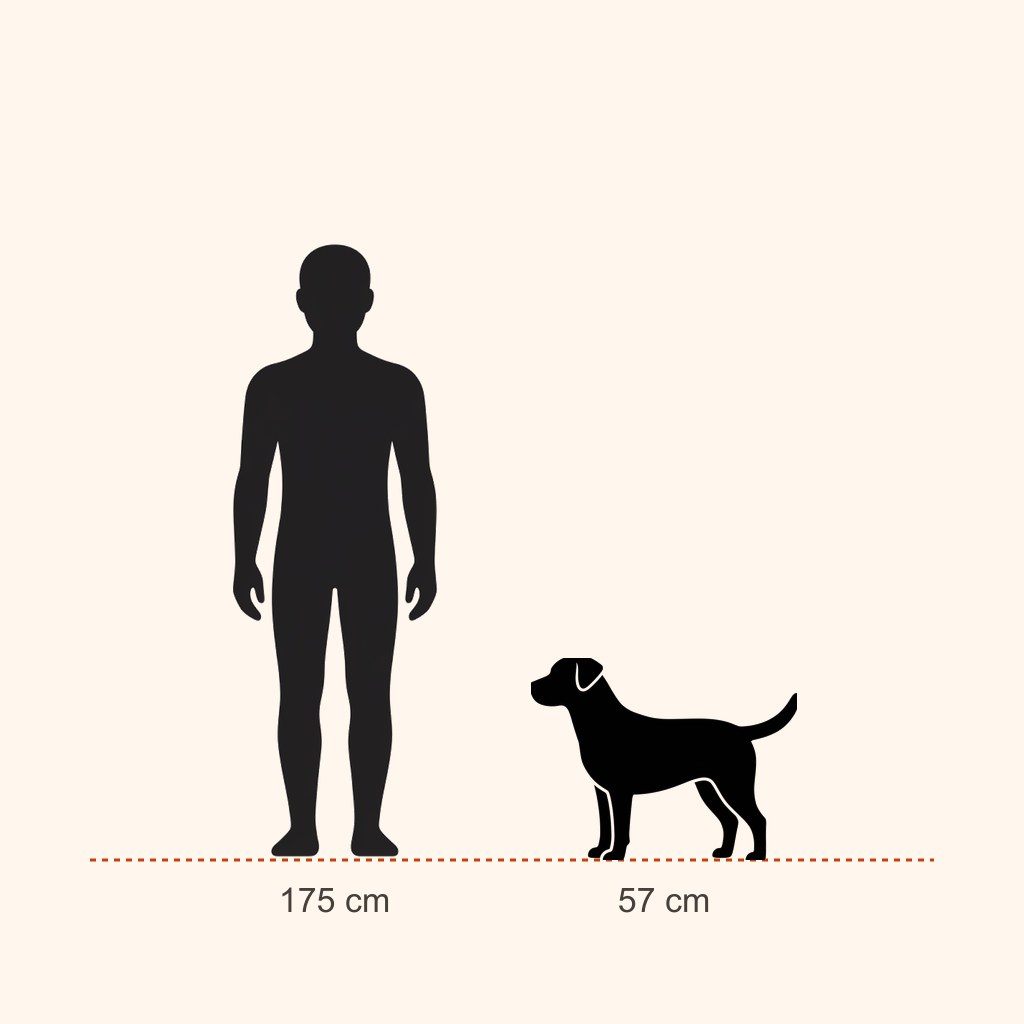
An adult Vizsla (females about 18-25 kg, males 20-29 kg) eats roughly 250-400 g of quality dry food a day depending on activity. VCA notes the breed tends to keep a good weight; very active dogs need more, and the ribs should be easy to feel.
- Puppy (2-12 months): Medium-to-large-breed puppy food, three meals a day. Do not push growth.
- Adult: 24-28% protein; a higher-energy food for hunting or sporting dogs.
- Senior (8+ years): Reduce calories, preserve muscle.
Feed two meals a day and avoid vigorous exercise for about an hour before and after; the risk of bloat in deep-chested dogs makes this rule worth following. For dogs diagnosed with VIP, feeding method (texture, bowl height) is decided with the vet.
Grooming and coat
A short, dense, smooth golden-rust coat with no undercoat.
- A rubber brush or hound glove once a week; occasional baths.
- Check ears weekly; drop ears trap moisture, so dry them after swimming.
- Nails every two to four weeks.
- Brush teeth several times a week.
- With no undercoat it is not cold-hardy; do not leave it outside for long in winter, and keep it as an indoor dog.
- In summer the short coat and light skin heat up quickly in the sun; walk in cooler hours and provide plenty of water.
- After country walks check for grass seeds, thorns and ticks.
Training and exercise
PetMD recommends at least an hour of exercise a day; for active individuals this rises to two hours. VCA considers long runs or hunting ideal and says a well-fenced yard is essential.
Priorities:
- Training for time alone (from day one). Start with absences of a few minutes and lengthen them slowly. Even at home, teach it to stay alone in a closed room for short periods. Keep departures and returns calm. Exercise it before longer absences and leave a food puzzle. If signs worsen, seek help from a vet or behaviour professional early; punishment increases anxiety.
- Independent resting. Reward it for settling calmly on its own bed; teach it that constant contact is not the only option.
- Recall. It may range far after birds or rabbits; work on a long line.
- Socialisation (8-16 weeks). In a sensitive breed, getting used to varied places and sounds builds confidence.
- Mental work. Scent games, retrieving, agility and gundog training both tire and satisfy this breed.
Avoid long runs and repeated jumping on hard ground during puppyhood.
History
The Vizsla developed in Hungary. According to PetMD its roots go back to the hunting dogs of the 8th century, when the Magyars settled in the Carpathian Basin. Selected to find, point and retrieve birds and hares in open plains and fields, it became the favoured gundog of the Hungarian nobility.
The breed suffered serious declines in the late 19th century and during both world wars. Dogs taken out of the country after the Second World War helped preserve it abroad, and, as PetMD notes, it reached the United States in that period.
Today the Vizsla is kept both as a gundog and as a companion for active families. There is also a wire-haired variety, the Wirehaired Vizsla, recognised as a separate breed.
This guide is for information only and is not a substitute for veterinary advice. Prices are approximate and vary by region and time.
Adoption Prep Checklist
Housing
-
Large-breed dog bed
A comfortable bed supports joint health.
Feeding
-
Large-breed dog food
Food matched to breed size gives the right nutritional balance.
-
Food and water bowl set
Needed for daily feeding and water access.
Grooming
-
Short-hair dog brush
Regular brushing reduces shedding and matting.
-
Dog nail clippers
Regular nail care matters for healthy walking.
-
Dog shampoo
Use a dog-specific shampoo for skin and coat health.
Walking & Activity
-
Running/exercise dog harness
Needed for safe walks.
-
Interactive dog puzzle toy
Mental and physical stimulation reduces behavior problems.
Frequently Asked Questions
Does the Vizsla shed?
Shedding is low. Brushing once a week is usually enough, with a mild increase during seasonal changes.
Can the Vizsla live in an apartment?
Possible but not ideal. A house with outdoor space is preferable; in an apartment you will need to increase daily exercise substantially.
Is the Vizsla good with children?
Generally yes. It adapts well to families with children. Even so, interactions should be supervised and children taught to respect the animal’s boundaries.
Is the Vizsla suitable for first-time dog owners?
Partly. Someone with basic experience will manage well, but it would not be the first choice for a complete beginner.
How much exercise does the Vizsla need?
It is high-energy and needs vigorous daily activity. Mental stimulation matters as much as physical exercise; without enough to do, destructive behaviour follows.
Can the Vizsla be left alone during the day?
It is not suited to long periods alone. It is prone to separation anxiety; a household where someone is usually home, or where a companion animal is present, fits it much better.
How long does the Vizsla live?
The Vizsla lives 12-15 years on average. Diet, regular veterinary check-ups and early screening for hereditary conditions all affect this directly.
Where does the Vizsla come from?
The Vizsla originates from Hungary. The geography a breed was developed in, and the job it was bred for, explain much of its temperament and care needs today.