

Rottweiler
The image on this page is AI-generated and does not depict a real animal.
- Species
- Dog
- Origin
- Germany
- Size
- Large
- Lifespan
- 8-10 years
- Temperament
- Loyal brave confident protective
- Description
A strong, confident and extremely loyal guard/working dog devoted to its family.
- Physical Traits
Short dense black coat with distinct brown/rust markings, a large muscular body, a broad head.
- Care / Environment Info
A house with a garden is preferred. Its short coat sheds moderately, easy to maintain. High exercise and early socialization needs. May be subject to breed-specific legislation (BSL) restrictions in some countries and cities; check local regulations before adoption.
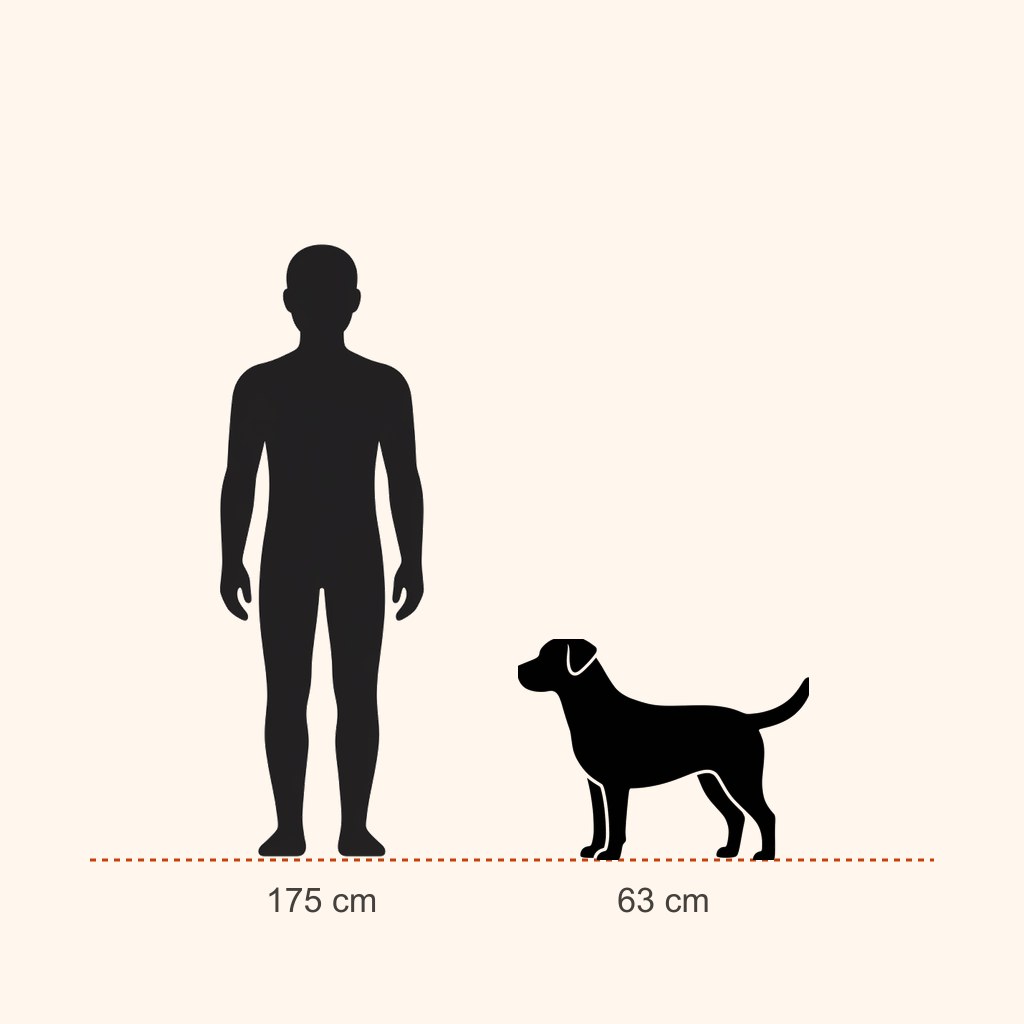
Rottweiler Owner's Guide
Last updated:
Is a Rottweiler right for you?
The Rottweiler is a working breed known for its strength and protective instinct. A well-bred Rottweiler is calm, balanced, and deeply devoted to its family. A badly bred one is a serious 50 kg responsibility. In this breed the outcome is determined not by the breed but by the owner.
| Situation | Suitability | Note |
|---|---|---|
| Apartment | Poor | Physically possible but contrary to the breed's needs |
| Family with young children | Caution | Devoted to its family; size and strength require constant supervision |
| First-time dog owner | Not suitable | Requires experience and consistent leadership |
| Alone 8+ hours a day | Poor | A bored Rottweiler becomes destructive |
| Household with fur allergies | Moderate | Short coat, moderate shedding |
| House with a garden | Excellent | An environment suited to the breed |
| Home unable to fund training | Not suitable | Professional training is essential in this breed |
Legal note: regulations on breeds that may be classified as potentially dangerous vary by country and change over time. Check current legislation and local rules before adopting.
Before you adopt
Breeder selection is decisive here. Work with a breeder who temperament-tests, shows the parents, and provides hip, elbow, and cardiac screening. Stay away from anyone using aggression as a selling point; poor temperament is heritable in this breed and cannot be corrected.
Ask about the parents' longevity as well. Osteosarcoma and cardiac disease shorten life in some lines.
Rottweilers and their mixes appear in shelters. Adopting an adult means the temperament is known in advance, which matters greatly with a dog this powerful, but it is a choice for experienced owners.
Temperament
The correct Rottweiler temperament is calm, self-assured, and observant. A dog that barks constantly and is tense and on edge is not a correct Rottweiler; that is a sign of poor breeding or poor socialisation.
It bonds deeply with its family and seeks physical closeness; a 50 kg dog trying to sit in your lap is normal in this breed. It is generally patient with children, but supervision is essential because of the size difference.
It is reserved with strangers. The protective instinct is not taught, it is already there; the owner's job is to manage it. A socialised Rottweiler accepts guests and distinguishes a threat.
It can be dominant toward other dogs, especially of the same sex. Early socialisation determines this.
It is intelligent and enjoys having a job; obedience sport, tracking, and search work suit it very well.
Health issues and lifespan
Average lifespan is 8 to 10 years, normal but short for a large breed.
- Hip and elbow dysplasia: The most common problem in the breed. Limping, difficulty rising, avoidance of exercise. Parental certification and weight control are critical.
- Osteosarcoma (bone cancer): Seen more often in this breed than in others. Usually in the limbs, presenting with sudden lameness and swelling. Studies suggest early neutering may increase the risk; discuss timing with your vet.
- Subaortic stenosis (SAS): A congenital cardiac narrowing. The heart should be auscultated at the puppy's first examination; if a murmur is present, a cardiology check follows.
- Gastric torsion (bloat): An emergency in this deep-chested breed. Distended abdomen, retching, restlessness. Requires an immediate vet.
- Eyelid problems: Entropion and ectropion; surgical correction may be needed.
- Parvovirus susceptibility: The disease can be severe in puppies of this breed; the vaccination schedule must be completed fully.
- Heat sensitivity: The black coat and large body make summer heat difficult.
Feeding
An adult Rottweiler (40-60 kg) consumes 500-700 g of quality dry food per day.
- Puppy (2-24 months): Large-breed puppy food. Growth takes two years in this breed. Slow growth is the rule; excess calcium and rapid weight gain are the biggest cause of joint problems. A chubby puppy is not a healthy puppy.
- Adult: 24-26% protein with balanced minerals.
- Senior (7+ years): Calories reduced, joint support added.
Two meals a day; no heavy exercise for an hour before and after eating.
Grooming and coat
- Short double coat; a rubber brush once or twice a week, more often during seasonal changes.
- It sheds more than expected; "short coat means no shedding" is not true.
- Bathe every 8 to 12 weeks.
- Weekly ear checks.
- Nails every three to four weeks; nails are thick in this breed and the habit should start in puppyhood.
- Teeth several times a week.
- In individuals with loose lower eyelids, the area around the eyes should be wiped daily.
Training and exercise
Daily requirement: 1 to 1.5 hours of exercise plus 20 to 30 minutes of mental work. The Rottweiler is enduring but not a running dog; long walks, weight pulling, and job-focused exercise suit it. During puppyhood, jumping and long runs must be limited to protect the joints.
Priorities:
- Socialisation (8-16 weeks). Not negotiable in this breed. Variety of people, children, dogs, sounds, and environments.
- Impulse control. Eating on permission, waiting at doors, not jumping on guests.
- Leash discipline. If you cannot hold a 55 kg dog, the walk is not safe.
- Recall. Without compromise.
- A professional trainer. Someone using reward-based methods with working-breed experience.
Harsh, punishment-based methods increase defensive behaviour in this breed. Being firm and being harsh are different; the Rottweiler responds very well to consistency.
History
The breed's origin is traced to the herding molossers that Roman legions took with them across the Alps. Those dogs herded and guarded the cattle that carried the army's meat supply "on the hoof".
After Rome, the town of Rottweil in present-day Germany became an important cattle trading centre. Here the dogs herded butchers' cattle and carried money pouches tied around their necks; the German name "Rottweiler Metzgerhund" (Rottweil butcher's dog) comes from this.
When rail transport took over cattle movement in the 19th century the breed lost its job and nearly disappeared. It was rebuilt in Germany in the early 1900s and began to be used as a police dog; it is one of the first official police dog breeds. Today it serves in protection, search and rescue, and as a therapy dog.
This guide is for information only and is not a substitute for veterinary advice. Prices are approximate and vary by region and time.
Adoption Prep Checklist
Housing
-
Large-breed dog bed
A comfortable bed supports joint health.
Feeding
-
Large-breed dog food
Food matched to breed size gives the right nutritional balance.
-
Food and water bowl set
Needed for daily feeding and water access.
Grooming
-
De-shedding brush
Regular brushing reduces shedding and matting.
-
Dog nail clippers
Regular nail care matters for healthy walking.
-
Dog shampoo
Use a dog-specific shampoo for skin and coat health.
Walking & Activity
-
Running/exercise dog harness
Needed for safe walks.
-
Interactive dog puzzle toy
Mental and physical stimulation reduces behavior problems.
Frequently Asked Questions
Does the Rottweiler shed?
It sheds a moderate amount. Brushing two or three times a week noticeably reduces both loose hair and matting.
Can the Rottweiler live in an apartment?
Possible but not ideal. A house with outdoor space is preferable; in an apartment you will need to increase daily exercise substantially.
Is the Rottweiler good with children?
Caution is warranted. With proper socialisation and adult supervision it can live with children, but it is not a first choice for homes with young children.
Is the Rottweiler suitable for first-time dog owners?
No — it suits experienced owners. Its character, energy or care requirements would be demanding for a first-time owner.
How much exercise does the Rottweiler need?
It is high-energy and needs vigorous daily activity. Mental stimulation matters as much as physical exercise; without enough to do, destructive behaviour follows.
Can the Rottweiler be left alone during the day?
It can be left alone for a few hours. Long, routine absences can bring on boredom-driven behaviour problems; enrichment and a predictable routine reduce that risk.
How long does the Rottweiler live?
The Rottweiler lives 8-10 years on average. Diet, regular veterinary check-ups and early screening for hereditary conditions all affect this directly.
Where does the Rottweiler come from?
The Rottweiler originates from Germany. The geography a breed was developed in, and the job it was bred for, explain much of its temperament and care needs today.