

Great Pyrenees
The image on this page is AI-generated and does not depict a real animal.
- Species
- Dog
- Origin
- France/Spain (Pyrenees Mountains)
- Size
- Very Large
- Lifespan
- 10-12 years
- Temperament
- Calm loyal protective gentle
- Description
Bred as a livestock guardian dog, a calm but extremely protective mountain dog.
- Physical Traits
Thick, long, usually pure white double coat, a large strong body.
- Care / Environment Info
A large garden is required. Its thick coat sheds heavily, requiring regular brushing. Moderate exercise needs. Its guarding instinct may lead to a tendency to bark at night.
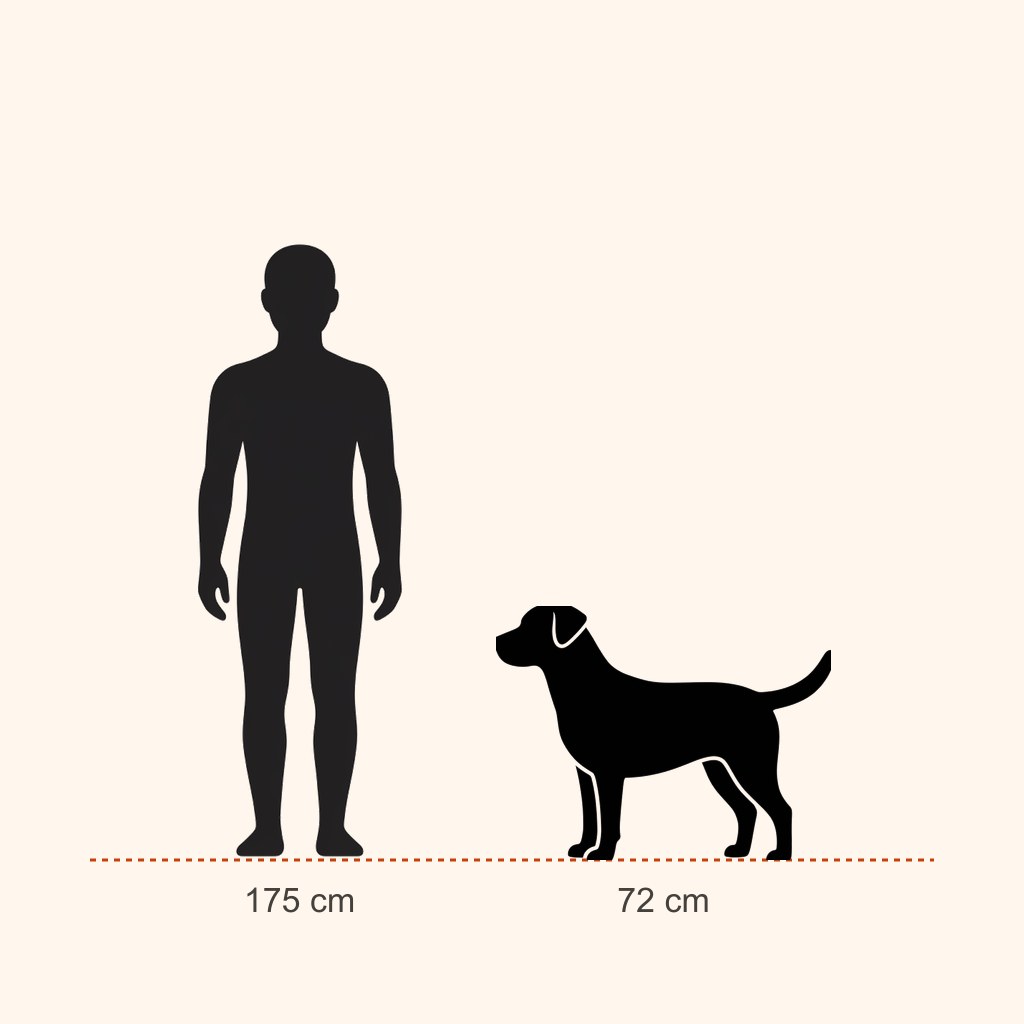
Great Pyrenees Owner's Guide
Last updated:
Is a Great Pyrenees right for you?
The Great Pyrenees (called the Pyrenean Mountain Dog by the FCI and in the UK) is a giant shepherd's dog bred in the mountains between France and Spain to protect flocks from wolves and bears. With its white, abundant coat and calm expression it looks like a huge teddy bear in photos. In reality it has the same job description as the Kangal or the Akbash: a livestock guardian that makes its own decisions. It should be chosen for what it was bred to do, not for how cuddly it looks.
| Situation | Suitability | Note |
|---|---|---|
| Apartment | Not suitable | The wrong setting for a 40-55+ kg guardian that barks at night |
| Family with young children | Caution | Gentle and patient with its family; its sheer size still needs supervision |
| First-time dog owner | Poor | Independent and stubborn; experience with giant breeds helps a lot |
| House with a garden | Good | A high, solid fence is essential; given space, it tests boundaries |
| Farm, flock, large land | Perfect | The reason the breed exists |
| Hot, humid climate | Poor | Heavy double coat; high heatstroke risk in summer |
| Household with fur allergies | Not suitable | Heavy, seasonal "snowstorm" shedding |
| Dense residential area | Poor | Night barking is natural patrolling behaviour |
This dog's calm is not laziness. It rests for hours during the day to save energy, then listens to its territory at night and barks when needed. In a quiet street or a semi-detached house, that becomes a problem.
Before you adopt
Choose breeders who let you meet the parents on site and can show pedigree and health paperwork. In places where the breed is uncommon, puppies advertised as "Pyrenees" are often white crossbreeds.
The breed club's health programme lists hip and patella (kneecap) evaluations as the core tests, with elbows, eyes, heart, thyroid and hearing as further options. Be cautious if the parents have none of these.
Double dewclaws on the hind legs are part of the breed standard, not a defect. A puppy whose rear dewclaws have been removed may be a warning sign about the breeder.
The Great Pyrenees is not on common restricted-breed lists (for example, it is not on Turkey's list of dangerous breeds), but check local rules. With a dog of this size, responsibility is mostly practical: a secure lead, a secure fence and good socialisation.
Temperament
The Great Pyrenees is calm, dignified and deeply attached to its family. The FCI standard describes a dog combining strength and agility with gentleness toward those it protects, whose independence and initiative demand a certain degree of authority from its owner.
It is reserved with strangers. When it senses a threat it barks first and, if the intruder does not retreat, steps forward. This is the product of centuries of selection, not training; protection training is both unnecessary and risky.
It meets obedience training with the question "why?". It knows how to sit, but slows down on repetitions it finds pointless. If you want a dog that eagerly waits for the next cue like a Retriever, this breed will disappoint you.
It has a marked tendency to roam. It wants to extend the area it guards, digs under fences and finds weak spots. Recall off-lead is not reliable.
Health issues and lifespan
Average lifespan is 10 to 12 years; the Royal Kennel Club gives an average of under 10 years. As in all giant breeds, old age arrives early.
- Gastric dilatation-volvulus (bloat): A life-threatening emergency in deep-chested giant breeds. A swollen belly, unproductive retching, heavy drooling and restlessness mean an immediate trip to the vet. Ask your vet about preventive gastropexy at the time of neutering.
- Hip and elbow dysplasia: Lameness, difficulty getting up, avoiding stairs. Rapid growth in puppyhood increases the risk.
- Patellar luxation: Skipping or carrying a hind leg for a few steps. If it recurs, have it examined.
- Osteosarcoma and hemangiosarcoma: The two cancers most often reported in breed club health surveys. Persistent lameness or a swelling on a leg bone in a middle-aged dog, or sudden weakness with pale gums, need urgent attention.
- Eye problems: Cataracts and eyelid or eyelash abnormalities. Watering, cloudiness or squinting are the signs.
- Von Willebrand's disease: An inherited bleeding disorder. Testing before surgery is sensible; prolonged bleeding from small wounds is a warning sign.
- Heatstroke: A real risk in hot summers. Very rapid panting, thick sticky saliva, staggering or dark red gums: move the dog into shade, cool it with lukewarm (not iced) water and get to a vet.
Feeding
An adult Great Pyrenees (roughly 40-55 kg, males more) eats about 550-850 g of quality dry food per day, depending on activity and the food's calorie density. The breed eats little for its size; use the pack guide as a starting point and adjust by weight and waistline.
- Puppy (2-18/24 months): Giant-breed puppy food. Do not add calcium; fast weight gain damages joint development. Slow growth is the goal.
- Adult: Balanced, good-quality protein. Excess weight is the joints' worst enemy; ribs should be easy to feel.
- Senior (7+ years): Fewer calories; joint-friendly formulas can be considered.
Feed at least two meals a day, and avoid hard running and play for about an hour before and after meals. Appetite often drops in summer; plenty of cool water must always be available.
Grooming and coat
A double coat of long, coarse outer hair over a dense, soft undercoat.
- The coat is surprisingly resistant to dirt and tangles; brushing at least once a week is enough most of the year.
- Undercoat shedding is intense in spring and autumn; an undercoat rake almost daily is needed then.
- Never shave it. The coat shields the skin from sun and insulates against heat; shaving does not help in hot weather and raises sunburn risk. Shade, water and timing are the answer.
- Trim the nails regularly, including the double dewclaws, which do not touch the ground and can grow into the pad.
- Hair between the pads can be trimmed for better grip on smooth floors.
- Check the ears weekly and brush the teeth regularly.
Training and exercise
Daily needs are moderate: time in a secure garden plus one or two walks. It is not a jogging partner; it saves its energy for moments of threat.
In hot weather, move walks to early morning and evening; midday pavements risk both burnt pads and heatstroke. A cool, shaded, breezy resting spot matters as much as the garden itself. Cool upland climates suit this breed far better than hot, humid coasts.
Priorities:
- Socialisation (8-16 weeks): People, children, visitors, vehicles, noises. An under-socialised Pyrenees becomes an adult that blocks guests at the door.
- Lead manners: Holding a pulling adult male is hard; teach loose-lead walking in puppyhood.
- Boundaries: A dog that clearly knows what it guards does not spill its guarding onto the neighbours.
- Recall: Practise it, but do not rely on it; never let it off-lead in unfenced areas.
- Short, reward-based sessions: Harsh methods increase stubbornness; be patient and consistent.
History
The ancestors of the Pyrenean Mountain Dog are thought to have lived in the region since very early times. According to the FCI standard, the breed guarded castles in the Middle Ages, was mentioned by Gaston Phoebus in the 14th century and became a favourite at the court of Louis XIV in the 17th century.
The first detailed description dates from 1897; the official standard was registered with the French Kennel Club in 1923, and today's standard remains very close to it. The American Kennel Club recognised the breed in 1933, where it became known as the Great Pyrenees.
By origin, the Great Pyrenees sits at the western end of the large family of livestock guardian dogs stretching from Europe to Anatolia and the Caucasus. That is why it shares so much in job and temperament with the Kangal, the Akbash, the Hungarian Kuvasz and the Italian Maremma: a guardian that lives with the flock, tries to deter predators first and makes its own decisions.
This guide is for information only and is not a substitute for veterinary advice. Prices are approximate and vary by region and time.
Sources
- www.akc.org/dog-breeds/great-pyrenees/
- vcahospitals.com/know-your-pet/great-pyrenees
- www.fci.be/Nomenclature/Standards/137g02-en.pdf
- greatpyrenees.club/general-health-cancer/
- www.royalkennelclub.com/search/breeds-a-to-z/breeds/pastoral/pyrenean-mountain-dog/
- www.msdvetmanual.com/digestive-system/diseases-of-the-stomach-and-intestines-in-small-animals/gastric-dilation-and-volvulus-in-small-animals
Adoption Prep Checklist
Housing
-
Large-breed dog bed
A comfortable bed supports joint health.
Feeding
-
Large-breed dog food
Food matched to breed size gives the right nutritional balance.
-
Food and water bowl set
Needed for daily feeding and water access.
Grooming
-
De-shedding brush
Regular brushing reduces shedding and matting.
-
Dog nail clippers
Regular nail care matters for healthy walking.
-
Dog shampoo
Use a dog-specific shampoo for skin and coat health.
Walking & Activity
-
Dog leash and collar set
Needed for safe walks.
-
Plush dog toy
Mental and physical stimulation reduces behavior problems.
Frequently Asked Questions
Does the Great Pyrenees shed?
It sheds heavily, especially at seasonal changes. Expect near-daily brushing and regular cleaning at home; it is not a good choice for anyone sensitive to pet hair.
Can the Great Pyrenees live in an apartment?
Not recommended. It needs a large garden or open space. Kept in confined quarters, restlessness and behavioural problems are the expected outcome.
Is the Great Pyrenees good with children?
Generally yes. It adapts well to families with children. Even so, interactions should be supervised and children taught to respect the animal’s boundaries.
Is the Great Pyrenees suitable for first-time dog owners?
Partly. Someone with basic experience will manage well, but it would not be the first choice for a complete beginner.
How much exercise does the Great Pyrenees need?
It needs a moderate amount of exercise. Daily activity plus some play time makes for a balanced routine.
Can the Great Pyrenees be left alone during the day?
It tolerates being alone well. That makes it workable for someone employed full time, though it will still expect attention and activity on your return.
How long does the Great Pyrenees live?
The Great Pyrenees lives 10-12 years on average. Diet, regular veterinary check-ups and early screening for hereditary conditions all affect this directly.
Where does the Great Pyrenees come from?
The Great Pyrenees originates from France/Spain (Pyrenees Mountains). The geography a breed was developed in, and the job it was bred for, explain much of its temperament and care needs today.