

Great Dane
The image on this page is AI-generated and does not depict a real animal.
- Species
- Dog
- Origin
- Germany
- Size
- Very Large
- Lifespan
- 8-10 years
- Temperament
- Gentle affectionate patient reliable
- Description
Known as a 'gentle giant' despite its massive size, a calm breed devoted to family.
- Physical Traits
Short smooth coat (various colors: fawn, brindle, black, harlequin), a very large long-legged body, a square head shape.
- Care / Environment Info
A large house/garden is ideal, but it can also live in an apartment provided there's enough space, thanks to its calm temperament. Its short coat sheds little, easy to maintain. Exercise needs are moderate relative to its giant size. Being a giant breed it has a short lifespan and is prone to heart/joint problems.
Great Dane Owner's Guide
Last updated:
Is a Great Dane right for you?
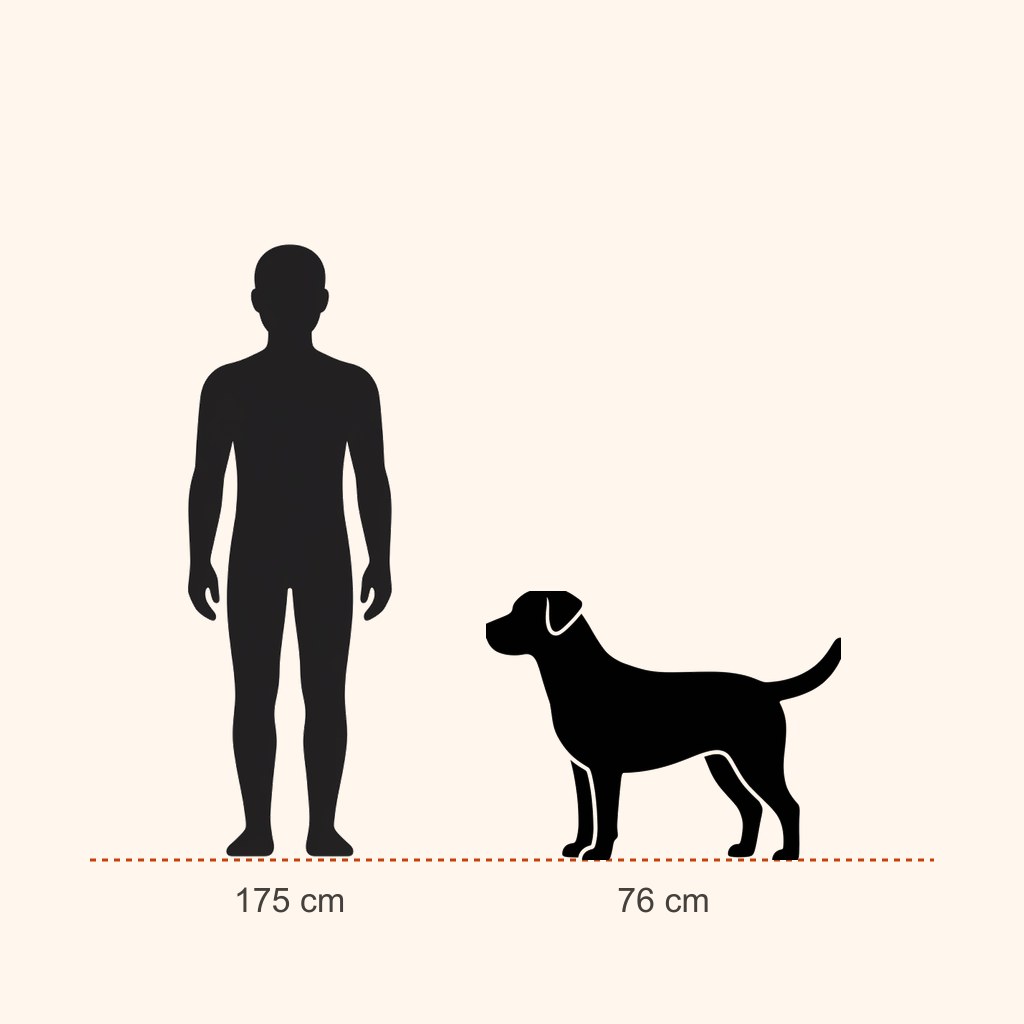
The Great Dane is the giant of the dog world: shoulder height can exceed 80 cm and weight can pass 70 kg. Its character is the inverse of its size: calm, gentle, devoted to people. The description "gentle giant" fits this breed best of all.
| Situation | Suitability | Note |
|---|---|---|
| Apartment | Surprisingly good | It moves little; physical space is still needed |
| Family with young children | Caution | Gentle, but a 70 kg dog can cause harm unintentionally |
| First-time dog owner | Moderate | Easy temperament; managing size and cost is demanding |
| Alone 8+ hours a day | Poor | Very attached to people; it will try to sit in your lap |
| Household with fur allergies | Moderate | Short coat, moderate shedding |
| Low budget | Not suitable | Food, medication, and surgery costs are very high |
| Owner not ready for a short life | Warning | Average lifespan 8 to 10 years; one of the shortest-lived breeds |
The hardest part of adopting this breed is not the size but the goodbye. Great Dane owners will tell you how short eight years is.
Before you adopt
Ask the breeder for hip certification and cardiac screening results. Ask about the longevity of dogs in the line and about the incidence of bloat.
Discuss preventive gastropexy with your vet. Because the risk of gastric torsion is very high in this breed, many veterinarians recommend fixing the stomach to the abdominal wall during neutering; this deserves serious consideration here.
Temperament
The Great Dane is calm, gentle, and affectionate. Its energy level is low; it spends most of the day lying down.
Closeness to people is its most distinctive quality. It does not know its own size and will try to sit in your lap; the description "the world's largest lap dog" is widely used.
It is reserved with strangers and deterrent by its mere presence, but it is not aggressive. A well-socialised Great Dane accepts guests.
It is patient with children, but supervision is essential because of the size difference; even a wagging tail can knock over a small child.
It is sensitive. It shuts down in the face of harsh voices and punishment; reward-based training is the only correct approach.
The puppy period is long and clumsiness during it is normal; it does not fully mature until two years of age.
Health issues and lifespan
Average lifespan is 8 to 10 years. The short lifespan common to giant breeds is pronounced here.
- Gastric dilatation and volvulus (GDV, bloat): One of the breed's most serious and most frequent causes of death. The deep, narrow chest raises the risk to its highest level. Signs: distended abdomen, retching without producing vomit, restlessness, heavy drooling, rapid breathing. It is fatal within hours and requires an immediate vet. Many vets recommend preventive gastropexy during neutering; it should be seriously considered in this breed.
- Dilated cardiomyopathy (DCM): Thinning and enlargement of the heart muscle. Common in this breed; lethargy, coughing, and breathlessness are the signs. Periodic cardiac checks are advised.
- Hip dysplasia and osteochondrosis: Joint problems are common because of rapid growth.
- Osteosarcoma (bone cancer): The risk is high in giant breeds; sudden lameness and swelling are the signs.
- Wobbler syndrome: A swaying gait and lack of coordination caused by pressure on the neck vertebrae. Frequently seen in this breed.
- Hypothyroidism: Weight gain, lethargy, coat problems.
- Entropion and eyelid problems.
- Pressure sores: A heavy body causes sores at the elbows and hips on hard flooring; a thick orthopaedic bed is essential.
Feeding
An adult Great Dane (50-80 kg) consumes 800-1,100 g of quality dry food per day.
- Puppy (2-24 months): Giant-breed puppy food is essential. Growth takes two years and must be controlled. High calcium and rapid growth cause permanent joint and bone deformities. Keep the puppy lean, not chubby; overfeeding "to raise it well" is the most harmful mistake in this breed.
- Adult: 23-25% protein with balanced minerals. Giant breeds need a balanced formula rather than excessive protein.
- Senior (6+ years): This breed ages early; a senior protocol should be considered from age six.
Bloat prevention: two to three meals a day rather than one large meal, no heavy activity for an hour before and after eating, a slow-feeder bowl, and no feeding in a stressful environment. The old advice about raised bowls is now disputed; consult your vet.
Grooming and coat
Given its size, grooming is surprisingly easy.
- A rubber brush or mitt once a week.
- Bathe every 8 to 12 weeks; washing a dog this size is a logistical operation, so start in puppyhood.
- A thick orthopaedic bed is essential; a thin bed causes pressure sores at the elbows and hips.
- Nails every three to four weeks; they are thick and hard, so accustom the dog young.
- Teeth several times a week.
- Drooling is normal; a towel becomes part of the household.
- The short coat offers little protection in winter; a coat may be needed.
Training and exercise
Daily requirement: 45 to 60 minutes of moderate walking. Exercise must be restricted during puppyhood; the joints close at 18 to 24 months, and until then long runs, jumping, and stairs should be limited.
Priorities:
- Size management training. Any behaviour not taught in puppyhood becomes a problem at 70 kg. No jumping, no pulling, waiting at doors.
- Leash discipline. A dog this size pulling is dangerous; teach it early and without compromise.
- Socialisation (8-16 weeks). Good temperament is critical given the deterrent appearance.
- Down and stay. A "place" cue is the most useful command when guests arrive.
- Tolerating vets and grooming. You cannot force a 70 kg dog to be examined; accustom it in puppyhood.
Work with rewards; this is a sensitive breed.
History
Despite the name, the Great Dane is not Danish but German in origin. Its German name is "Deutsche Dogge" and Germany is accepted as the breed's homeland. How the "Dane" name took hold is not entirely clear; it is linked to the spread of the term "grand danois" used by the 18th-century French naturalist Buffon.
The breed's origins lie with the large hunting dogs used for wild boar in medieval Europe. These dogs were developed from a combination of English Mastiff and sighthound lines; both power and speed were required. The tradition of cropping the ears also dates from this period and was intended to prevent a boar from tearing them. That practice is now prohibited in many countries, including Türkiye.
When the hunting function declined in the 19th century, the breed became a protection and status dog for the German nobility. At a meeting in Berlin in 1880 the breed's name was formally fixed as "Deutsche Dogge" and the standard was written.
Its best-known representative in popular culture is the cartoon character Scooby-Doo.
This guide is for information only and is not a substitute for veterinary advice. Prices are approximate and vary by region and time.
Adoption Prep Checklist
Housing
-
Large-breed dog bed
A comfortable bed supports joint health.
Feeding
-
Large-breed dog food
Food matched to breed size gives the right nutritional balance.
-
Food and water bowl set
Needed for daily feeding and water access.
Grooming
-
Short-hair dog brush
Regular brushing reduces shedding and matting.
-
Dog nail clippers
Regular nail care matters for healthy walking.
-
Dog shampoo
Use a dog-specific shampoo for skin and coat health.
Walking & Activity
-
Dog leash and collar set
Needed for safe walks.
-
Plush dog toy
Mental and physical stimulation reduces behavior problems.
Frequently Asked Questions
Does the Great Dane shed?
Shedding is low. Brushing once a week is usually enough, with a mild increase during seasonal changes.
Can the Great Dane live in an apartment?
Possible but not ideal. A house with outdoor space is preferable; in an apartment you will need to increase daily exercise substantially.
Is the Great Dane good with children?
Generally yes. It adapts well to families with children. Even so, interactions should be supervised and children taught to respect the animal’s boundaries.
Is the Great Dane suitable for first-time dog owners?
Partly. Someone with basic experience will manage well, but it would not be the first choice for a complete beginner.
How much exercise does the Great Dane need?
It needs a moderate amount of exercise. Daily activity plus some play time makes for a balanced routine.
Can the Great Dane be left alone during the day?
It can be left alone for a few hours. Long, routine absences can bring on boredom-driven behaviour problems; enrichment and a predictable routine reduce that risk.
How long does the Great Dane live?
The Great Dane lives 8-10 years on average. Diet, regular veterinary check-ups and early screening for hereditary conditions all affect this directly.
Where does the Great Dane come from?
The Great Dane originates from Germany. The geography a breed was developed in, and the job it was bred for, explain much of its temperament and care needs today.