

Doberman Pinscher
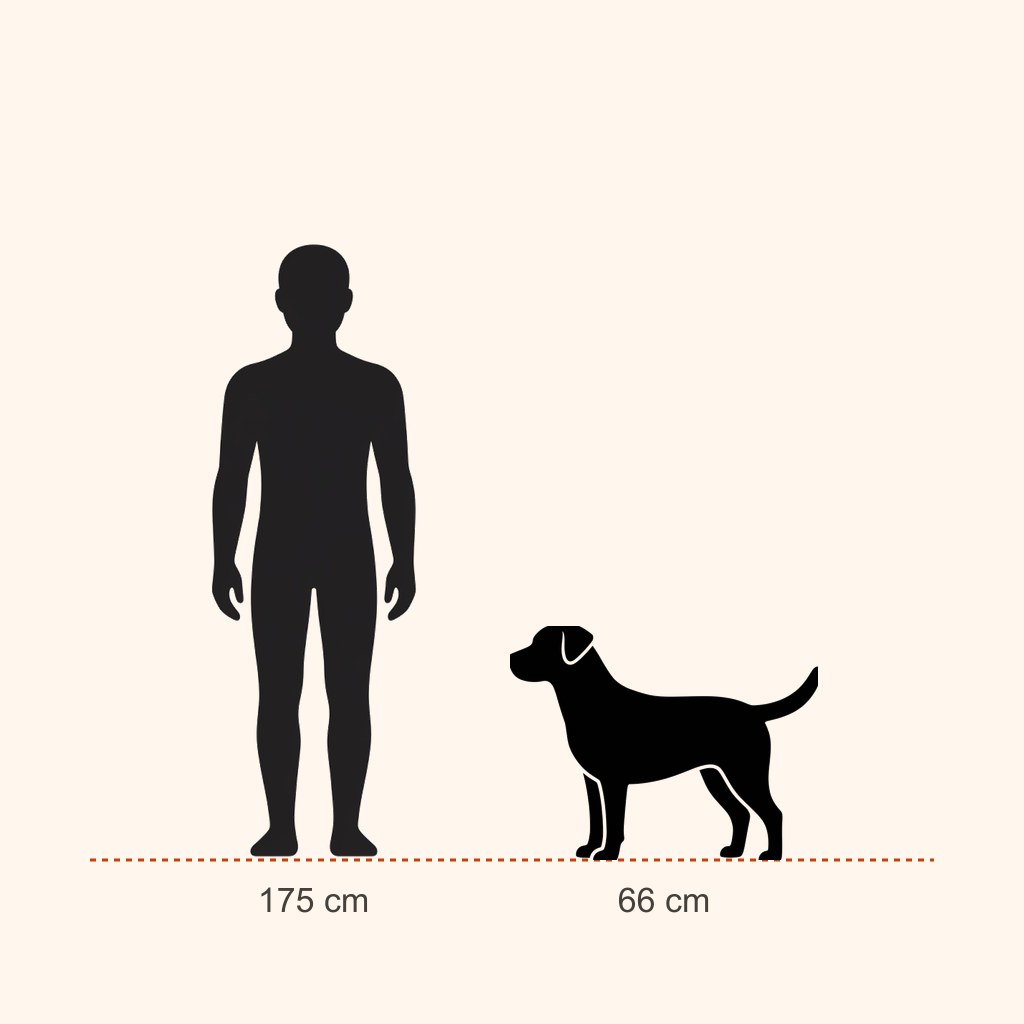
The image on this page is AI-generated and does not depict a real animal.
- Species
- Dog
- Origin
- Germany
- Size
- Very Large
- Lifespan
- 10-13 years
- Temperament
- Intelligent alert confident loyal
- Description
Intelligent and athletic, bred for protection work, very trainable.
- Physical Traits
Short glossy coat (black, brown or blue, with rust-colored markings), an elegant muscular slender body, upright ears (if cropped).
- Care / Environment Info
A house with a garden is preferred. Its short coat sheds little, easy to maintain, but sensitive to cold. High exercise and mental stimulation needs.
Doberman Pinscher Owner's Guide
Last updated:
Is a Doberman right for you?
The Doberman is known for its image as a guard dog, but the reality of the breed is different: it is an extremely people-dependent, sensitive, and intelligent dog. The nickname "velcro dog" is well earned; a Doberman does not like being apart from its owner.
| Situation | Suitability | Note |
|---|---|---|
| Apartment | Moderate | Quiet and clean; 1.5 hours of exercise must be provided |
| Family with young children | Good | Bonded to the family; supervision needed because of size |
| First-time dog owner | Moderate to poor | Easy to train, but mistakes in handling are costly |
| Alone 8+ hours a day | Very poor | One of the most dependent breeds; separation anxiety is very common |
| Household with fur allergies | Moderate | Short coat, moderate shedding |
| Cold climate | Poor | No undercoat; a coat in winter is a genuine need |
| Someone wanting an outdoor dog | Not suitable | Cannot live alone in a garden; it must be inside the home |
The hardest fact to know when adopting this breed concerns health: dilated cardiomyopathy is very common in the Doberman and markedly shortens life. Read the health section.
Before you adopt
Ask the breeder for the DCM (cardiac) genetic test, hip certification, and von Willebrand disease test results. All three should be standard in this breed.
Ask about the longevity of dogs in the line as well; lines with long-lived dogs are valuable here.
Ear cropping and tail docking: cosmetic cropping is prohibited in many countries, including Türkiye. A Doberman with natural ears is completely normal.
Dobermans appear in breed rescues, often surrendered because of separation anxiety or health costs. Adopting an adult means the temperament and cardiac status can be assessed in advance.
Temperament
The Doberman is intelligent, alert, and extremely loyal. Its learning speed is very high and it ranks in the top five in obedience rankings.
It is glued to its family. It follows you from room to room, sits at your feet, and seeks contact. This attachment is both the breed's most loved and most demanding quality; a Doberman left alone for long periods develops serious separation anxiety.
It is reserved with strangers, but the correct temperament of a modern Doberman is "observant" rather than "tense". A socialised Doberman accepts guests.
It is sensitive. It shuts down in the face of harsh voices and punishment. Reward-based training is the only correct approach in this breed.
It is energetic and playful, and continues to behave like a puppy well into adulthood.
Health issues and lifespan
Average lifespan is 10 to 13 years, though in practice it can be shorter because of cardiac disease.
- Dilated cardiomyopathy (DCM): The breed's most serious problem and its most common cause of death. The heart muscle thins and enlarges; it gives no signs for a long time and then presents as sudden heart failure or sudden death. Its frequency in the breed is markedly higher than in others. Annual echocardiography and 24-hour Holter monitoring are recommended from age three. In cases caught early, medication extends life.
- Von Willebrand disease: An inherited bleeding disorder. It appears as bleeding that will not stop after surgery or injury. A genetic test exists, and knowing the status before surgery is vital.
- Cervical spondylomyelopathy (Wobbler syndrome): A swaying gait and lack of coordination caused by pressure on the neck vertebrae. Common in this breed.
- Gastric torsion (bloat): An emergency in this deep-chested breed. Distended abdomen, retching, restlessness. Go to a vet immediately.
- Hypothyroidism: Weight gain, lethargy, hair loss; diagnosed by blood test.
- Colour dilution alopecia: Thinning hair and skin problems seen in blue and fawn individuals. For this reason the standard black and red types are safer choices.
Feeding
An adult Doberman (30-45 kg) consumes 400-550 g of quality dry food per day.
- Puppy (2-18 months): Large-breed puppy food, three meals a day.
- Adult: 24-28% protein. A note on grain-free diets: research continues into the association between some grain-free formulas and DCM in dogs. In a breed already at high DCM risk, discuss food choice with your vet.
- Senior (8+ years): Calorie adjustment alongside cardiac and renal monitoring.
Dietary content matters for nutrients that support heart health, such as taurine and carnitine; supplementation may be considered on veterinary advice.
Two meals a day with an hour of calm around feeding.
Grooming and coat
One of the easiest breeds to groom.
- A rubber brush or mitt once a week. The short coat sheds, but the amount is small.
- Bathe every 8 to 12 weeks.
- There is no undercoat; this breed is not resistant to cold. A coat in winter is a genuine need, not decoration.
- Weekly ear checks; ventilation is better in natural (uncropped) ears, but they still need care.
- Nails every three to four weeks.
- Teeth several times a week.
Training and exercise
Daily requirement: 1.5 hours of exercise plus mental work. Running, long walks, and play. This breed should not be over-exerted during puppyhood in order to protect the joints.
Priorities:
- Socialisation (8-16 weeks). In a reserved breed, this step determines temperament.
- Being alone. The most critical and most neglected item in this breed. Start with short periods and increase gradually; once separation anxiety is established it is very hard to resolve.
- Basic obedience. Learning speed is high; consistency is essential.
- Impulse control. Waiting at doors, not jumping on guests.
- Advanced work. Obedience sport, tracking, agility. Keeping the mind busy is necessary in this breed.
Work with rewards. Because it is a sensitive breed, harsh methods break trust and produce defensive behaviour.
History
The breed was developed in 1890s Germany by Karl Friedrich Louis Dobermann. Dobermann was a tax collector who also ran a dog pound; he wanted a protection dog that was both imposing and reliable to accompany him while collecting money in dangerous areas.
Because records were not fully kept, it is not certain which dogs were used in the breed's formation; Rottweiler, German Pinscher, Manchester Terrier, Greyhound, and Weimaraner contributions are assumed. The result was a breed created in as little as thirty years.
In the 20th century it was used in police and military service; in the Second World War it served as the official dog of the United States Marine Corps in the Pacific. The war dog memorial in Guam dates from this period.
Over the last half century the breed has evolved from a hard, protection-focused type into a more balanced family dog. Today's Doberman is markedly softer in temperament than its ancestors.
This guide is for information only and is not a substitute for veterinary advice. Prices are approximate and vary by region and time.
Adoption Prep Checklist
Housing
-
Large-breed dog bed
A comfortable bed supports joint health.
Feeding
-
Large-breed dog food
Food matched to breed size gives the right nutritional balance.
-
Food and water bowl set
Needed for daily feeding and water access.
Grooming
-
Short-hair dog brush
Regular brushing reduces shedding and matting.
-
Dog nail clippers
Regular nail care matters for healthy walking.
-
Dog shampoo
Use a dog-specific shampoo for skin and coat health.
Walking & Activity
-
Running/exercise dog harness
Needed for safe walks.
-
Interactive dog puzzle toy
Mental and physical stimulation reduces behavior problems.
Frequently Asked Questions
Does the Doberman Pinscher shed?
Shedding is low. Brushing once a week is usually enough, with a mild increase during seasonal changes.
Can the Doberman Pinscher live in an apartment?
Possible but not ideal. A house with outdoor space is preferable; in an apartment you will need to increase daily exercise substantially.
Is the Doberman Pinscher good with children?
Caution is warranted. With proper socialisation and adult supervision it can live with children, but it is not a first choice for homes with young children.
Is the Doberman Pinscher suitable for first-time dog owners?
No — it suits experienced owners. Its character, energy or care requirements would be demanding for a first-time owner.
How much exercise does the Doberman Pinscher need?
It is high-energy and needs vigorous daily activity. Mental stimulation matters as much as physical exercise; without enough to do, destructive behaviour follows.
Can the Doberman Pinscher be left alone during the day?
It can be left alone for a few hours. Long, routine absences can bring on boredom-driven behaviour problems; enrichment and a predictable routine reduce that risk.
How long does the Doberman Pinscher live?
The Doberman Pinscher lives 10-13 years on average. Diet, regular veterinary check-ups and early screening for hereditary conditions all affect this directly.
Where does the Doberman Pinscher come from?
The Doberman Pinscher originates from Germany. The geography a breed was developed in, and the job it was bred for, explain much of its temperament and care needs today.