

Border Collie
The image on this page is AI-generated and does not depict a real animal.
- Species
- Dog
- Origin
- England/Scotland border
- Size
- Medium
- Lifespan
- 12-16 years
- Temperament
- Energetic extremely intelligent attentive hard-working
- Description
Considered the most intelligent of all dog breeds, a high-energy working dog bred for herding sheep.
- Physical Traits
Medium-length coat (usually black-and-white), an athletic medium-sized body, attentive focused eyes.
- Care / Environment Info
A house with a garden, active household is essential; apartment living is not recommended unless given sufficient exercise/work. Its medium-length coat sheds moderately. Very high exercise and mental stimulation needs (one of the highest-energy breeds among dogs); destructive behaviors can develop without adequate stimulation.
Border Collie Owner's Guide
Last updated:
Is a Border Collie right for you?
The Border Collie is considered the most intelligent dog breed in the world. That reputation is the worst possible reason to get one. Intelligence here does not mean "easy dog"; it means a dog that needs constant work, constant stimulation, and constant thought. This breed is too much for an ordinary household.
| Situation | Suitability | Note |
|---|---|---|
| Apartment | Poor | Even with physical exercise, the mental needs are hard to meet |
| Family with young children | Caution | The herding instinct can lead it to nip at the heels of running children |
| First-time dog owner | Not suitable | One of the most demanding breeds; needs experience and time |
| Alone 8+ hours a day | Very poor | A bored Border Collie develops compulsive behaviour |
| Household with fur allergies | Poor | Double coat with heavy seasonal shedding |
| Active owner who does sport | Perfect | Unmatched as a partner for running, agility, and frisbee |
| Farm, flock, large land | Perfect | The reason the breed exists |
The most honest warning: the most common complaint from Border Collie owners is not "too energetic" but "its mind never stops". Even after two hours of running, it stays restless if its brain is not tired.
Before you adopt
Ask for hip certification, an eye examination, and the MDR1 gene test result. The MDR1 mutation is common in this breed and creates a potentially fatal sensitivity to several common medicines. Also ask about CEA, PRA, and NCL genetic tests.
Ask the breeder whether the line is a working line or a show line, and be honest about your own lifestyle. A good breeder will refuse a puppy to a home that cannot meet the breed's needs.
Border Collies appear in shelters and breed rescues frequently, usually surrendered because the owner underestimated the energy. Adopting an adult means the drive level is already visible, but it remains a breed for experienced homes.
Temperament
The Border Collie is intense, focused, and hard-working. The fixed stare known as "eye", used when herding, is the breed's signature and appears at home too: it will stare at a ball, a shadow, a light, or a running child with the same intensity.
It is very attached to its owner and enjoys working with them. It can be shy with strangers, so good socialisation is needed.
The herding instinct can be a problem in domestic life: it tries to circle and nip at the heels of running children, bicycles, and vehicles. This is not aggression but a work reflex, and it must be redirected.
It is sensitive to sound and movement. Vacuum cleaners, motorbikes, shadows, and reflections can become objects of obsession. In bored individuals, compulsive behaviours such as shadow chasing and tail chasing develop; this is the breed's most common behavioural problem.
Health issues and lifespan
Average lifespan is 12 to 16 years. Generally healthy, with a few important genetic risks.
- MDR1 gene mutation: Common in this breed. It creates a serious, potentially fatal sensitivity to certain common medicines (some parasite treatments such as ivermectin, and some painkillers and sedatives). A genetic test exists and should always be done. Share the result with your vet; medication choices depend on it.
- Collie eye anomaly (CEA): A developmental disorder of the retina and blood vessels. A genetic test exists; mild cases do not affect vision, severe cases lead to blindness.
- Hip dysplasia: Parental certification should be requested.
- Progressive retinal atrophy (PRA): Slowly progressing blindness; a DNA test exists.
- Epilepsy: Reported in this breed; usually begins at a young age and is controlled with medication.
- Neuronal ceroid lipofuscinosis (NCL): A rare but fatal neurological disease; a genetic test exists.
- Compulsive behaviours: Not medical but a serious welfare problem arising from insufficient mental stimulation.
Feeding
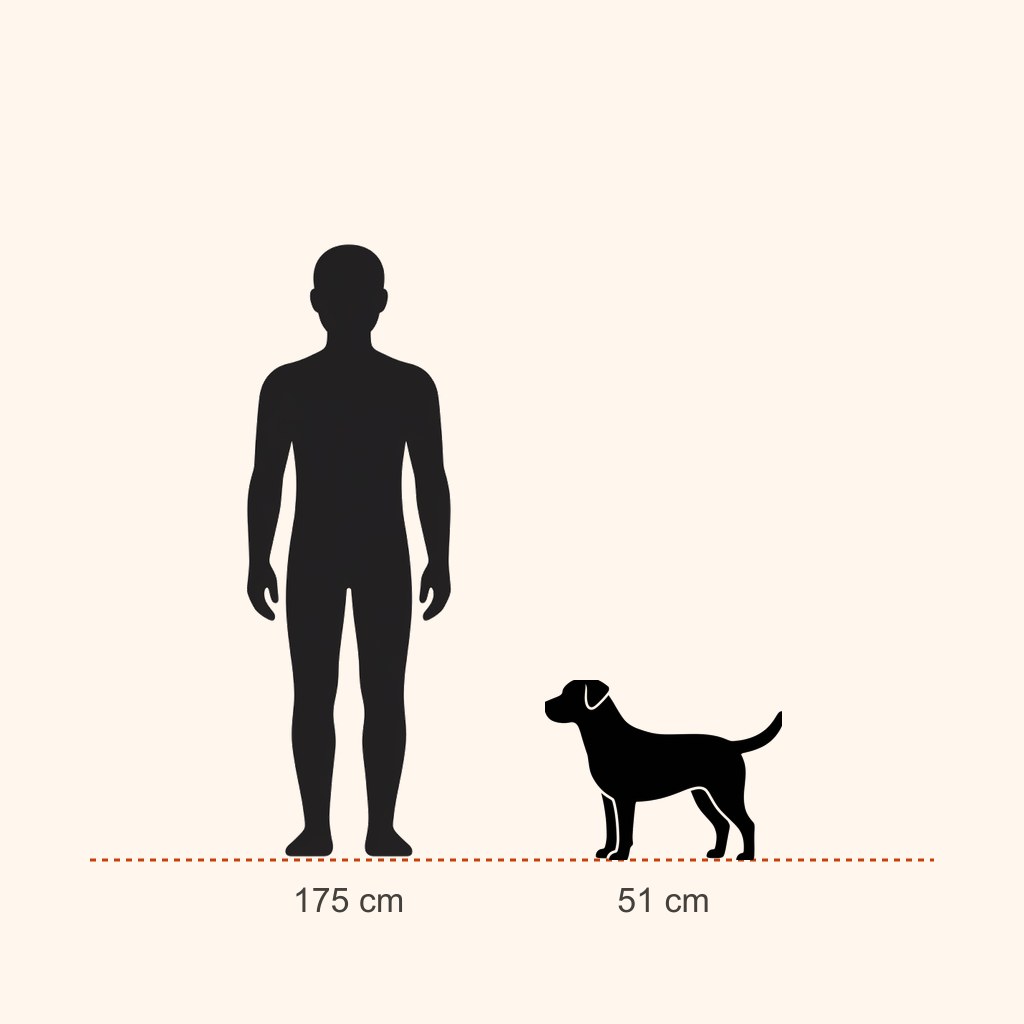
An adult Border Collie (14-20 kg) consumes 250-350 g of quality dry food per day; working individuals need considerably more.
- Puppy (2-14 months): Medium-breed puppy food, three meals a day.
- Adult: 24-28% protein. Energy density matters for an active breed.
- Senior (9+ years): Calorie adjustment; this breed stays active into old age.
Medication warning: if the MDR1 test has not been done, alert your vet about the breed when parasite treatments and sedatives are being chosen.
Grooming and coat
There are two coat types: rough (long) and smooth. Both are double coats.
- Brush two to three times a week for the rough coat, once a week for the smooth.
- Daily during seasonal changes, with an undercoat rake.
- Check for matting behind the ears, on the ruff, and on the rear leg feathering.
- Bathe every 8 to 12 weeks.
- Nails every three to four weeks; active individuals may need less.
- Teeth several times a week.
- Because this breed runs through undergrowth, tick and paw checks should be routine.
Training and exercise
Daily requirement: at least two hours of physical exercise plus 30 to 60 minutes of mental work. The mental part is not negotiable in this breed.
Priorities:
- Mental work. The breed's number-one need. Trick training, scent work, food puzzles, finding hidden objects, learning the names of toys. A Border Collie can learn the names of hundreds of objects.
- Dog sport. Agility, frisbee, obedience sport, treibball. For this breed these are a need, not a hobby.
- Socialisation (8-16 weeks). Important because of the tendency toward shyness.
- Herding control. Redirect the urge to chase running children and vehicles; as an alternative, set up a game where herding a ball is allowed.
- A "finished" cue. Teaching an off switch is the most effective way to prevent obsession in this breed. Endlessly throwing a ball does not solve the problem; it feeds the addiction.
Warning: endless ball throwing is not a good solution for this breed, as it fuels obsessive behaviour. Activities that require thinking should be preferred.
History
The Border Collie was developed to herd sheep in the border region between England and Scotland. Every individual in the breed can be traced back to a male dog named "Old Hemp", born in 1893; Old Hemp established the working style of controlling the flock with a silent, intense stare and left hundreds of offspring.
The breed was selected purely on working ability rather than looks. This explains its intelligence and intensity today; a standard Border Collie has been bred for centuries against the criterion of being able to do a job.
International sheepdog trials have been held since the late 19th century, and the breed is unrivalled in this field. A Border Collie named Chaser learned the names of more than 1,000 toys in a scientific study, becoming a landmark in canine cognition research.
This guide is for information only and is not a substitute for veterinary advice. Prices are approximate and vary by region and time.
Adoption Prep Checklist
Housing
-
Medium-breed dog bed
A comfortable bed supports joint health.
Feeding
-
Medium-breed dog food
Food matched to breed size gives the right nutritional balance.
-
Food and water bowl set
Needed for daily feeding and water access.
Grooming
-
De-shedding brush
Regular brushing reduces shedding and matting.
-
Dog nail clippers
Regular nail care matters for healthy walking.
-
Dog shampoo
Use a dog-specific shampoo for skin and coat health.
Walking & Activity
-
Running/exercise dog harness
Needed for safe walks.
-
Interactive dog puzzle toy
Mental and physical stimulation reduces behavior problems.
Frequently Asked Questions
Does the Border Collie shed?
It sheds a moderate amount. Brushing two or three times a week noticeably reduces both loose hair and matting.
Can the Border Collie live in an apartment?
Not recommended. It needs a large garden or open space. Kept in confined quarters, restlessness and behavioural problems are the expected outcome.
Is the Border Collie good with children?
Caution is warranted. With proper socialisation and adult supervision it can live with children, but it is not a first choice for homes with young children.
Is the Border Collie suitable for first-time dog owners?
No — it suits experienced owners. Its character, energy or care requirements would be demanding for a first-time owner.
How much exercise does the Border Collie need?
It is high-energy and needs vigorous daily activity. Mental stimulation matters as much as physical exercise; without enough to do, destructive behaviour follows.
Can the Border Collie be left alone during the day?
It is not suited to long periods alone. It is prone to separation anxiety; a household where someone is usually home, or where a companion animal is present, fits it much better.
How long does the Border Collie live?
The Border Collie lives 12-16 years on average. Diet, regular veterinary check-ups and early screening for hereditary conditions all affect this directly.
Where does the Border Collie come from?
The Border Collie originates from England/Scotland border. The geography a breed was developed in, and the job it was bred for, explain much of its temperament and care needs today.