

Bloodhound
The image on this page is AI-generated and does not depict a real animal.
- Species
- Dog
- Origin
- Belgium/France
- Size
- Large
- Lifespan
- 10-12 years
- Temperament
- Calm loyal determined gentle
- Description
Used for tracking with its unrivaled sense of smell, a calm and determined breed.
- Physical Traits
Short dense coat (black-tan or red), very long drooping ears, loose wrinkled skin, a large body.
- Care / Environment Info
A house with a garden is preferred. Its short coat sheds moderately, easy to maintain. Moderate-to-high exercise needs. Its drooping ears and loose skin need regular cleaning, drooling tendency is noticeable, and its strong scenting drive means a high tendency to track scents.
Bloodhound Owner's Guide
Last updated:
Is a Bloodhound right for you?
The Bloodhound is the world's most famous scent hound, known for finding lost or hidden people by following their scent. At home it is gentle, patient, and calm; on a trail it is relentlessly determined. The wrinkled face and droopy ears look endearing, but this is a big, strong, drooling, and very vocal dog.
| Situation | Suitability | Note |
|---|---|---|
| Apartment | Not suitable | A 40-50 kg, vocal dog that needs two hours of exercise a day |
| Family with children | Good | Gentle and patient, but its size can knock small children over |
| First-time dog owner | Poor | Stubborn, independent, and strong; lead control takes experience |
| House with a garden | Good | Fence must be high, solid, and closed at the base; it can squeeze through small gaps |
| Off-lead walks | Not suitable | Once on a scent it does not hear you and will cross roads |
| House-proud household | Poor | Heavy drool, a distinctive odour, and shedding |
| Home needing quiet | Poor | One of the most vocal breeds, with a deep bay |
The truth to accept before getting a Bloodhound: it can never be trusted off-lead in open areas. That is not a training failure; it is the very trait the breed was selected for over centuries.
Before you adopt
Ask the breeder for the parents' hip and elbow dysplasia screening results and eye examinations. Look at the parents' eyelids: very droopy or inward-rolling lids mean trouble for the puppies too. Ask whether there is a history of bloat (GDV) in the family.
Bloodhounds are uncommon in many countries, and scarcity can make unscreened litters look tempting. Do not buy a puppy without seeing the parents.
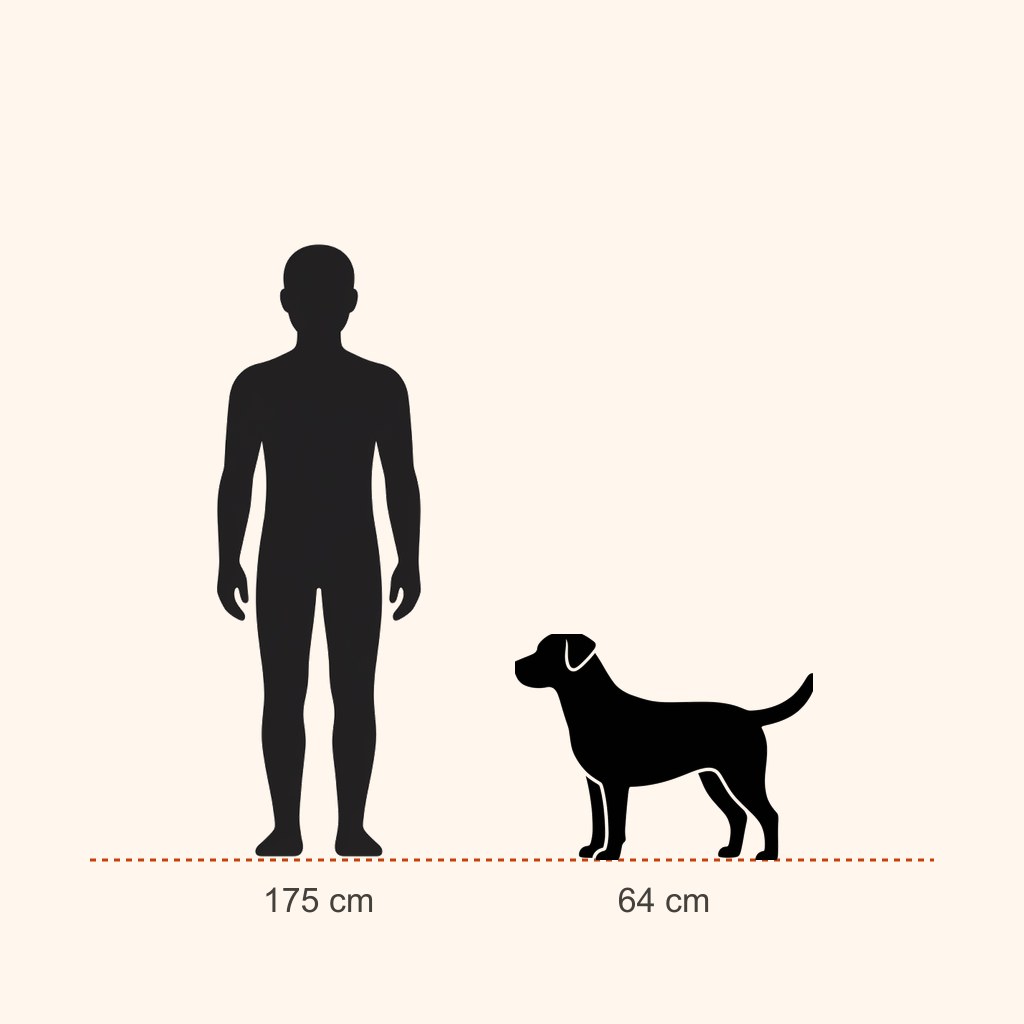
Prepare your home: a high, secure fence, a locking bin, nothing left on counters, and towels for drool. Think of a Bloodhound as the size of a teenager rather than a typical dog.
The Bloodhound is not on restricted-breed lists in most countries, but check local rules.
Temperament
The Bloodhound is gentle, calm, and patient. It is not aggressive to people and generally makes a poor guard dog, greeting strangers amiably. As a pack hound it usually gets on well with other dogs and children.
On a trail it is a different dog: focused, persistent, and stubborn. Once it has a scent, everything else disappears.
It is independent and training requires patience. It responds poorly to harshness and learns through reward-based, patient training.
It is very vocal, communicating with a deep, long bay. It gets bored when left alone, which can lead to howling and destruction. Puppyhood lasts a long time, and young Bloodhounds can be clumsy and destructive.
Health issues and lifespan
Sources usually give a lifespan of 10-12 years, while the UK's PDSA gives a life expectancy of under 10 years. As a large breed it is relatively short-lived. Adults weigh about 36-50 kg and stand 58-69 cm.
- Bloat (GDV): The breed's most important emergency. The stomach fills with gas and twists. A swollen, hard belly, retching without producing anything, restlessness, heavy drooling, and pale gums are signs. It can kill within hours; go to the vet without delay. Ask your vet about preventive gastropexy.
- Ear infections: Long, pendulous ears trap moisture, allowing bacteria and yeast to grow. Head shaking, odour, and redness are signs.
- Eyelid problems: Both ectropion (sagging outward) and entropion (rolling inward) occur. Ectropion causes dry, red eyes with mucoid discharge; in entropion lashes rub the eye. Both can lead to corneal ulcers. See your vet for squinting, constant tearing, or cloudiness.
- Hip and elbow dysplasia: Lameness, difficulty rising, reluctance to exercise.
- Skin fold dermatitis and atopy: Moisture collects in facial folds; environmental allergies cause itching.
Feeding
An adult Bloodhound (36-50 kg) typically eats 450-700 g of quality dry food a day depending on activity; adjust to the feeding guide and body condition.
- Puppy (2-18 months): Large-breed puppy food. Slow growth is the rule; excess calories and calcium damage joint development. Three to four meals a day.
- Adult: At least two meals a day. One large meal increases bloat risk.
- Senior (7+ years): Reduce calories and discuss joint support with your vet.
To lower bloat risk: split the daily ration, avoid heavy exercise for about an hour before and after meals, use a slow-feeder bowl for fast eaters, and don't let it gulp huge amounts of water at once.
Counter and bin security matters; it can easily reach the table.
Grooming and coat
- Short, dense coat; a rubber brush once a week. Moderate shedding.
- Wipe facial folds daily and dry them; this is the most effective way to prevent dermatitis.
- Check and clean ears at least weekly. They dip into food and water bowls and need frequent wiping.
- Check around the eyes daily and wipe away discharge with a damp cloth.
- Drool is part of daily life; keep towels at home, in the car, and by the door.
- It has a characteristic odour; a strong smell suggests an ear or skin infection.
- Nails every three to four weeks.
Training and exercise
Daily requirement: at least two hours. Long, sniff-rich walks and free time in a secure, fully fenced area. Bloodhounds were bred for endurance; they are distance dogs, not sprinters.
In hot weather, schedule long walks for early morning and cool evenings.
Priorities:
- Always on lead. A long line (5-10 metres) gives sniffing freedom while keeping it safe. A harness protects the neck when it pulls.
- Tracking work. The most satisfying job for a Bloodhound. Tracking classes and simple "find the hidden person" games tire both body and mind.
- Loose-lead walking. If you cannot hold back a 45 kg dog, walks are not safe; start in puppyhood.
- Recall. Practise it, but never rely on it in open spaces.
- Socialisation and alone-time training (8-16 weeks).
Puppyhood is long; expect to need patience until around two years old. Punishment only increases stubbornness.
History
The Bloodhound is traced to hounds bred in the Middle Ages at the Abbey of Saint-Hubert in present-day Belgium, which is why it is also known in Europe as the St. Hubert Hound. It was brought to England with the Norman nobility, where it acquired its current name.
"Blood" is widely held to refer not to tracking blood but to "blooded" dogs, meaning hounds of pure, noble breeding.
The breed's nose is considered so reliable that it has been used for centuries to search for missing people and track fugitives. Its wrinkled face and long ears are thought to help gather scent around the face.
This guide is for information only and is not a substitute for veterinary advice. Prices are approximate and vary by region and time.
Adoption Prep Checklist
Housing
-
Large-breed dog bed
A comfortable bed supports joint health.
Feeding
-
Large-breed dog food
Food matched to breed size gives the right nutritional balance.
-
Food and water bowl set
Needed for daily feeding and water access.
Grooming
-
De-shedding brush
Regular brushing reduces shedding and matting.
-
Dog nail clippers
Regular nail care matters for healthy walking.
-
Dog shampoo
Use a dog-specific shampoo for skin and coat health.
Walking & Activity
-
Running/exercise dog harness
Needed for safe walks.
-
Interactive dog puzzle toy
Mental and physical stimulation reduces behavior problems.
Frequently Asked Questions
Does the Bloodhound shed?
It sheds a moderate amount. Brushing two or three times a week noticeably reduces both loose hair and matting.
Can the Bloodhound live in an apartment?
Possible but not ideal. A house with outdoor space is preferable; in an apartment you will need to increase daily exercise substantially.
Is the Bloodhound good with children?
Generally yes. It adapts well to families with children. Even so, interactions should be supervised and children taught to respect the animal’s boundaries.
Is the Bloodhound suitable for first-time dog owners?
Partly. Someone with basic experience will manage well, but it would not be the first choice for a complete beginner.
How much exercise does the Bloodhound need?
It is high-energy and needs vigorous daily activity. Mental stimulation matters as much as physical exercise; without enough to do, destructive behaviour follows.
Can the Bloodhound be left alone during the day?
It can be left alone for a few hours. Long, routine absences can bring on boredom-driven behaviour problems; enrichment and a predictable routine reduce that risk.
How long does the Bloodhound live?
The Bloodhound lives 10-12 years on average. Diet, regular veterinary check-ups and early screening for hereditary conditions all affect this directly.
Where does the Bloodhound come from?
The Bloodhound originates from Belgium/France. The geography a breed was developed in, and the job it was bred for, explain much of its temperament and care needs today.