

Beauceron
The image on this page is AI-generated and does not depict a real animal.
- Species
- Dog
- Origin
- France
- Size
- Very Large
- Lifespan
- 12-14 years
- Temperament
- Loyal protective intelligent confident
- Description
One of France's oldest herding dog breeds; a strong and protective working dog.
- Physical Traits
Short dense black-and-tan coat, a large muscular body, upright ears.
- Care / Environment Info
A house with a garden is preferred. Its short coat sheds moderately, easy to maintain. High exercise and early socialization needs.
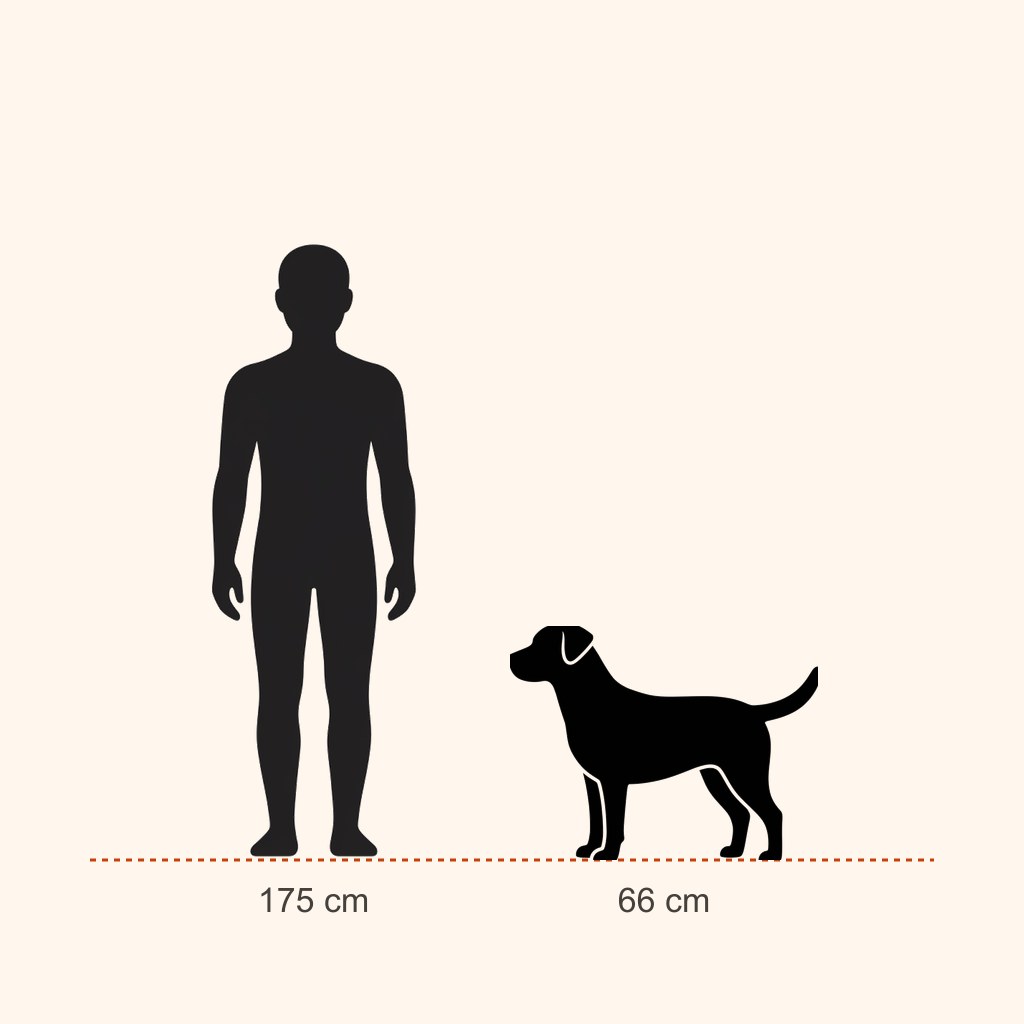
Beauceron Owner's Guide
Last updated:
Is a Beauceron right for you?
The Beauceron is France's large, powerful herding dog, nicknamed "Bas-Rouge" (red stockings). The AKC describes it as carrying "a Border Collie's brain in a 100-pound body." Bred for both herding and guarding, this breed can look intimidating because of its size and self-assured bearing, but it is in fact extremely devoted and sensitive to its owner.
| Situation | Suitability | Note |
|---|---|---|
| Apartment | Not suitable | Too large and high-energy a working breed for this setting |
| Family with young children | Caution | Patient with its family but its size and protective instinct call for supervision |
| First-time dog owner | Caution | Intelligent and trainable, but a strong, self-assured temperament needs confident handling |
| House with a garden | Excellent | Space and a job are essential for this breed |
| Open, socially busy environment | Poor | Naturally reserved and watchful by nature |
| Household with fur allergies | Poor | Short double coat, sheds heavily seasonally |
| Active owner who trains and does sport | Excellent | An unmatched, versatile working partner in the right hands |
The Beauceron has a distinguishing physical trait: the standard calls for double dewclaws on the hind legs. This is part of the breed's historical identity and is still sought in purebred lines.
Before you adopt
The Beauceron is a rare breed in Turkey; most come from imported lines. Ask the breeder for hip and elbow certification, a cardiac exam, and an eye examination — breed clubs specifically recommend these three screens.
Always meet the parents. An overly timid or overly aggressive parent is a strong warning sign for the puppy's temperament. A good breeder will ask about your living situation and experience before placing a puppy.
This breed is rarely seen in shelters; if you're adopting an adult Beauceron, try to get clear information about its large-breed handling experience and socialisation history.
Temperament
The Beauceron is intelligent, self-assured, and highly versatile as a working dog. Bred for both herding and guarding property, it carries a watchful, evaluating attitude.
It shows deep devotion to its family and often bonds especially closely with one person. It is reserved with strangers; not aggressive, but building trust takes time. Early, thorough socialisation is mandatory for this breed.
It learns quickly and bores easily with repetitive tasks. It is sensitive to harsh methods — pressure can turn into loss of trust or defensiveness in this breed. It needs firm but calm leadership.
Its energy level is high, and it is unhappy without a job; despite its large frame it is agile and fast.
Health issues and lifespan
Average lifespan is 12 to 14 years. It is generally a robust breed, but its large, deep-chested build carries some risks.
- Hip dysplasia: Common in large breeds; parent certification should be requested, and overly rapid growth in puppyhood should be avoided.
- Bloat (gastric dilatation-volvulus): A serious emergency in this deep-chested breed. A distended abdomen, restlessness, and unproductive retching to vomit are signs; it can be fatal within hours. Divided meals rather than one large one, and rest after eating, are protective.
- Progressive retinal atrophy (PRA): A genetic test exists; regular eye exams are recommended.
- Hypothyroidism: Presents as weight gain, lethargy, and skin problems.
- Osteochondritis dissecans (OCD) and panosteitis: Growth-related joint and bone pain conditions seen in fast-growing large-breed puppies; excessive exercise and improper nutrition raise the risk.
Feeding
An adult Beauceron (30-45 kg) eats 450-550 g of quality dry food per day, adjusted for activity level.
- Puppy (2-18 months): Large-breed puppy food with controlled calcium levels; rapid growth raises the risk of joint problems.
- Adult: 24-28% protein. A moderate-to-high energy formula suits this active working dog.
- Senior (8+ years): Reduce calories and add joint support.
Because of bloat risk, two to three smaller meals a day are preferred over one large one, and heavy exercise should be avoided for an hour before and after eating. Elevated food bowls are not recommended for this breed — some research suggests raised bowls do not reduce, and may even increase, bloat risk in deep-chested breeds.
Grooming and coat
Short-to-medium double coat with a harsh outer layer and dense undercoat.
- Brushing once or twice a week is sufficient; increase frequency during seasonal shedding.
- Bathe every 8-12 weeks, or as needed.
- Check ears weekly.
- Trim nails every 3-4 weeks.
- Brush teeth several times a week.
- Double dewclaws, where present, need extra attention during nail care.
Training and exercise
Daily requirement: at least 1.5-2 hours of physical exercise plus regular mental work. The Beauceron is not happy without a job.
Priorities:
- Early, thorough socialisation (8-16 weeks). Non-negotiable for this breed; insufficient socialisation leads to excessive wariness or defensive behaviour.
- Firm, consistent, reward-based training. Harsh methods backfire; clear boundaries should be set calmly.
- Dog sports. Obedience, agility, tracking, protection sports, or herding work suit this breed well.
- Impulse control. Because of its protective instinct, waiting at doors and moving only with permission should be taught.
- Professional trainer support. Especially useful for inexperienced owners in the early months.
History
The Beauceron takes its name from the flat, open Beauce region south of Paris. The region's level terrain favoured a short-coated, large-bodied herding dog; by contrast, the long-coated Briard developed in the wooded Brie region. The two breeds are considered sibling breeds shaped by the different terrain of the same broader area.
The Beauceron was used for both herding and farm and property guarding; its "Bas-Rouge" (red stockings) nickname comes from the characteristic reddish-tan markings on its legs. The breed standard was written down at the end of the 19th century, and a breed club was founded in France in 1922.
The two World Wars severely reduced the dog population of rural France in the 20th century, and the Beauceron nearly faded into obscurity. Dedicated breeders rebuilt the breed after the war; today it remains relatively rare but is a versatile working dog valued in military, police, and search-and-rescue work.
This guide is for information only and is not a substitute for veterinary advice. Prices are approximate and vary by region and time.
Adoption Prep Checklist
Housing
-
Large-breed dog bed
A comfortable bed supports joint health.
Feeding
-
Large-breed dog food
Food matched to breed size gives the right nutritional balance.
-
Food and water bowl set
Needed for daily feeding and water access.
Grooming
-
De-shedding brush
Regular brushing reduces shedding and matting.
-
Dog nail clippers
Regular nail care matters for healthy walking.
-
Dog shampoo
Use a dog-specific shampoo for skin and coat health.
Walking & Activity
-
Running/exercise dog harness
Needed for safe walks.
-
Interactive dog puzzle toy
Mental and physical stimulation reduces behavior problems.
Frequently Asked Questions
Does the Beauceron shed?
It sheds a moderate amount. Brushing two or three times a week noticeably reduces both loose hair and matting.
Can the Beauceron live in an apartment?
Possible but not ideal. A house with outdoor space is preferable; in an apartment you will need to increase daily exercise substantially.
Is the Beauceron good with children?
Caution is warranted. With proper socialisation and adult supervision it can live with children, but it is not a first choice for homes with young children.
Is the Beauceron suitable for first-time dog owners?
No — it suits experienced owners. Its character, energy or care requirements would be demanding for a first-time owner.
How much exercise does the Beauceron need?
It is high-energy and needs vigorous daily activity. Mental stimulation matters as much as physical exercise; without enough to do, destructive behaviour follows.
Can the Beauceron be left alone during the day?
It can be left alone for a few hours. Long, routine absences can bring on boredom-driven behaviour problems; enrichment and a predictable routine reduce that risk.
How long does the Beauceron live?
The Beauceron lives 12-14 years on average. Diet, regular veterinary check-ups and early screening for hereditary conditions all affect this directly.
Where does the Beauceron come from?
The Beauceron originates from France. The geography a breed was developed in, and the job it was bred for, explain much of its temperament and care needs today.