

Bearded Collie
The image on this page is AI-generated and does not depict a real animal.
- Species
- Dog
- Origin
- Scotland
- Size
- Large
- Lifespan
- 12-14 years
- Temperament
- Cheerful energetic independent friendly
- Description
Known for its long, lush coat, a cheerful herding dog bred for herding sheep.
- Physical Traits
Long, straight or slightly wavy lush coat, a distinct beard framing the eyes, a medium-to-large body.
- Care / Environment Info
A house with a garden is preferred. Its long coat sheds heavily, requiring regular (frequent) brushing. High exercise needs.
Bearded Collie Owner's Guide
Last updated:
Is a Bearded Collie right for you?
The Bearded Collie is Scotland's long-coated, cheerful herding dog, nicknamed "Beardie." Despite its shaggy, laid-back appearance, it is actually a highly active and vocal breed. Bred to make independent decisions while working sheep, it is less an obedient house dog and more a joyful partner that thinks for itself.
| Situation | Suitability | Note |
|---|---|---|
| Apartment | Caution | Energetic and prone to barking; needs daily exercise |
| Family with young children | Excellent | Playful, patient, and cheerful; devoted to its family |
| First-time dog owner | Moderate | Easy-going but its independent streak requires patient training |
| Alone 8+ hours a day | Poor | A social breed; can become destructive when left alone |
| Household with fur allergies | Not suitable | Long double coat needs daily care and sheds heavily |
| Active, outdoorsy family | Excellent | Loves being outside in any weather |
| Owner without regular grooming time | Not suitable | The long coat needs frequent brushing or it mats |
The most common misconception about the Bearded Collie is its look: it may seem calm and heavy-coated, but it is actually a bouncy, running, vocal herding dog. A lifestyle that cannot meet this energy leads to frustration for both dog and owner.
Before you adopt
The Bearded Collie is not a common breed in Turkey; most come from imported lines or a small number of local breeders. When buying a puppy, ask about hip evaluation, an eye exam, and, if possible, any known family history of thyroid or Addison's disease.
Meeting the parents matters especially in this breed: an overly anxious or overly wound-up parent is a strong clue to the puppy's temperament. This breed is rarely seen in shelters or rehoming listings; when it is, the coat is often neglected and matted, and taking one on usually means budgeting for professional grooming.
Temperament
The Bearded Collie is cheerful, curious, and highly social. Its herding-dog tendency to make its own decisions can look like "stubbornness" in a pet home; in reality, it is not that the dog fails to understand a command, it simply wants to weigh the situation itself.
It uses its voice a lot. Barking is both a warning and a form of communication for this breed and cannot be fully suppressed; this should be factored in for homes near neighbours.
It generally does very well with children and other dogs, playful and tolerant. It is friendly toward strangers, sometimes overly curious — this is not a guarding breed.
It is intelligent and bores quickly. Repetitive, monotonous training causes this breed to lose interest; short, varied, game-based sessions work better.
Health issues and lifespan
Average lifespan is 12 to 14 years. The Bearded Collie is generally considered a robust breed, but a few conditions stand out clearly in this breed.
- Addison's disease (hypoadrenocorticism): Notably more common in the Bearded Collie than in most breeds, and genetic studies have found a particularly elevated risk for this breed. Signs include lethargy, loss of appetite, vomiting, and sudden collapse under stress; diagnosed by blood test and managed for life with medication.
- Autoimmune hypothyroidism: Seen above average in the breed. Presents as weight gain, lethargy, poor coat quality, and skin problems; confirmed with a thyroid panel.
- Hip dysplasia: A risk in this medium-large breed; avoiding overly rapid growth and heavy exercise in puppyhood is protective.
- Progressive retinal atrophy (PRA): Begins with worsening night vision and progresses to complete blindness over time; a genetic test exists.
Because Addison's and thyroid disease are common enough in this breed, unexplained lethargy or weight change should prompt a prompt veterinary visit rather than a wait-and-see approach.
Feeding
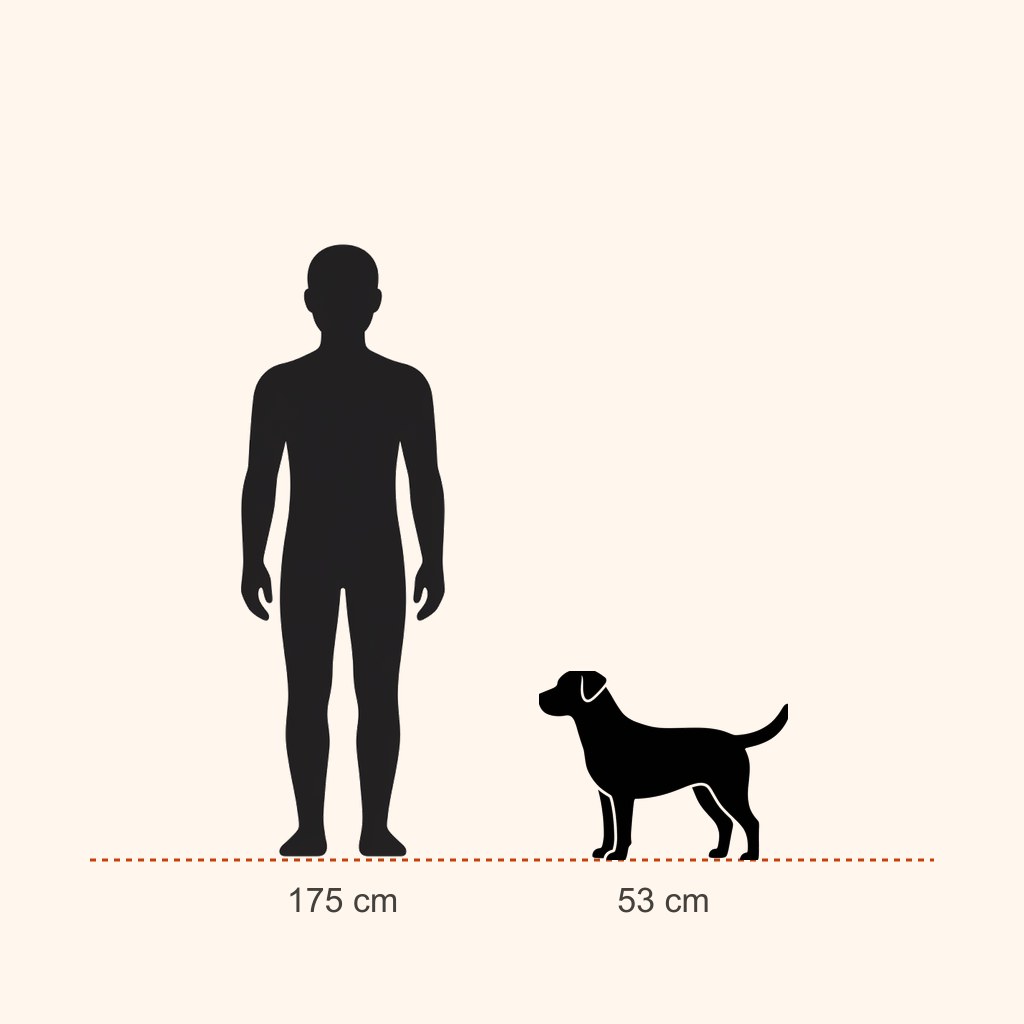
An adult Bearded Collie (18-27 kg) eats roughly 300-400 g of quality dry food per day, adjusted for activity level.
- Puppy (2-12 months): Medium-to-large breed puppy food, three meals a day.
- Adult: 22-26% protein. As an active herding dog, moderate-to-high energy formulas suit it well.
- Senior (8+ years): Reduce calories; joint support can help.
Two meals a day is recommended. This breed is not especially prone to obesity, but weight should still be monitored once activity drops.
Grooming and coat
The coat is by far the Bearded Collie's most demanding care requirement.
- Long, straight, double coat; brush at least 2-3 times a week, ideally daily.
- Brush down to the skin — surface brushing hides matting rather than removing it.
- Bathe every 4-6 weeks; dry the undercoat thoroughly, as trapped moisture leads to skin problems.
- Long hair around the eyes should be trimmed or tied back regularly so it doesn't obstruct vision.
- Check ears weekly; the drop-ear shape can trap moisture.
- Trim nails every 3-4 weeks.
Neglecting coat care is not just a cosmetic issue — moisture and debris trapped under matted fur create ideal conditions for skin infection.
Training and exercise
Daily requirement: 1 to 1.5 hours of active exercise plus mental stimulation. The Bearded Collie loves running, playing, and exploring; a flat, repetitive walk will not satisfy it.
Priorities:
- Socialisation (8-16 weeks). Early exposure to different people, dogs, and environments channels its natural curiosity in a good direction.
- Short, fun training sessions. Smart but easily bored; reward-based, varied work gets the best results.
- Recall. Its herding instinct can pull it toward moving objects (bikes, running children, other dogs); a reliable recall is a priority.
- Dog sports. Agility, obedience, and especially herding trials suit this breed naturally.
- Managing barking. It cannot be eliminated entirely, but enough exercise and mental stimulation reduce it.
History
The Bearded Collie traces back to the Scottish Highlands, where it worked sheep flocks for centuries. A widely cited theory holds that Polish Lowland Sheepdogs (Polski Owczarek Nizinny) brought to Scotland in the 16th century interbred with local herding dogs to form the Bearded Collie's ancestors; this theory is not conclusively proven but remains the most commonly cited account of the breed's origin.
The breed remained mostly a working farm dog in Scotland with little wider recognition until the mid-20th century. Modern popularity took shape after breeder Mrs. G. Olive Willison received a Bearded Collie puppy by mistake instead of the breed she had ordered in 1944, fell in love with the dog, and began promoting the breed. Today it remains a herding dog that has largely kept its working ability while also being cherished as a family companion.
This guide is for information only and is not a substitute for veterinary advice. Prices are approximate and vary by region and time.
Adoption Prep Checklist
Housing
-
Large-breed dog bed
A comfortable bed supports joint health.
Feeding
-
Large-breed dog food
Food matched to breed size gives the right nutritional balance.
-
Food and water bowl set
Needed for daily feeding and water access.
Grooming
-
De-shedding brush
Regular brushing reduces shedding and matting.
-
Dog nail clippers
Regular nail care matters for healthy walking.
-
Dog shampoo
Use a dog-specific shampoo for skin and coat health.
Walking & Activity
-
Running/exercise dog harness
Needed for safe walks.
-
Interactive dog puzzle toy
Mental and physical stimulation reduces behavior problems.
Frequently Asked Questions
Does the Bearded Collie shed?
It sheds heavily, especially at seasonal changes. Expect near-daily brushing and regular cleaning at home; it is not a good choice for anyone sensitive to pet hair.
Can the Bearded Collie live in an apartment?
Possible but not ideal. A house with outdoor space is preferable; in an apartment you will need to increase daily exercise substantially.
Is the Bearded Collie good with children?
Generally yes. It adapts well to families with children. Even so, interactions should be supervised and children taught to respect the animal’s boundaries.
Is the Bearded Collie suitable for first-time dog owners?
Partly. Someone with basic experience will manage well, but it would not be the first choice for a complete beginner.
How much exercise does the Bearded Collie need?
It is high-energy and needs vigorous daily activity. Mental stimulation matters as much as physical exercise; without enough to do, destructive behaviour follows.
Can the Bearded Collie be left alone during the day?
It can be left alone for a few hours. Long, routine absences can bring on boredom-driven behaviour problems; enrichment and a predictable routine reduce that risk.
How long does the Bearded Collie live?
The Bearded Collie lives 12-14 years on average. Diet, regular veterinary check-ups and early screening for hereditary conditions all affect this directly.
Where does the Bearded Collie come from?
The Bearded Collie originates from Scotland. The geography a breed was developed in, and the job it was bred for, explain much of its temperament and care needs today.