

Australian Stumpy Tail Cattle Dog
The image on this page is AI-generated and does not depict a real animal.
- Species
- Dog
- Origin
- Australia
- Size
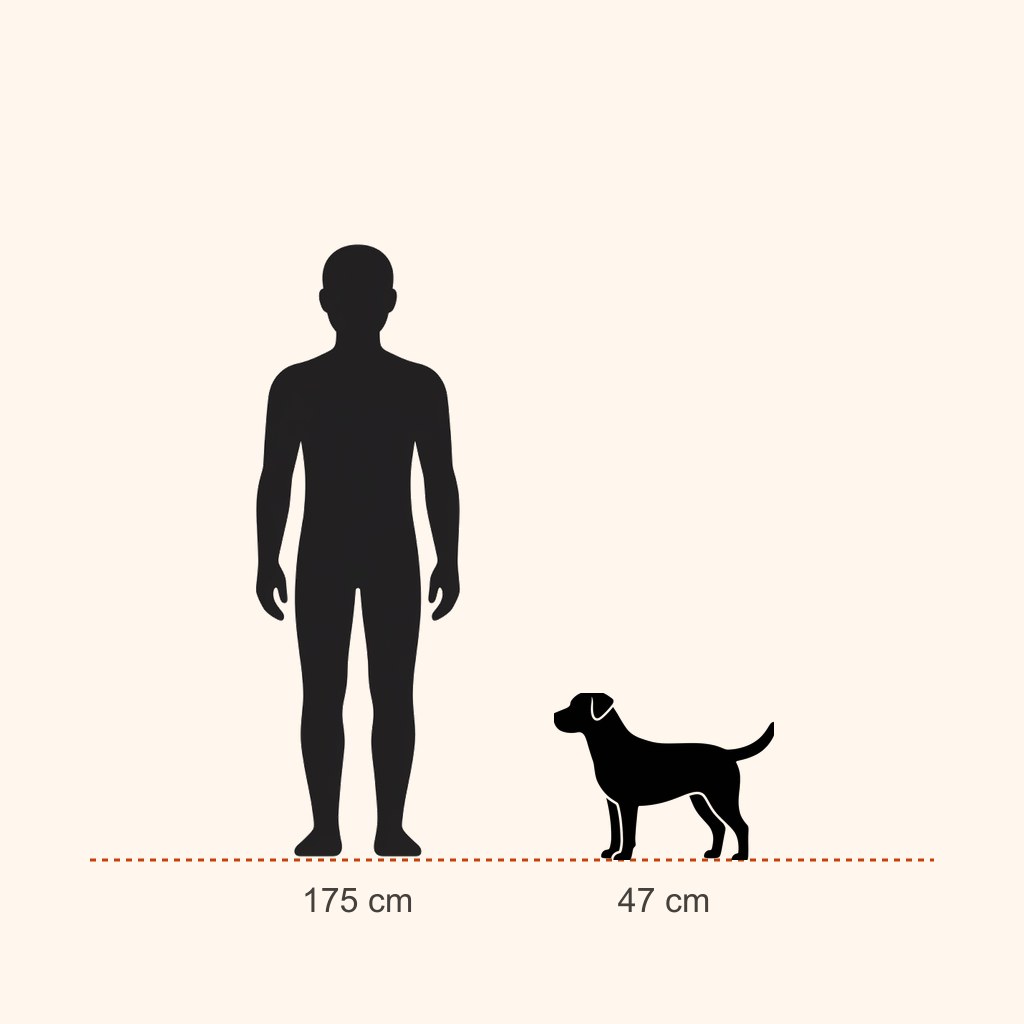
- Medium
- Lifespan
- 12-15 years
- Temperament
- Hard-working independent intelligent protective
- Description
Known for its naturally short tail, a hardy herding dog bred for cattle herding.
- Physical Traits
Short dense speckled coat, a naturally short/tailless look, a muscular compact body.
- Care / Environment Info
A house with a garden, active household preferred. Its short coat sheds little-to-moderately, easy to maintain. High exercise needs.
Australian Stumpy Tail Cattle Dog Owner's Guide
Last updated:
Is an Australian Stumpy Tail Cattle Dog right for you?
This breed is the lesser-known relative of the Australian Cattle Dog (Blue Heeler). Both come from the same roots, but this one is born with a naturally short or absent tail, hence the name "Stumpy". Beyond that visual difference, the two share the same core truth: both were bred to drive cattle and are tireless, intelligent working dogs that need a job.
| Situation | Suitability | Note |
|---|---|---|
| Apartment | Poor | Not enough space for its energy and drive to work |
| Family with young children | Moderate | Herding instinct can turn into heel-nipping; supervise |
| First-time dog owner | Moderate | High energy and an independent character need experience |
| House with a garden | Good | Requires a secure, high fence and daily activity |
| Farm or wide open space | Excellent | The environment the breed was built for |
| Household with fur allergies | Poor | Short but heavily shedding double coat |
| Left alone for long hours | Poor | Becomes destructive when bored |
| Active owner (running, hiking, agility) | Excellent | An ideal match for someone looking for a workout partner |
The truth to accept before getting this dog: it is not a lap dog but a working dog whose job has been taken away. If you don't give it a daily task or intense exercise, it will invent one — usually one you won't like (a door, furniture, the garden).
Before you adopt
This breed is extremely rare outside Australia and North America; you are unlikely to find one through a shelter or rehoming page. If importing, look for puppies whose parents have hip and elbow evaluations, an eye exam (for PRA and lens luxation), and a hearing test (BAER). Tan markings in the coat are considered undesirable by the breed standard and usually indicate crossing with the Australian Cattle Dog.
Don't decide from a photo alone; ask to see the parents' temperament and health records.
Temperament
Alert, watchful, and deeply devoted to its owner, while reserved and wary of strangers. Breed fanciers describe these dogs as "Velcro dogs" — they don't like being left alone and want to be near you constantly.
Intelligence and drive to work are high; left idle, it will create its own entertainment. The herding instinct is strong, and it may try to herd anything that moves — bicycles, running children, cars — an instinct that needs careful management in homes with young kids.
Because it's cautious around strangers, thorough early socialization matters a great deal in this breed. An undersocialized individual can become overprotective or fearful.
Health issues and lifespan
Sources generally put the lifespan at 12 to 15 years. As a breed shaped largely by natural selection, its genetic load is relatively light, though a handful of inherited conditions are reported.
- Congenital deafness: Present from birth, in one or both ears. Puppies are screened with a BAER test; a pup that doesn't react to sound should be evaluated carefully.
- Hip dysplasia: A joint development disorder that leads to lameness and arthritis later in life.
- Elbow dysplasia: Shows up as stiffness and limping in a front leg; early diagnosis slows progression.
- Progressive retinal atrophy (PRA): Gradual breakdown of the eye's light-sensing cells leading to blindness; night vision is affected first.
- Primary lens luxation: Displacement of the eye's lens; redness, tearing, cloudiness, or pain call for urgent veterinary attention, since untreated cases can progress to blindness.
Feeding
An adult (14-20 kg) should eat two meals a day of a quality food formulated for high activity levels. Given how active this breed is, a performance or sporting-dog formula is worth discussing with your vet.
- Puppy (2-12 months): Medium-breed puppy food, 3-4 meals a day.
- Adult: Portion by activity level; working or heavily exercised dogs need more.
- Senior (8+ years): Reduce calories, add joint support.
Treats shouldn't exceed 10% of daily calories; since this energetic breed is often trained with food rewards, subtract that amount from its regular meals.
Grooming and coat
Short, dense double coat.
- Weekly brushing is enough outside shedding season; increase frequency during the heavy spring and autumn blow-outs.
- Bathe only as needed, with a dog-safe shampoo.
- Check the eyes regularly; redness, tearing, or cloudiness can signal PRA or lens luxation.
- Working or frequently outdoor dogs need a check for burrs, ticks, and debris after every outing.
- Year-round flea and tick prevention shouldn't be skipped.
Training and exercise
Daily need: at least 1 to 1.5 hours of vigorous physical activity plus a mental task. Running, long walks, agility, obedience work, and herding activities satisfy both body and mind in this breed.
Priorities:
- Socialization (8-16 weeks). Critical given its wariness of strangers.
- Giving it a job. This breed wasn't built for idle time; a daily "task" (fetch, an agility course, a scent game) prevents most behavior problems.
- Redirecting the heel-nipping instinct. The herding drive can't be suppressed, but it can be channeled into appropriate toys and games.
- Recall. Essential for safe off-lead time in a breed with strong energy and prey drive.
- Consistent, reward-based training. Smart and independent, this breed resists harsh methods; short, engaging, reward-heavy sessions work better.
History
The breed's roots trace to dogs that arrived in Australia with the First Fleet in 1788, some of which were developed into herding dogs on free settler George Hall's property. Known as "Halls Heelers," these lines are the common ancestor of both today's Australian Cattle Dog and the Stumpy Tail Cattle Dog.
The key difference between the two is the tail: the Stumpy is born with a naturally short (under 10 cm) or absent tail, a trait caused by a T-box gene mutation found across several breeds — a natural inherited trait, not a surgical cut.
The breed was recognized separately in 1963, took its current name in 2001, and gained international recognition from the Fédération Cynologique Internationale (FCI) in 2003. The American Kennel Club added it to its Foundation Stock Service — a step toward full recognition — in 2018. The standard disallows tan markings in the coat, seen as a sign of crossing with the Australian Cattle Dog.
This guide is for information only and is not a substitute for veterinary advice. Prices are approximate and vary by region and time.
Adoption Prep Checklist
Housing
-
Medium-breed dog bed
A comfortable bed supports joint health.
Feeding
-
Medium-breed dog food
Food matched to breed size gives the right nutritional balance.
-
Food and water bowl set
Needed for daily feeding and water access.
Grooming
-
De-shedding brush
Regular brushing reduces shedding and matting.
-
Dog nail clippers
Regular nail care matters for healthy walking.
-
Dog shampoo
Use a dog-specific shampoo for skin and coat health.
Walking & Activity
-
Running/exercise dog harness
Needed for safe walks.
-
Interactive dog puzzle toy
Mental and physical stimulation reduces behavior problems.
Frequently Asked Questions
Does the Australian Stumpy Tail Cattle Dog shed?
It sheds a moderate amount. Brushing two or three times a week noticeably reduces both loose hair and matting.
Can the Australian Stumpy Tail Cattle Dog live in an apartment?
Possible but not ideal. A house with outdoor space is preferable; in an apartment you will need to increase daily exercise substantially.
Is the Australian Stumpy Tail Cattle Dog good with children?
Caution is warranted. With proper socialisation and adult supervision it can live with children, but it is not a first choice for homes with young children.
Is the Australian Stumpy Tail Cattle Dog suitable for first-time dog owners?
Partly. Someone with basic experience will manage well, but it would not be the first choice for a complete beginner.
How much exercise does the Australian Stumpy Tail Cattle Dog need?
It is high-energy and needs vigorous daily activity. Mental stimulation matters as much as physical exercise; without enough to do, destructive behaviour follows.
Can the Australian Stumpy Tail Cattle Dog be left alone during the day?
It can be left alone for a few hours. Long, routine absences can bring on boredom-driven behaviour problems; enrichment and a predictable routine reduce that risk.
How long does the Australian Stumpy Tail Cattle Dog live?
The Australian Stumpy Tail Cattle Dog lives 12-15 years on average. Diet, regular veterinary check-ups and early screening for hereditary conditions all affect this directly.
Where does the Australian Stumpy Tail Cattle Dog come from?
The Australian Stumpy Tail Cattle Dog originates from Australia. The geography a breed was developed in, and the job it was bred for, explain much of its temperament and care needs today.