

American Eskimo Dog
The image on this page is AI-generated and does not depict a real animal.
- Species
- Dog
- Origin
- United States
- Size
- Small
- Lifespan
- 12-15 years
- Temperament
- Intelligent alert friendly trainable
- Description
Known for its pure white coat, an intelligent and energetic spitz-type family dog.
- Physical Traits
Thick, fluffy pure white double coat, a fox-like pointed face, upright ears.
- Care / Environment Info
Suitable for apartment living. Its double coat sheds heavily, requiring regular brushing. Moderate-to-high exercise needs.
American Eskimo Dog Owner's Guide
Last updated:
Is an American Eskimo Dog right for you?
The American Eskimo Dog ("Eskie") is a small-to-medium Spitz breed with a plush white coat, pricked ears, and a curled tail. It is intelligent, alert, and devoted to its family, but it is also a breed that uses its voice freely and needs constant mental stimulation. Do not adopt one just because it looks cute without taking those two traits seriously first.
| Situation | Suitability | Note |
|---|---|---|
| Apartment | Moderate | Size is fine, but the barking habit can become a neighbour issue |
| Family with young children | Good | Playful and patient; small size means rough play needs supervision |
| First-time dog owner | Moderate | Intelligent but stubborn; consistent training is essential or bad habits set in |
| Home alone most of the day | Poor | Bonds intensely with its family and is prone to separation anxiety |
| Household with fur allergies | Poor | The double coat sheds heavily, especially during seasonal changes |
| Close-neighbour apartment or complex | Poor | Strong watchdog instinct; barks often and at length when alert |
| Owner who can provide mental stimulation | Excellent | Unused intelligence turns into destructive behaviour; a job makes it happy |
The two most important rows here are barking and being left alone. You can keep an Eskie happy in an apartment, but not without investing in bark training and daily mental work.
Before you adopt
Ask that the parents have had a hip evaluation, an eye examination, and ideally a PRA (progressive retinal atrophy) genetic test. These three tests, recommended by the breed's parent club, target the most significant inherited risks in this breed.
When you visit the puppy, ask to see the mother; an overly fearful or overly aggressive mother raises the risk of a similar temperament in the litter.
This breed falls into the heavily produced "cute small dog" category, so uncontrolled breeding is common. Avoiding a breeder who cannot show health-test paperwork reduces your risk of both health and temperament surprises down the line.
Temperament
The Eskie is intelligent, alert, and eager to learn; it excels at obedience and agility. But its intelligence is also a challenge: when bored, it invents its own entertainment, and owners rarely enjoy the result.
It bonds deeply with its family and is often described as a "one-family dog." It is watchful and reserved with strangers; this wariness signals careful distance rather than aggression. Poorly socialised individuals can become excessively fearful.
Its watchdog instinct is strong and inborn. A doorbell, a street noise, another dog — any of these can trigger barking. This behaviour cannot be silenced entirely, only managed.
It gets along well with other dogs and cats when raised with them from puppyhood; individuals introduced as adults sometimes show friction.
Health issues and lifespan
Average lifespan is 12 to 15 years; the breed is generally considered healthy, but it carries a few inherited risks typical of small-to-medium dogs.
- Hip dysplasia: Less common than in large breeds but reported. Limping, reluctance to jump, and difficulty with stairs are signs; progressive cases need X-rays and orthopaedic assessment.
- Patellar luxation: The kneecap slipping out of place; common in small breeds. An occasional skip with the leg held up, followed by a sudden "pop" back into place, is the typical sign. Mild cases are monitored; advanced cases may need surgery.
- Legg-Calvé-Perthes disease: Seen in small-breed puppies, usually around 6-9 months, when blood flow to the head of the femur is disrupted and the bone starts to deteriorate. Signs include worsening hind-leg lameness, muscle wasting, and pain-related restlessness; diagnosis is by X-ray, and most cases recover fully with surgery.
- Progressive retinal atrophy (PRA): An inherited eye disease in which the light-sensing cells slowly degenerate; the first sign is usually weakening night vision, which can progress to total blindness. There is no cure, which is why the parent club recommends genetic testing of breeding stock.
- Hypothyroidism: The thyroid gland fails to produce enough hormone; signs include weight gain, lethargy, coat thinning, and skin problems. Diagnosed with a blood test and managed with lifelong medication.
- Dental disease: Small breeds accumulate tartar and gum disease faster; neglected dental care can lead to early tooth loss.
See a vet without delay if you notice a leg held up repeatedly while walking, noticeably worse night vision, sudden unexplained lameness, or lethargy paired with weight change.
Feeding
Because the American Eskimo Dog comes in Toy, Miniature, and Standard size classes (see History below), daily food amounts should be based on the dog's actual weight — a single number would be misleading for this breed.
- Toy (roughly 3-5 kg): 60-90 g of quality dry food per day, split into two meals.
- Miniature (roughly 5-9.5 kg): 90-150 g per day, split into two meals.
- Standard (roughly 9-18 kg): 150-230 g per day, split into two meals.
- Puppy (2-12 months): Small/medium-breed puppy food, three meals a day; growth speed varies by size class, so avoid rapid weight gain.
- Senior (8+ years): Reduced-calorie, joint-support formulas are preferable; because this is a small breed, excess weight quickly increases joint strain.
These ranges are a starting point; adjust to the food brand's guidance and your dog's activity level, and check ideal weight by feeling the ribs.
Grooming and coat
It has a thick, double, white (sometimes cream-toned) coat: a soft, dense undercoat under a longer, coarser outer coat.
- Brushing two to three times a week is enough normally; during seasonal shedding (spring and autumn) the undercoat sheds heavily and needs daily brushing.
- Use a metal comb that reaches the undercoat; surface brushing alone does not remove shed hair.
- The white coat shows dirt clearly, but frequent bathing strips natural skin oils; bathing every four to six weeks is usually enough.
- Do not shave it. The double coat protects against both cold and heat; a shaved coat may not grow back the same.
- Ears are upright and open so they ventilate well, but a weekly check is still recommended.
- Trim nails every three to four weeks; overly long nails distort gait in small breeds.
- Brush teeth several times a week — dental problems develop faster in small breeds.
Training and exercise
Daily needs are 30-45 minutes of walking and play; more important than duration is mental stimulation. A bored Eskie invents its own "job," which usually means barking, digging, or chewing.
Priorities:
- Socialisation (8-16 weeks). The single most important step for this naturally wary breed; early exposure to different people, sounds, and settings prevents excessive fearfulness.
- Bark management. It cannot be silenced completely, but a "quiet" cue and redirecting attention at the trigger keep it under control.
- Mental stimulation. Scent games, puzzle feeders, basic obedience, and agility work are almost as necessary here as physical exercise.
- Alone-time conditioning. Since it is prone to separation anxiety, gradual short absences should start from puppyhood.
- Reward-based training. Intelligent but stubborn; harsh methods damage trust, while short, consistent sessions built on food and play rewards work better.
History
Despite its name, the American Eskimo Dog's roots trace to Spitz-type dogs in Germany. Brought to America with 19th-century European immigrants, these dogs worked farms as watchdogs and small-vermin chasers.
The breed was first registered in America by the United Kennel Club around 1913 as the "American Spitz." Following the anti-German sentiment after World War I, the name changed first to "American Spitz," then "American Eskimo Spitz"; by the late 1920s "Spitz" was dropped, arriving at today's name. Around the same period, white Spitz dogs appeared in some travelling circus acts, with puppies sold to spectators — a period that helped popularise the breed.
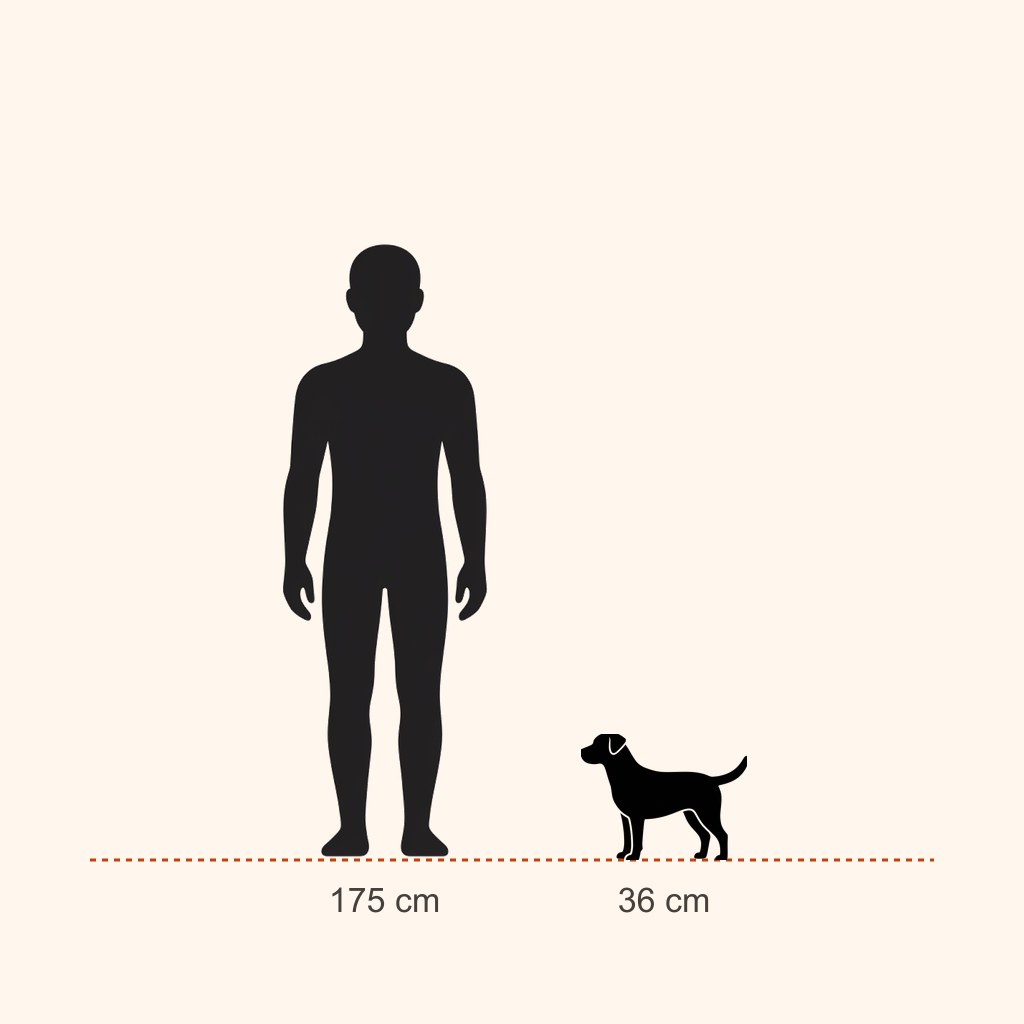
The National American Eskimo Dog Association (NAEDA), founded in 1970, first split the breed by weight into Standard and Miniature. When the American Kennel Club officially recognised the breed in 1995, it expanded the standard to three size classes: Toy (roughly 9-12 in / 23-30 cm at the shoulder), Miniature (roughly over 12-15 in / 30-38 cm), and Standard (roughly over 15-19 in / 38-48 cm). All three are genetically the same breed, differing only in size class, and none is preferred over another. (The United Kennel Club still recognises only Miniature and Standard.) The 35.5 cm height figure on this site sits at the upper end of the Miniature class and represents the size most commonly encountered; confirm with the breeder which size class a puppy is expected to reach before adopting.
This guide is for information only and is not a substitute for veterinary advice. Prices are approximate and vary by region and time.
Sources
- www.akc.org/dog-breeds/american-eskimo-dog/
- images.akc.org/pdf/breeds/standards/AmericanEskimoDog.pdf
- www.akc.org/breeder-programs/breed-health-testing-requirements/non-sporting-group-health-testing-requirements/
- vcahospitals.com/know-your-pet/dog-breeds/american-eskimo
- www.hillspet.com/dog-care/dog-breeds/american-eskimo
- aedca.org/aedca_breedhist.php
- www.ukcdogs.com/american-eskimo
Adoption Prep Checklist
Housing
-
Small-breed dog bed
A comfortable bed supports joint health.
Feeding
-
Small-breed dog food
Food matched to breed size gives the right nutritional balance.
-
Food and water bowl set
Needed for daily feeding and water access.
Grooming
-
De-shedding brush
Regular brushing reduces shedding and matting.
-
Dog nail clippers
Regular nail care matters for healthy walking.
-
Dog shampoo
Use a dog-specific shampoo for skin and coat health.
Walking & Activity
-
Running/exercise dog harness
Needed for safe walks.
-
Interactive dog puzzle toy
Mental and physical stimulation reduces behavior problems.
Training
-
Training treats / beginner training guide
Basic obedience training is recommended for first-time dog owners.
Frequently Asked Questions
Does the American Eskimo Dog shed?
It sheds heavily, especially at seasonal changes. Expect near-daily brushing and regular cleaning at home; it is not a good choice for anyone sensitive to pet hair.
Can the American Eskimo Dog live in an apartment?
Yes. It lives comfortably in an apartment as long as its daily needs are met. What matters is not floor area but consistent exercise and mental stimulation.
Is the American Eskimo Dog good with children?
Generally yes. It adapts well to families with children. Even so, interactions should be supervised and children taught to respect the animal’s boundaries.
Is the American Eskimo Dog suitable for first-time dog owners?
Yes. Its care and training are relatively forgiving, which makes it a sound choice for first-time owners.
How much exercise does the American Eskimo Dog need?
It is high-energy and needs vigorous daily activity. Mental stimulation matters as much as physical exercise; without enough to do, destructive behaviour follows.
Can the American Eskimo Dog be left alone during the day?
It can be left alone for a few hours. Long, routine absences can bring on boredom-driven behaviour problems; enrichment and a predictable routine reduce that risk.
How long does the American Eskimo Dog live?
The American Eskimo Dog lives 12-15 years on average. Diet, regular veterinary check-ups and early screening for hereditary conditions all affect this directly.
Where does the American Eskimo Dog come from?
The American Eskimo Dog originates from United States. The geography a breed was developed in, and the job it was bred for, explain much of its temperament and care needs today.