

American English Coonhound
The image on this page is AI-generated and does not depict a real animal.
- Species
- Dog
- Origin
- United States
- Size
- Large
- Lifespan
- 12-14 years
- Temperament
- Energetic vocal friendly hard-working
- Description
Bred for raccoon hunting, this hunting dog with a powerful sense of smell.
- Physical Traits
Short dense coat (tricolor or spotted), long drooping ears, an athletic body.
- Care / Environment Info
A house with a garden is preferred. Its short coat sheds little, easy to maintain. High exercise needs, its hunting call (baying) is noticeable.
American English Coonhound Owner's Guide
Last updated:
Is an American English Coonhound right for you?
The American English Coonhound is a long-legged, muscular hunting dog developed in the southern United States to hunt raccoon. It is energetic, friendly, and hard-working, but the trait that defines this breed most is its voice. The long, carrying "bay" it lets out once it has treed its quarry has been deliberately selected for generations, precisely so it can be heard from miles away.
| Situation | Suitability | Note |
|---|---|---|
| Apartment | Poor | The long, deep bay is noticeably more powerful than even a Beagle's; neighbour complaints are almost guaranteed |
| Home needing quiet | Poor | Being vocal cannot be trained away; it is exactly what this breed was bred for |
| Family with young children | Good | Friendly, playful, and sturdy; but its energy can knock a small child over |
| First-time dog owner | Moderate to poor | An independent hunting mindset; needs patient, consistent, experienced handling |
| Alone most of the day | Poor | A pack-hunting breed; long solitude turns into howling and destructive behaviour |
| Off-lead walks / free roaming | Not suitable | Once it picks up a scent it will not hear you and can travel for miles |
| House with a garden | Good | The fence must be tall and secure; a strong nose can find its way through small gaps |
| Active, walking/running household | Excellent | A working dog that needs high energy output and stamina |
One truth to accept before getting this breed: the American English Coonhound is not a quiet house dog and can never be trusted off-lead. Neither is a training gap — both are exactly what centuries of selection for raccoon hunting produced.
Before you adopt
This breed is extremely rare in Turkey. Since raccoon hunting does not exist there as a sport, there is no established breeder network or shelter experience in the country; anyone wanting one is generally dependent on dogs imported from abroad.
When buying a puppy, ask for hip (and ideally elbow) screening and a veterinary eye exam on the parents. See the parents in person if you can — it gives you an honest read on both temperament and this breed's signature voice.
If you share a garden or wall with neighbours, talk to them before bringing this dog home; in dense housing this breed's voice can cause real disputes.
Temperament
The American English Coonhound is energetic, friendly, and loyal, and is generally warm even to strangers, so it does not work as a guard dog. When socialised it gets along well with people and other dogs; having historically hunted in packs, it does not enjoy being left alone.
It carries an independent hunting mindset. For generations it was selected to trail scent and tree a raccoon without waiting for a command from the hunter. That independence shows up in everyday obedience too: it is intelligent, but when a cue competes with a scent in front of it, it usually chooses the scent.
Its voice is the breed's identity. Alongside barking, it produces a long, melodic "bay" developed to tell the hunter where it is during a hunt. This call was shaped to carry across dense woodland from a distance and cannot be fully silenced.
It has a strong nose and hunting drive, and may chase small pets (like cats) unless trained otherwise. Its energy level is high, and without daily exercise both its vocalising and destructive behaviour increase.
Health issues and lifespan
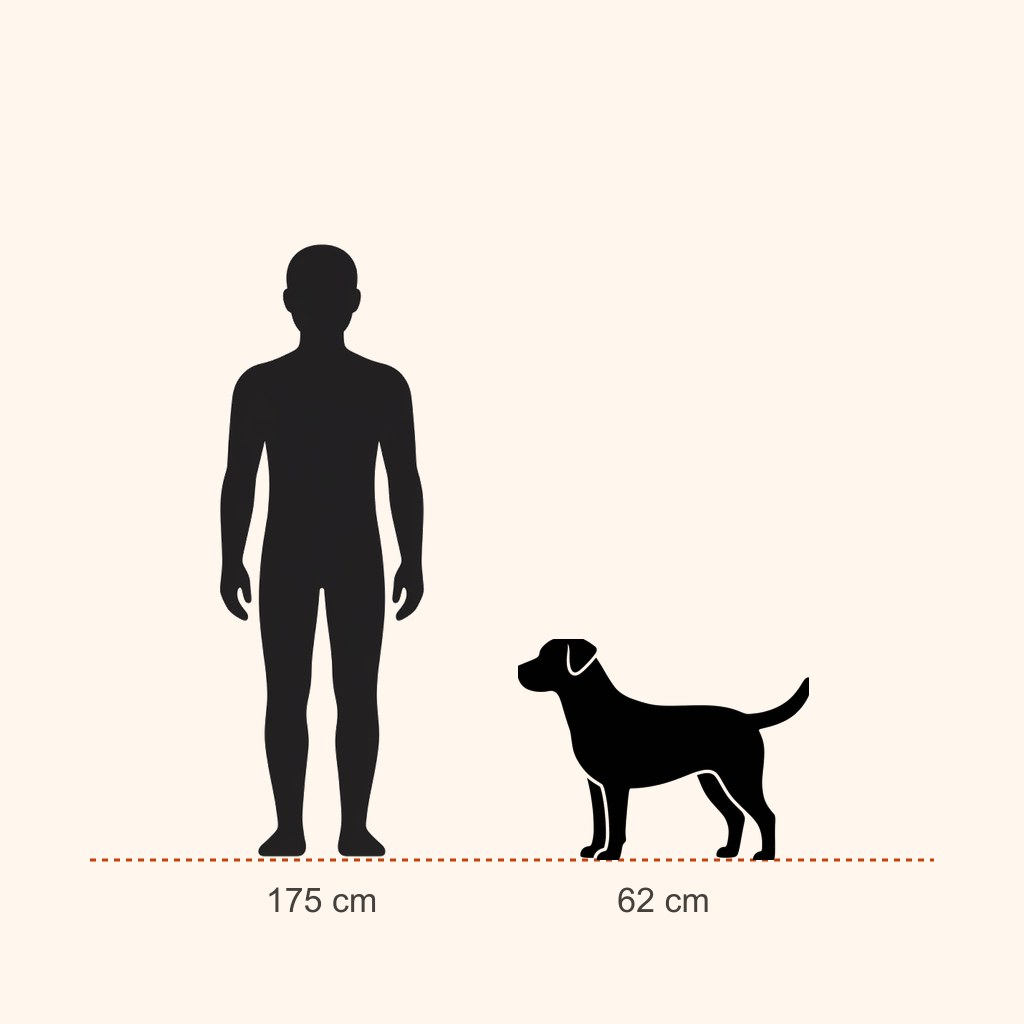
Sources put average lifespan at 11-12 years; adult height runs 58-66 cm and weight roughly 18-29 kg. It is generally considered a healthy breed but carries a few inherited and structural risks.
- Hip dysplasia: Abnormal development of the hip joint. Signs include limping, difficulty rising, hind-leg weakness, and a wobbly gait. Risk rises markedly in puppies that are overfed and grow too fast; see a vet for persistent lameness.
- Ear infections: Long, drop ears trap moisture and debris. Head shaking, scratching at the ear, odour, and redness are the signs; chronic cases thicken and narrow the ear canal. See a vet as soon as signs appear.
- Progressive retinal atrophy (PRA): An inherited eye disease that leads to vision loss. Early signs are usually reluctance to go outside at night and cloudy-looking eyes; regular eye exams help catch it early.
- Hypothyroidism: The thyroid gland underperforms. Weight gain, lethargy, dry skin, and hair loss are the signs; diagnosed by blood test and managed with medication.
- Gastric dilatation-volvulus (GDV/bloat): An emergency seen in deep-chested large breeds where the stomach fills with gas and twists on itself. Signs are a distended, hard abdomen, unproductive retching, restlessness, and excess drooling. It can be fatal within hours — see a vet immediately if these signs appear.
- Obesity and weight management: Overweight puppies face roughly double the risk of hip dysplasia compared with normal-weight littermates, and excess weight adds joint strain in adulthood too. Monitor body condition regularly.
Feeding
An adult American English Coonhound (18-29 kg) eats roughly 300-450 g of quality dry food per day depending on activity level; adjust the bag's guideline to its condition.
- Puppy (2-15 months): Large-breed puppy food, 3-4 meals a day. Slow, controlled growth lowers hip dysplasia risk; avoid excess calories and calcium.
- Adult: Choose a food formulated for active dogs, 22-26% protein. Split into at least two meals a day; one large meal raises GDV risk. Avoid strenuous exercise for about an hour before and after eating.
- Senior (8+ years): Reduce calories and discuss joint support (omega-3, glucosamine) with your vet.
A slow-feeder bowl helps fast eaters digest better and lowers GDV risk.
Grooming and coat
Short, coarse, dense single coat.
- A weekly session with a rubber brush or grooming mitt is enough; sheds a moderate amount.
- Bathe as needed, generally every couple of months.
- Check ears weekly and dry them after fieldwork or swimming — moisture is the biggest trigger for ear infections.
- Trim nails every three to four weeks.
- Brush teeth several times a week.
- Since this breed dives into brush on a scent, check for ticks after every walk.
Training and exercise
Daily requirement is at least 1-1.5 hours of active exercise: a brisk walk, a run, and free-running time in a safe, fully fenced area. This breed was bred for stamina, and a lack of exercise turns into both destructive behaviour and excessive vocalising.
Priorities:
- Socialisation (8-16 weeks). Early exposure to people, other dogs, and different environments keeps its friendly nature well balanced.
- Secure boundaries and leash discipline. It can pull hard on a scent; fences must be tall with a closed base, and it should stay leashed at all times outdoors.
- Scent and tracking work. The most satisfying mental activity for this breed; hide-and-find games in the yard or tracking classes put its energy to good use.
- Recall. Difficult but essential — work at short distances with high-value rewards. Even so, never fully trust it off-lead in the open.
- Alone-time training. As a pack dog, this should be built up gradually in short sessions.
Harsh or forceful methods do not work with this breed; its independent nature calls for a reward-based, patient, consistent approach.
History
The American English Coonhound traces back to English foxhounds brought to the American colonies in the 17th and 18th centuries; early settlers, including Thomas Walker and George Washington, are known to have imported these dogs. Over time, hounds bred for Europe's hedgerow-divided land were reshaped into a fast, tireless raccoon hunter suited to America's wide-open country.
The breed was first registered by the United Kennel Club in 1905 as the "English Fox and Coonhound." In the 1940s, the Bluetick and Treeing Walker Coonhounds split off from the same lines as separate breeds. The American Kennel Club admitted it to its Foundation Stock Service in 1995 and gave it full recognition in the Hound Group in 2011, adding "American" to the name to distinguish it from its English ancestors.
It should not be confused with the Bloodhound: the Bloodhound is a large, loose-skinned trailing hound shaped to follow a human scent slowly and methodically over long distances, while the American English Coonhound was selected to chase a raccoon quickly and tree it, giving it a lighter, more muscular, and faster build.
Since Turkey has no raccoon-hunting tradition, this breed is almost entirely unknown there and can only be acquired through import. It handles a warm, hot summer comfortably thanks to its short coat; the real challenge is not housing but its powerful voice, which is hard for close neighbours to accept.
This guide is for information only and is not a substitute for veterinary advice. Prices are approximate and vary by region and time.
Sources
- www.akc.org/expert-advice/dog-breeds/american-english-coonhound-history/
- www.uebfa.org/ukc-standards
- www.petmd.com/dog/breeds/american-english-coonhound
- vcahospitals.com/know-your-pet/hip-dysplasia-in-dogs
- vcahospitals.com/know-your-pet/ear-infections-in-dogs-otitis-externa
- www.merckvetmanual.com/digestive-system/surgical-problems-of-the-gastrointestinal-tract-in-small-animals/gastric-dilation-and-volvulus-in-small-animals
Adoption Prep Checklist
Housing
-
Large-breed dog bed
A comfortable bed supports joint health.
Feeding
-
Large-breed dog food
Food matched to breed size gives the right nutritional balance.
-
Food and water bowl set
Needed for daily feeding and water access.
Grooming
-
Short-hair dog brush
Regular brushing reduces shedding and matting.
-
Dog nail clippers
Regular nail care matters for healthy walking.
-
Dog shampoo
Use a dog-specific shampoo for skin and coat health.
Walking & Activity
-
Running/exercise dog harness
Needed for safe walks.
-
Interactive dog puzzle toy
Mental and physical stimulation reduces behavior problems.
Training
-
Training treats / beginner training guide
Basic obedience training is recommended for first-time dog owners.
Frequently Asked Questions
Does the American English Coonhound shed?
Shedding is low. Brushing once a week is usually enough, with a mild increase during seasonal changes.
Can the American English Coonhound live in an apartment?
Possible but not ideal. A house with outdoor space is preferable; in an apartment you will need to increase daily exercise substantially.
Is the American English Coonhound good with children?
Generally yes. It adapts well to families with children. Even so, interactions should be supervised and children taught to respect the animal’s boundaries.
Is the American English Coonhound suitable for first-time dog owners?
Yes. Its care and training are relatively forgiving, which makes it a sound choice for first-time owners.
How much exercise does the American English Coonhound need?
It is high-energy and needs vigorous daily activity. Mental stimulation matters as much as physical exercise; without enough to do, destructive behaviour follows.
Can the American English Coonhound be left alone during the day?
It can be left alone for a few hours. Long, routine absences can bring on boredom-driven behaviour problems; enrichment and a predictable routine reduce that risk.
How long does the American English Coonhound live?
The American English Coonhound lives 12-14 years on average. Diet, regular veterinary check-ups and early screening for hereditary conditions all affect this directly.
Where does the American English Coonhound come from?
The American English Coonhound originates from United States. The geography a breed was developed in, and the job it was bred for, explain much of its temperament and care needs today.